Rethinking Waste,
One Scrap at a Time.
When we think about food waste, we often think of it as compostable material that provides valuable nutrients to the soil where it decomposes. While this is true, it's not always the case. According to the EPA, food waste makes up roughly 24 percent of municipal solid waste disposed of in landfills but accounts for approximately 58 percent of landfill methane emissions—more than any other landfilled material.
As a business that generates a substantial amount of food waste, Alta has taken steps to collect and divert food scraps from landfills—helping reduce our carbon footprint while making a positive contribution to our community. Since March 2021, Alta has diverted more than 4.1 tons of food waste from landfills across its food and beverage locations, including Watson Shelter, Alf's Restaurant, Albion Grill, Alf Engen Ski School and the Buckhorn employee cafeteria.
Wasatch Resource Recovery (WRR) is a large-scale digester in North Salt Lake that takes food waste and turns organics into energy.
What is food waste?
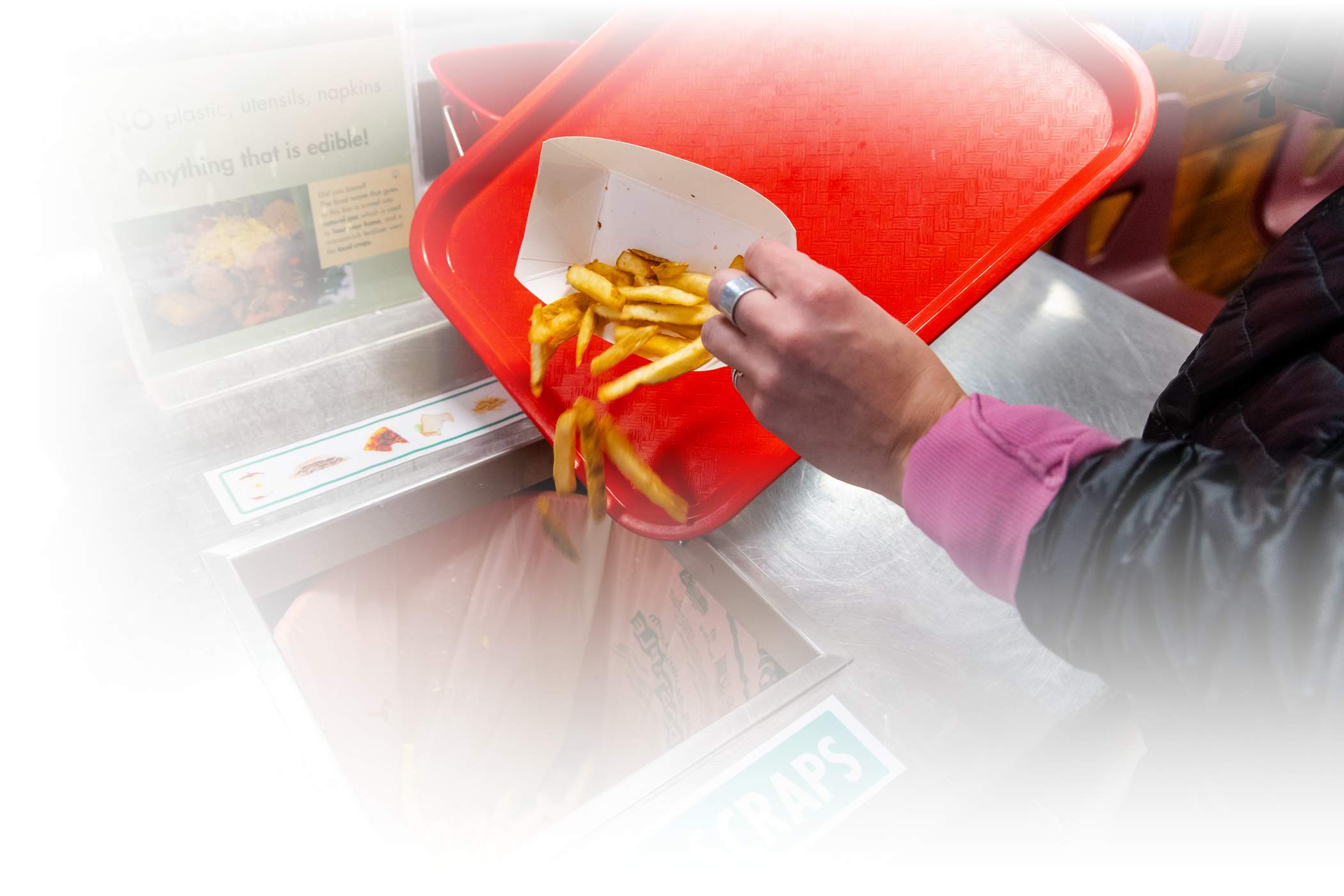
Simply put, food waste is anything you could eat but didn't. If you find yourself at a food waste bin, ask yourself: Is this something I could eat? If the answer is yes, toss it in! If not—like napkins or utensils—place it in the appropriate landfill or recycling bin.
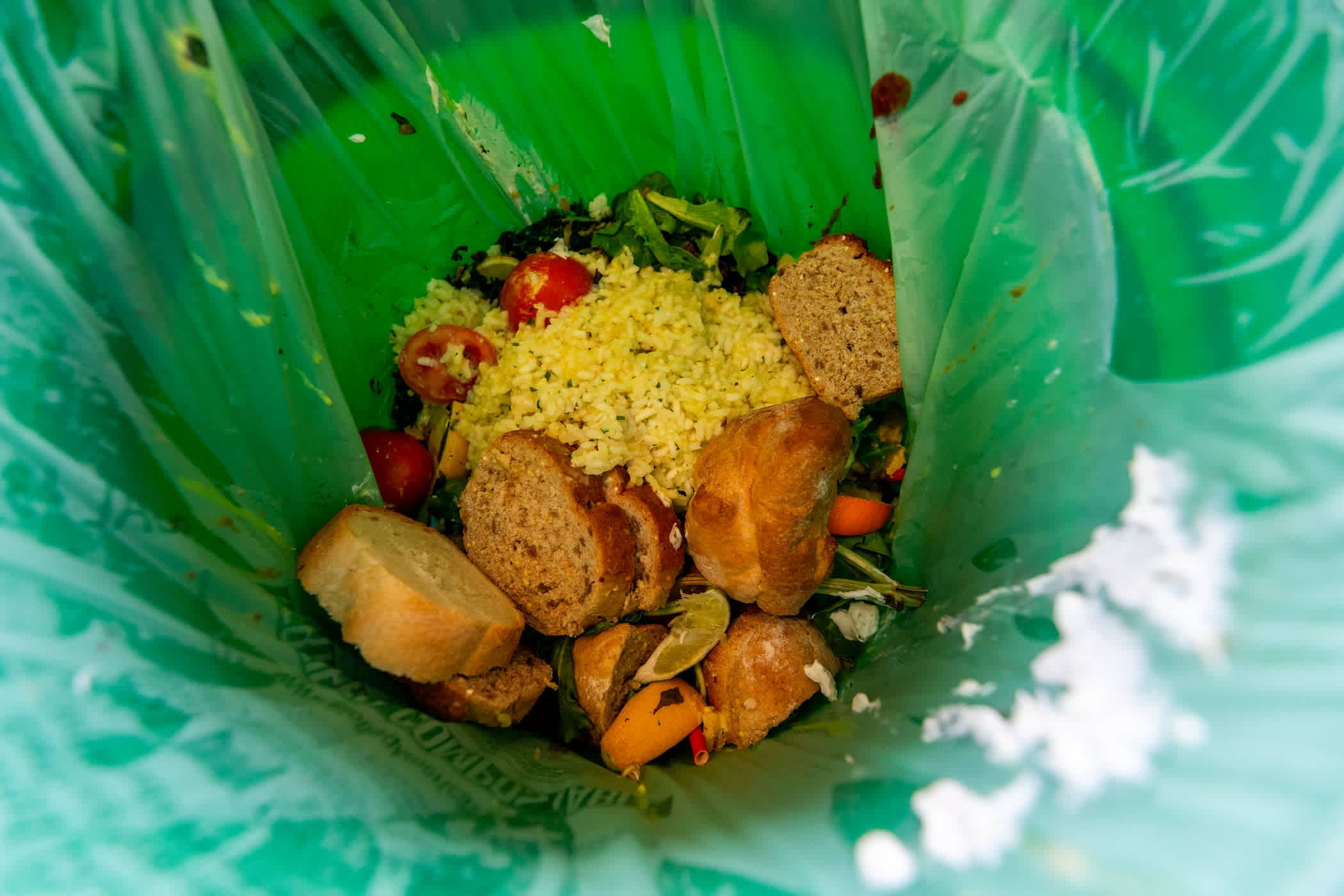
While some items found in restaurants may be compostable, that doesn't necessarily mean they belong in a food waste bin. To keep food waste collection effective and free of contamination, non-food items should be disposed of separately—even if they're labeled compostable.
From Food Scraps
to Renewable Resources
So, what happens to food waste once it leaves your plate? Here's how Alta's food scraps make their way from the mountain to a second life as renewable energy and fertilizer.
Food Waste Collection: All on-mountain food and beverage locations collect food scraps from both front- and back-of-house operations.
Collection and Delivery: Food scraps are placed in biodegradable bags and designated bins for weekly pickup by Momentum Recycling and delivered to WRR. To reduce transportation emissions, Alta and Snowbird coordinate their pickup schedules.
Pre-Processing: Food waste arrives at WWR, where it is ground into small pieces, mixed with water and processed to remove packaging and other contaminants. The remaining organic material is then sent to a digester.
Digestion: Inside the digester, organic waste is heated to encourage the growth of microbes that break down the material without oxygen, producing biogas and nutrient-rich byproducts.
Product 1: Renewable Energy
Biogas is captured, purified and converted into renewable natural gas before entering a nearby pipeline. WWR produces enough natural gas to serve approximately 40,000 people or 15,000 homes—roughly the size of Bountiful, Utah.
Product 2: Bio-based Fertilizer
The remaining organic material becomes a nutrient-rich, carbon-based fertilizer used to grow crops.
Why divert food waste from the landfill?
When organic material is buried in a landfill, it begins to decompose in an anaerobic (oxygen-free) environment. Without oxygen, the decomposing food produces methane gas, which escapes into the atmosphere. When the organic material decomposes naturally in an aerobic (oxygen-rich) environment—such as a compost pile—it releases carbon dioxide. This type of release is a normal process in the lifecycle of carbon in nature. Methane and carbon dioxide are both greenhouse gases. However, methane has a global warming potential 80x higher over a 20-year span than carbon dioxide.
Diverting Alta’s on-site food waste allows us to make tangible impacts on our greenhouse gas emissions. The goal of this program is to make our operations more circular, minimize our environmental footprint and give back to our community in meaningful ways.
How can you get involved?
If you are eating in one of Alta’s dining locations, please help our dining staff and dispose of waste in the correct receptacles. We have three basic waste streams in Alta dining locations—landfill, recyclables and food waste. If you aren’t sure where something goes, ask a dining staff member.
If you have a green waste bin at home, your jurisdiction may accept food waste. Salt Lake City allows for fruits and vegetables, eggshells, tea bags and coffee grounds in green waste bins. Check your local jurisdiction for what is allowed in the green waste bins. Other options include taking your food waste to Wasatch Resource Recovery for their public drop-off.
Add Your Comment