
Adapting to warmer winters.
This December has been unseasonably warm. It's been preceded by record highs—NOAA reports that November and the autumn season (September–November) were warmer than any previously observed and the 2025 year is on track to be the second-warmest year on record. Snowfall has been below average, with Alta typically measuring 86 inches in December. So far, Alta has recorded just 55 inches between October, November and December with limited chances to make snow due to the unseasonably warm temperatures.
This is not meant to be a doom-and-gloom outlook—given recent weather patterns and scientific predictions that weather conditions will be more volatile in a warming climate, these conditions should not come as a surprise. In the last few years alone, Alta's snow pendulum has swung from a record-breaking 903 inches in 2022–23 to this year's second slowest start in the past 46 years.
The Alta Environmental Center aims to clearly explain current conditions, how they fit within past trends and future climate models and the strategies the ski area is implementing to adapt to our changing climate.
So what does a business do when it relies on snow?
When temperatures drop, we use the opportunity to begin snowmaking. In recent years, Alta has made snowmaking efficiency a top priority, replacing outdated infrastructure with newer, smarter technology. By producing snow even when natural precipitation isn’t occurring, we can effectively store water in the form of snow. Utah’s snowpack accounts for approximately 95% of the state’s water supply, acting as a natural reservoir that slowly releases water during the dry, summer months.
Older snowmaking equipment has been gradually replaced with new lances and tower guns across the mountain. These newer tower guns can produce roughly twice as much snow using the same amount of energy compared to 25-year-old models. This improvement is captured by the Energy–Snow Ratio (ESR), measured in kilowatt-hours per cubic meter (kWh/m³).
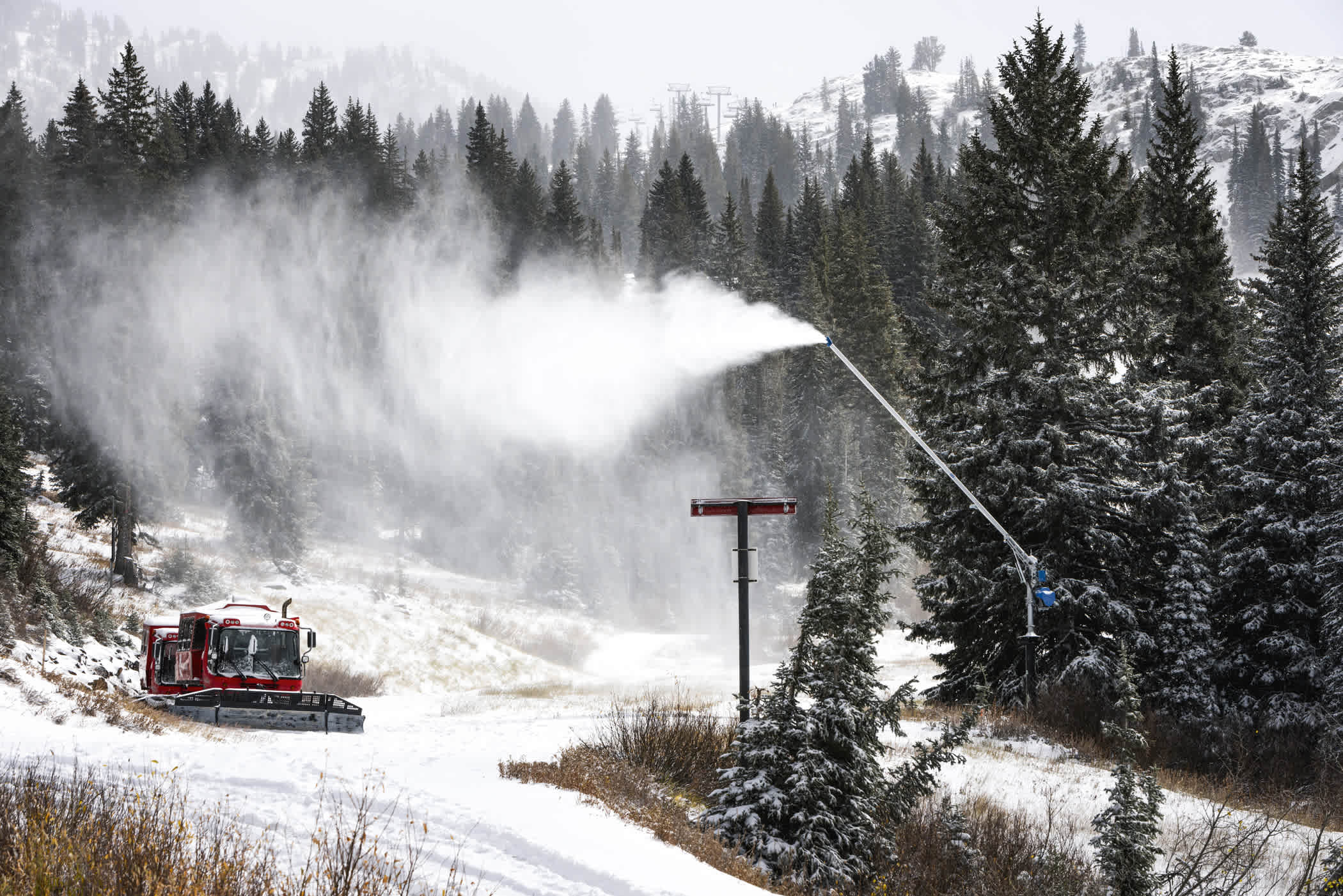
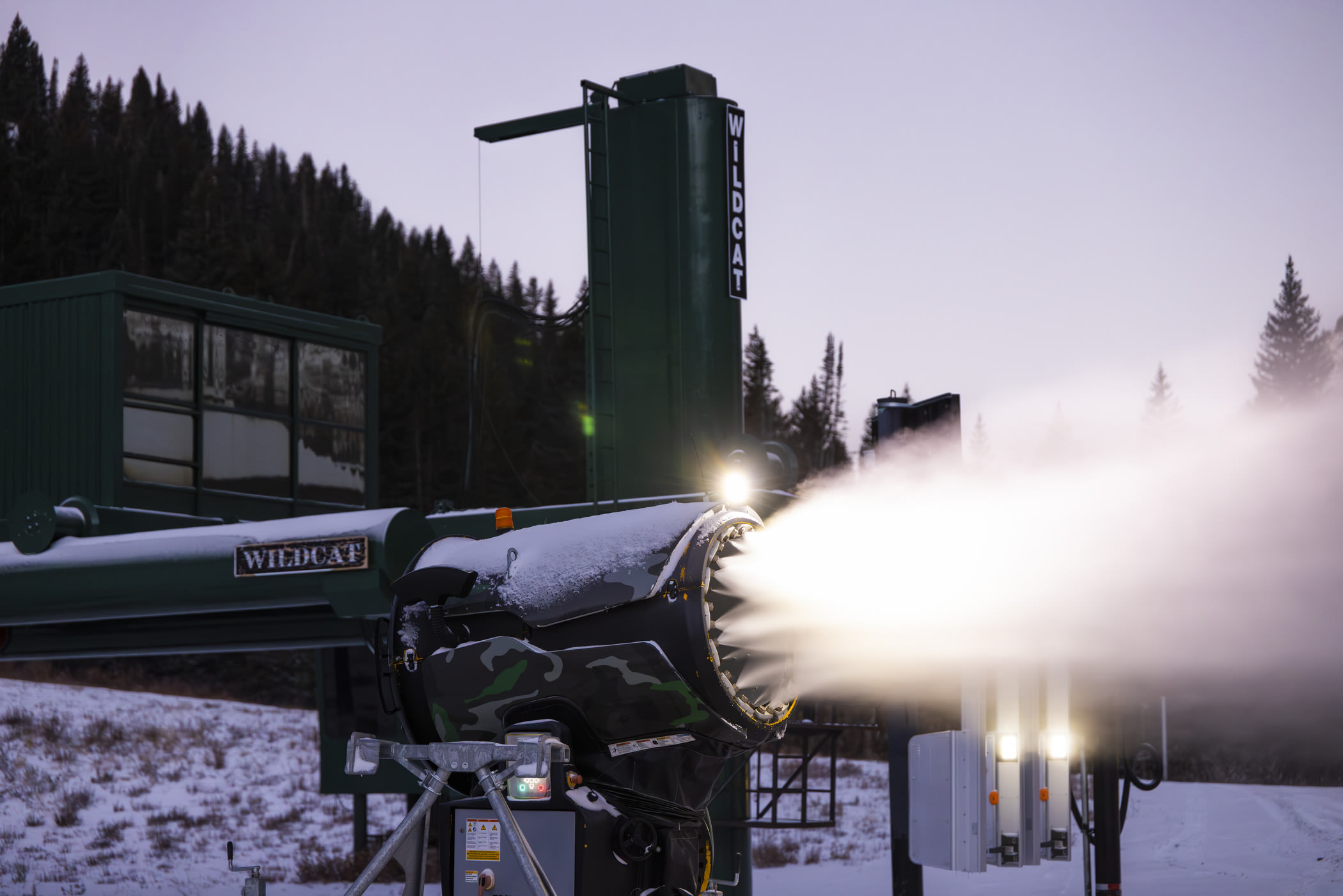
Snowmaking lances and guns in action early season | Photo: Rocko Menzyk
ESR describes how much energy is required to produce one cubic meter of snow—the lower the value, the greater the efficiency. For example, in 2000, a fan gun achieved an ESR of 1.45 kWh/m³ at a wet-bulb temperature of –4°C. By contrast, a 2024 fan gun can operate at approximately 0.7 kWh/m³ under similar conditions, effectively producing twice as much snow with the same energy input.
Even with these efficiency gains, the number of days cold enough for snowmaking is declining. Between 1980 and 2018, the number of days with temperatures suitable for snowmaking across the state of Utah (–4°C, or –2°C with low humidity) dropped from 40 to 31. Alta's snowmaking season spans the last week of October through Christmas, providing 30 potential days of snowmaking. Unfortunately, this season has provided fewer than 15 snowmaking days. Climate models indicate this trend will continue under a “business-as-usual” emissions scenario, emphasizing the need for both adaptation and emissions reduction.
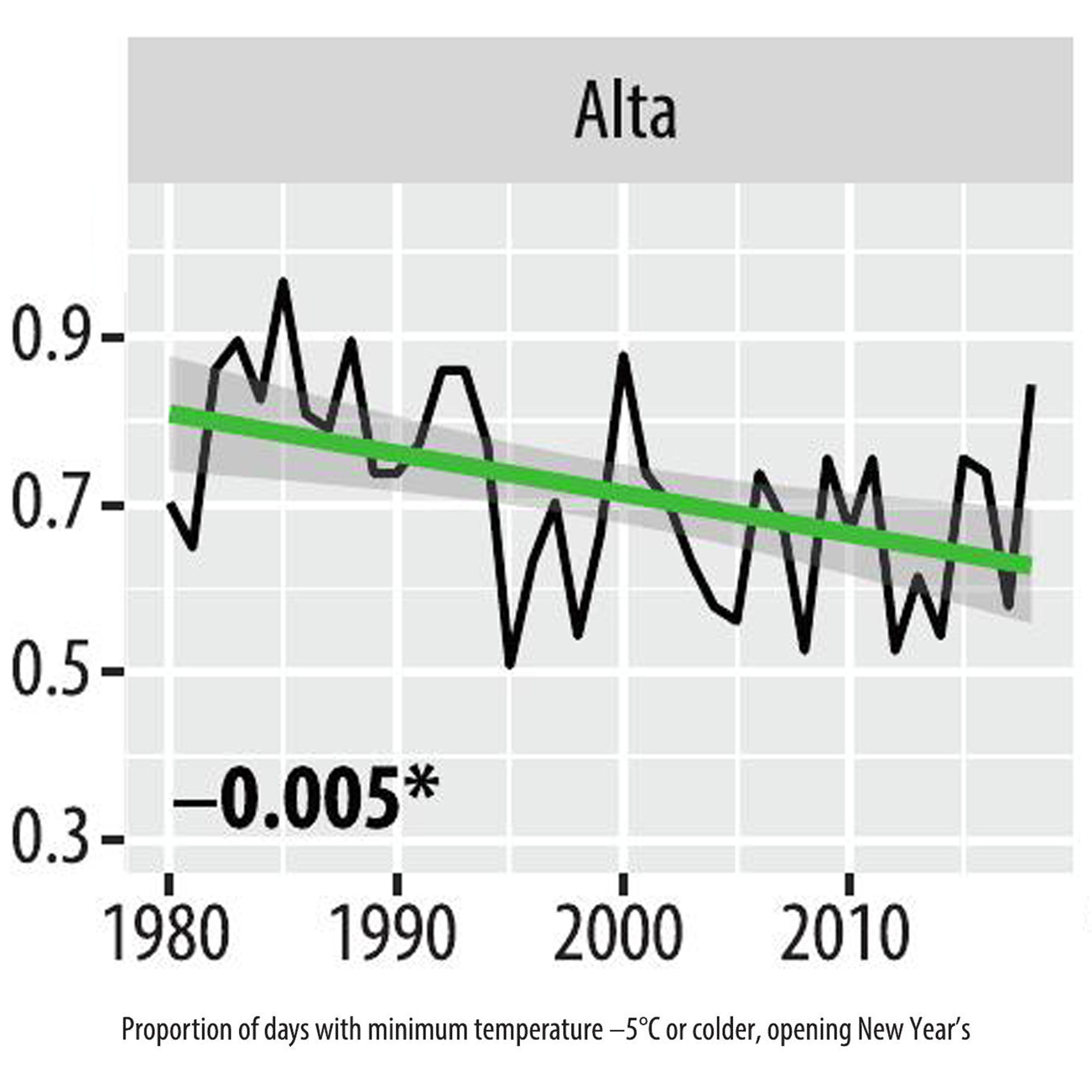 Trends in the proportion of days in the early season with a minimum daily temperature below –5°C by ski resort (1980–2018)
Image: The early season is defined as 2 weeks before opening (varies by resort) through January 2nd, to capture the holiday season. Numbers on each panel represent Sen's slope; * indicates the value is statistically significant at α ≤ 5%. Akbar H, Wilkins EJ, Saley T, Hager R. 2021. Climate change at Utah ski resorts: Impacts, perceptions and adaptation strategies.
Leaving Greener Tracks
This reality brings attention to Alta’s own carbon footprint. Electricity is the ski area’s largest source of emissions, making reduction in electrical load a critical priority. This past summer, Alta took another step to reduce energy consumption and improve snowmaking efficiency by installing additional water storage along the Transfer Tow. Currently, the snowmaking system relies on Cecret Lake as its primary reservoir. It works through a siphon system; Alta siphons water into the lake for storage and when temperatures are cold enough, that water is siphoned from the lake to make snow in the Albion Basin.
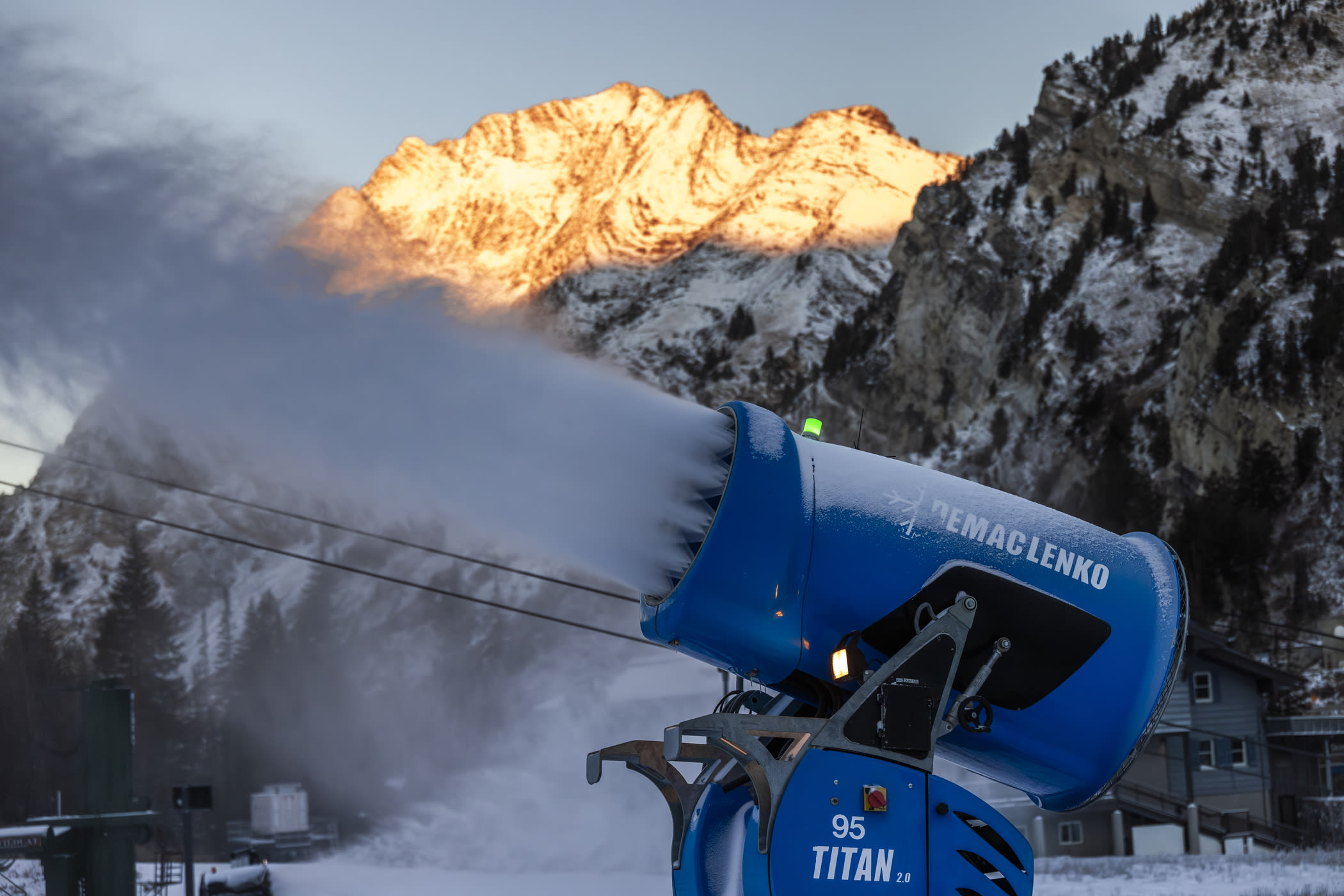 Demaclenko snowgun blowing snow at the Wildcat base area early season | Photo: Rocko Menzyk
The question became "What if some of that water could be stored at the base area without relying on pumps?" That idea led to the development of this summer’s Transfer Tow project. Two large HDPE pipes were installed underground alongside other infrastructure already scheduled for replacement. This new system allows Alta to store up to 250,000 gallons of water at the base area, delivered by gravity rather than pumped. When temperatures drop, the system is ready immediately, requiring significantly less energy.
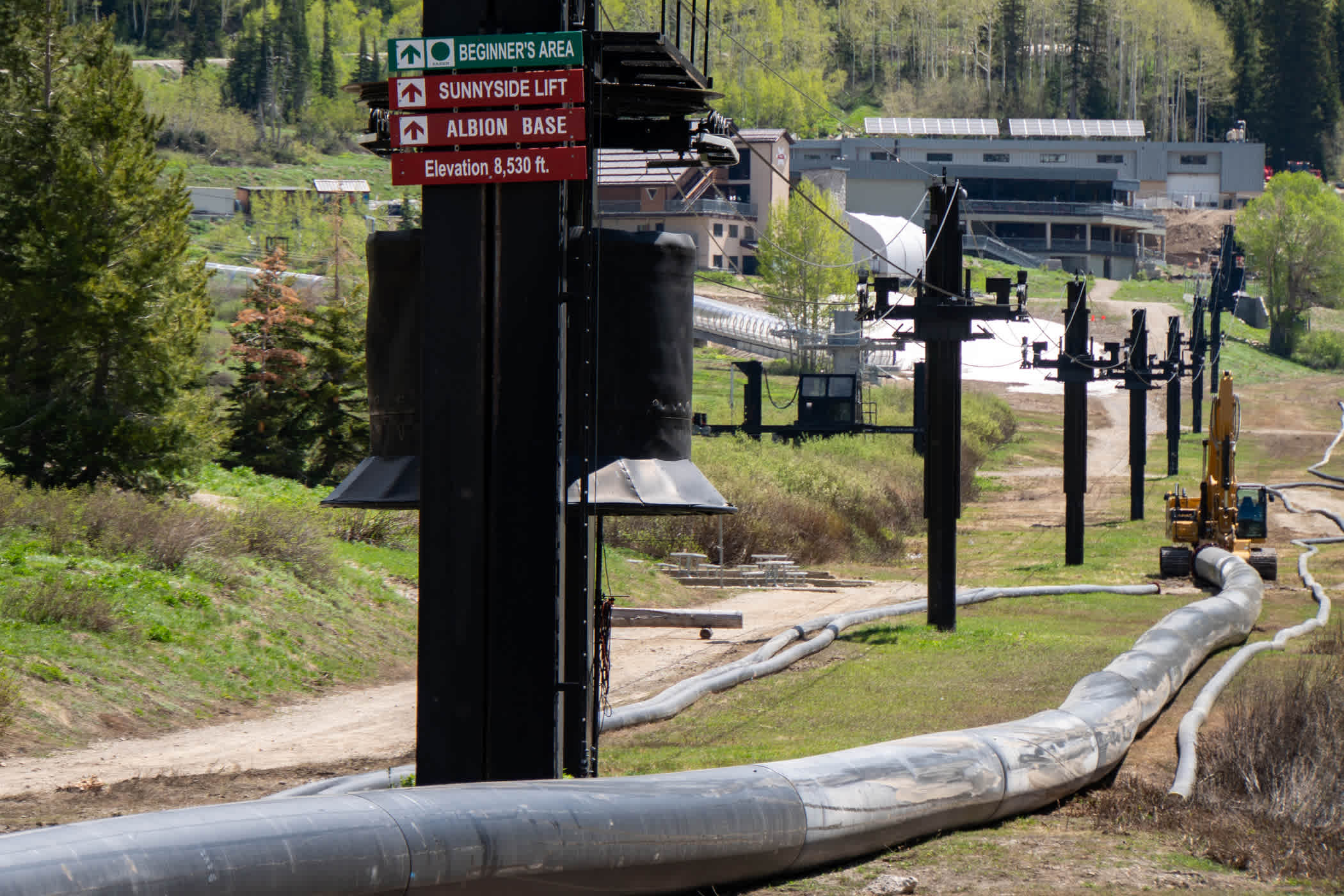 Snowmaking pipeline construction along the Transfer Tow | Photo: Adam Fehr
Once snow is produced, snow depth is actively managed to optimize coverage. Alta utilizes SnowSat—a digital snow management platform integrated across the grooming fleet—which provides real-time snow depth data through GPS and LiDAR-based measurements. This data allows operators to more efficiently distribute manmade snow. In turn, this reduces fuel consumption and snowmaking energy use while maintaining consistent surface conditions and a high-quality skiing experience.
Finally, Alta has made targeted terrain modifications on popular groomed runs over the past five years. These changes create more consistent slopes and surfaces, allowing skiable conditions to be achieved with less snow—whether natural or man-made. Filling a depression or gully requires far more snow than covering a smooth, even surface. By addressing these terrain features in advance, Alta can create reliable top-to-bottom runs from each lift that hold snow more consistently.
Warmer Winters on the Horizon
Taken together, these efforts are about being practical and proactive. By working smarter with terrain, water, technology and energy, we can plan for lower-snow years while still delivering the ski experience people know and love at Alta—all while acknowledging that the climate we’re operating in is changing.
Add Your Comment