
Alta is the home of steep.
Alta Ski Area is known for its eye-popping snow totals and challenging terrain. It's not uncommon to spy Olympians and professional skiers waiting alongside Alta locals in the Wildcat lift line before an unforgettable powder day. Uniquely, Alta does not make a difficulty rating distinction between black diamond and double black diamond terrain, so our trail map won’t reveal the steepest pitches. With 55 percent of the resort’s 118 named runs marked as expert, you could explore steeps all day without locating all of Alta's steepest runs.
It's true that sidestepping or bootpacking are often required to access Alta's steepest pitches and most appealing runs. Locals often joke that Alta is actually an acronym for "Another Long Traverse Ahead." The advantage to earning your turns rewards intrepid skiers with outlying powder caches that remain untouched by the those unwilling to put in a little grunt work to reach them.
The steepness of a ski run may vary depending on the current depth of the snowpack or where you record measurements with a clinometer. The average pitch can often underestimate the pucker factor while staring down the initial drop into a chute or steep run. The following list contains some of Alta's most famous and quintessential steep skiing runs.
1. ALF’S HIGH RUSTLER (AKA HIGH BOY)
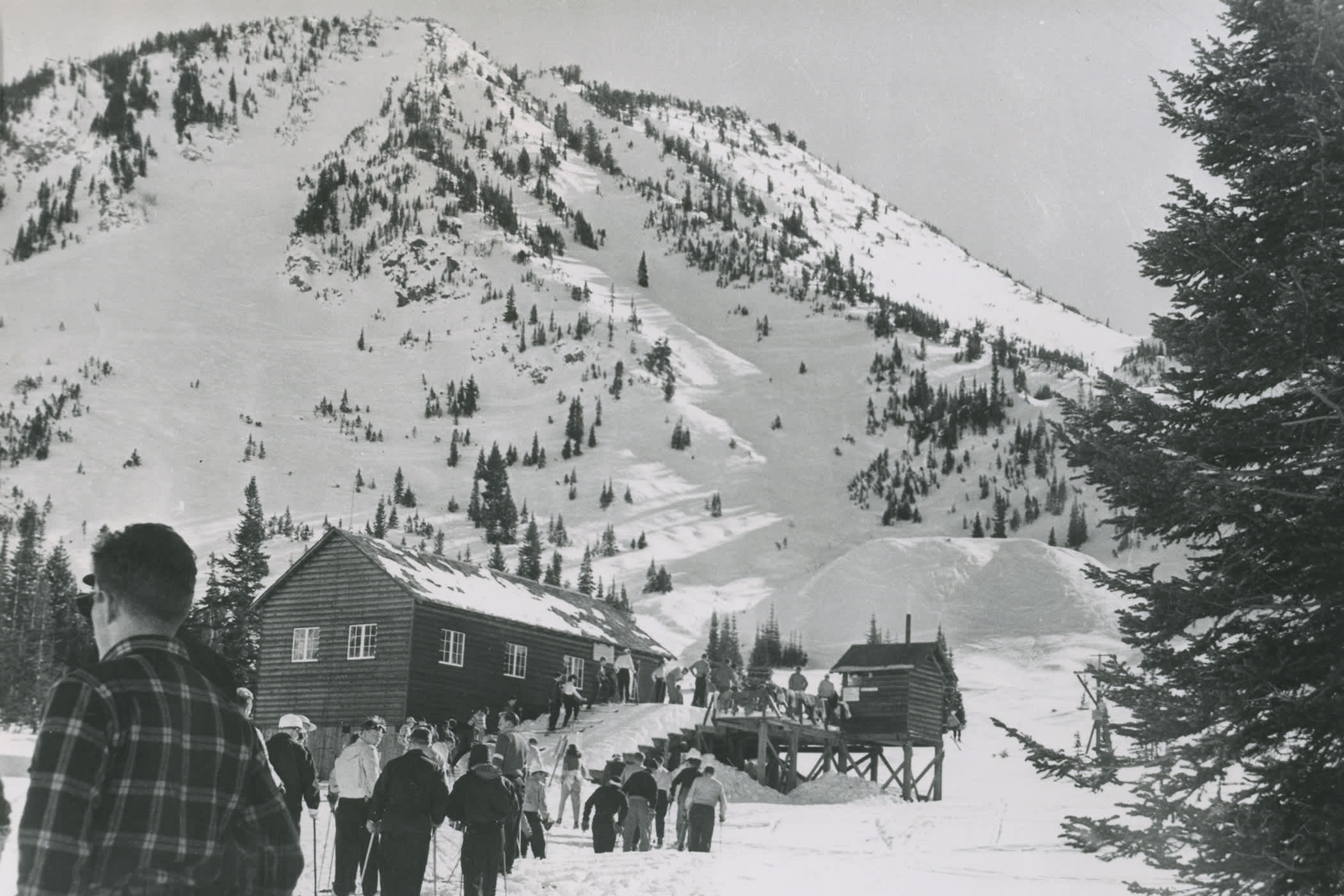
Skiers wait to load the original Collins single chair underneath High Rustler's watch | Photo circa 1947
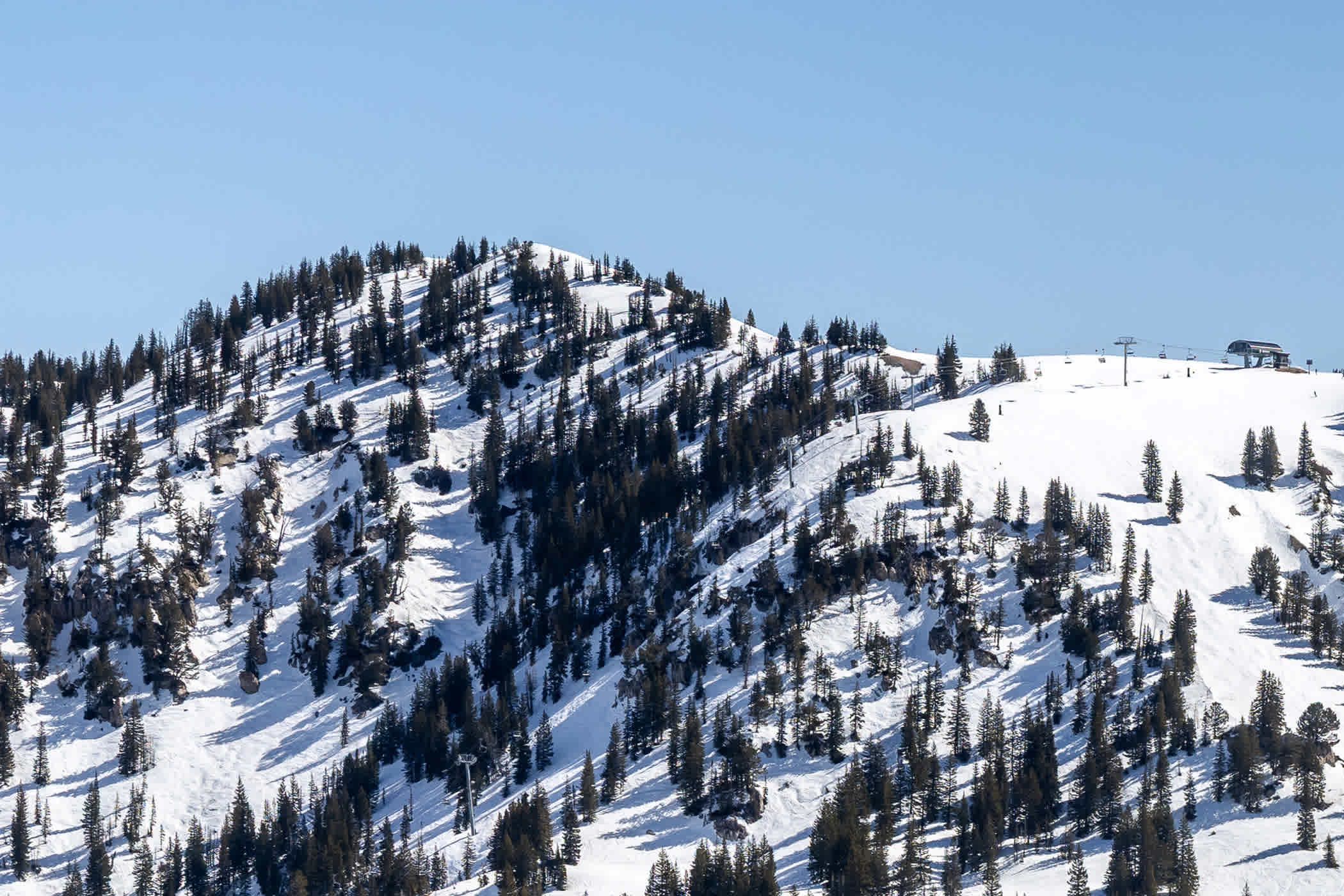
Alf's High Rustler—also known as High Boy—has stood sentinel over the ski area since its humble beginnings in 1938. From the moment you arrive at Alta's Wildcat base area, High Rustler commands your attention. It looms over the Collins and Wildcat lifts, blocking out the weak winter sun and dominating the skyline. Designated as one of the most recognizable and iconic ski runs in Utah for decades, no expert skier's visit to Alta is complete without a lap down High Rustler's thrilling heights. The tricky navigation and technical skills needed to drop in are enough to deter most skiers from a faceoff with High Rustler.
In the early days of Alta, skiing High Rustler from the top wasn't much of a consideration. The Collins single chair only extended up to the current location of the mid-mountain Watson Shelter and the long wooden skis and supple leather boots weren't ideal tools for such a steep and endless ride through untracked powder. In fact, it wasn't until the mid-1940s that Alta pioneers began inventing and perfecting the techniques and equipment needed to turn and float through deep powder. As skiing's evolution progressed, it is reported that world famous skier and Alta legend, Alf Engen would straight-line the pitch, earning the run its official name—Alf's High Rustler.

Jake Doan makes chalky turns down High Rustler| Photo: Rocko Menzyk
Brave skiers of the modern era can attempt to follow in Alf's ski tracks down this 38-45-degree pitch that offers 1,000 feet of vertical drop. High Rustler's north-facing aspect and soaring height remain shaded for much of the winter, sheltering the snow and often offering incredible skiing conditions. When the wind howls, High Rustler can become dusted in a smooth, supportive coat of chalky snow that leaves skiers yipping and hollering. During periods of high pressure, High Rustler might just offer one of the longest mogul runs you've ever seen. And if you're lucky enough to score High Rustler on a powder day, you'll never forget that that run as long as you live. Successfully skiing High Rustler from top to bottom without stopping is the Alta local's benchmark for achieving acceptable winter ski fitness.
2. EAGLE'S NEST/HOURGLASS CHUTE
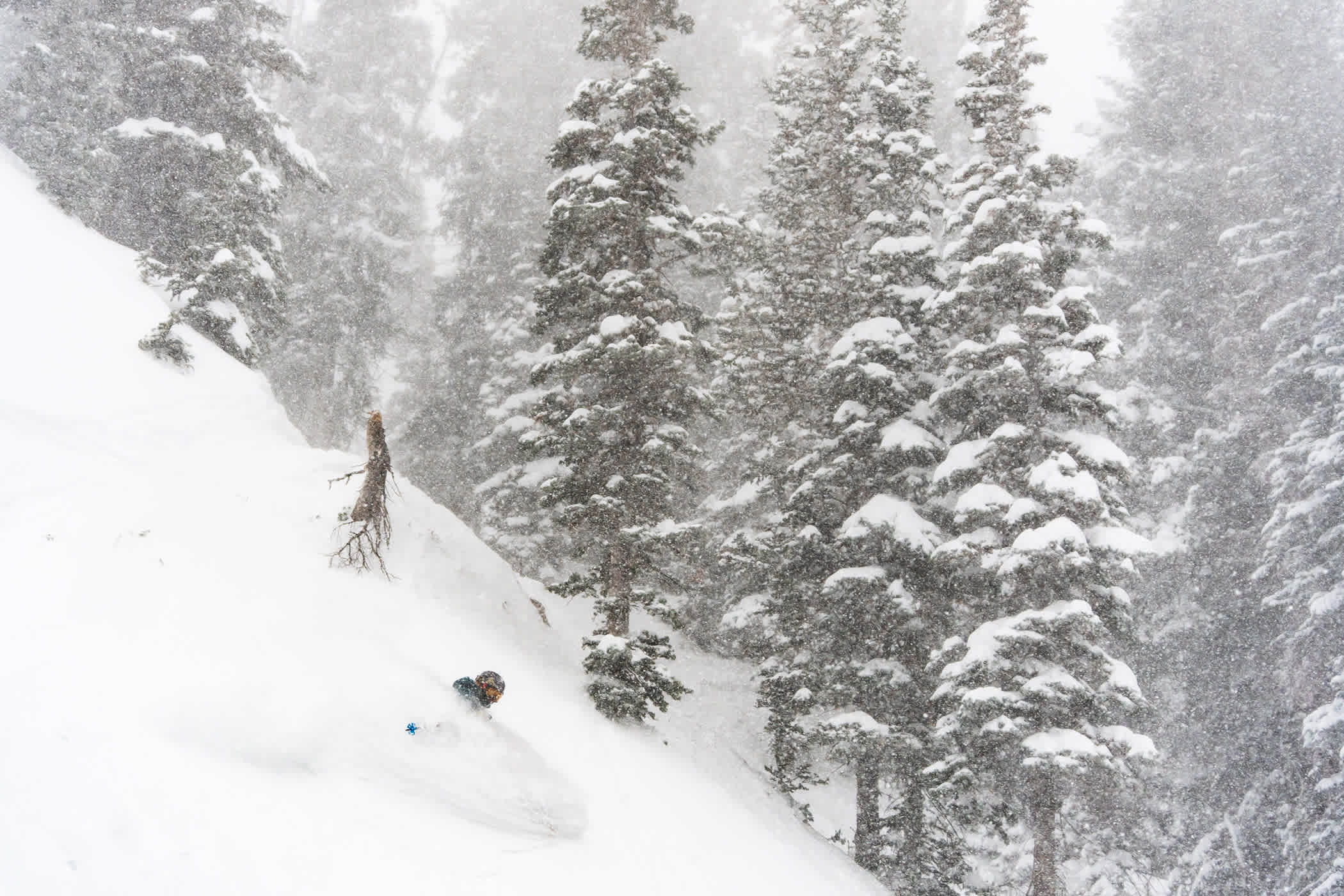
Sydney Ricketts navigates her way through the Eagle's Nest | Photo: Erica Hinck
Bold skiers who manage to weather the entirety of the High Traverse’s collection of dips, turns, whoops and forks are rewarded with access to Eagle’s Nest and Hourglass Chute. This run lies around a subtle ridgeline, to the looker’s left of High Rustler. The pitch screams as steeply as the former and it also offers 1,000 feet of vertical drop. The differentiator is dense stands of evergreen trees, perfectly spaced for black diamond tree skiing. It's difficult to imagine, but this zone was one entirely denuded of trees by miners in the late 1800s who harvested the timber to build homes, storefronts and shore up mining tunnels. All the trees you'll be threading around today comprise a second-generation forest of sub-alpine fir, Engelmann spruce and limber pine that help keep our watershed pure and ecosystem healthy.
Clean lanes between the groves of trees will dictate your line through the top sections of Eagle’s Nest. The prevailing winds from the Northwest often deposit thick drifts of snow along this aspect. Thanks to its remote location along the High Traverse, it's often possible to find great powder skiing and deep pockets within the Eagle's Nest area. It's also a reliable choice when visibility is poor and navigation around the mountain becomes difficult. As you reach the lower half of the run, the trees begin to thin out and skiers can open up their turns before returning to the base area for another lap.
3. GUNSIGHT
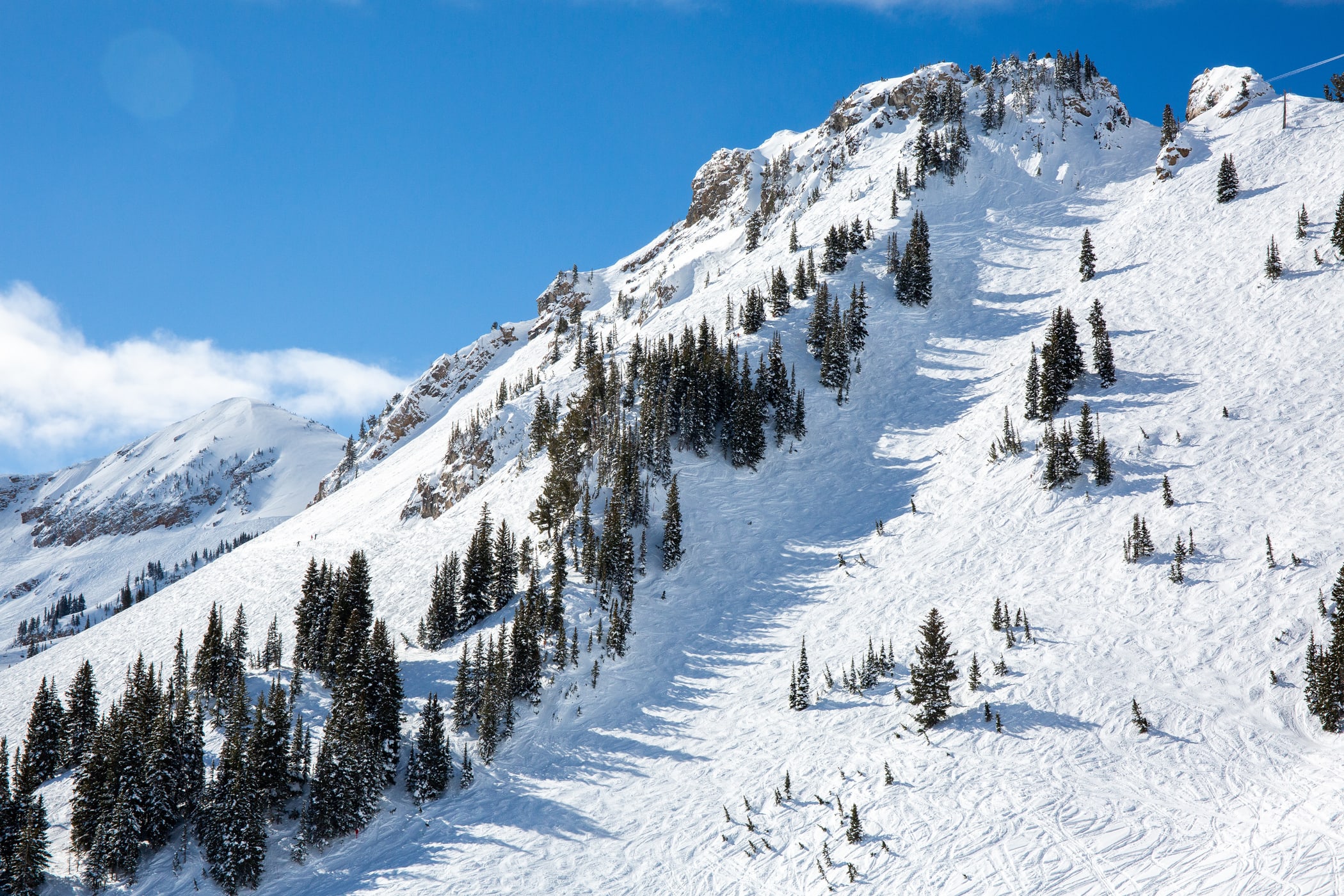
Looking down the barrel of Gunsight | Photo: Iz La Motte
In true Alta fashion, to experience our second-most-famous expert run, you'll need to mentally prepare for a bit of steep sidestepping. To locate this gem, stick to the highest line along the High Traverse from Collins lift while maintaining your glide and momentum. Look for a red ski patrol sign marking the sidestep track leading up and over the ridge near a bulky spire of rock. The sidestep is quite steep so many skiers need to catch their breath before completing the scramble. Creeping around a final corner of the sidestep will bring a dizzying view of the tight notch that guards the run's entrance.
A geological fact that may have escaped your notice is that Gunsight, Main Chute and Snowbird's Pipeline Couloir all appear to line up and comprise a vein of softer rock that erodes more quickly than the surrounding rock. Before you drop in, take a look behind you and see if you can see how Main Chute on Mount Baldy compares.
The confining entry gated by buttresses of rock and the 45-degree slope unfurling beneath you will make you question your sanity. Remind yourself that there’s no time like the present and proceed with caution. The angle mellows gradually as you proceed down Gunsight's apron, but your legs won’t get a break until the broad bowl at the very bottom.
4. EDDIE'S HIGH NOWHERE
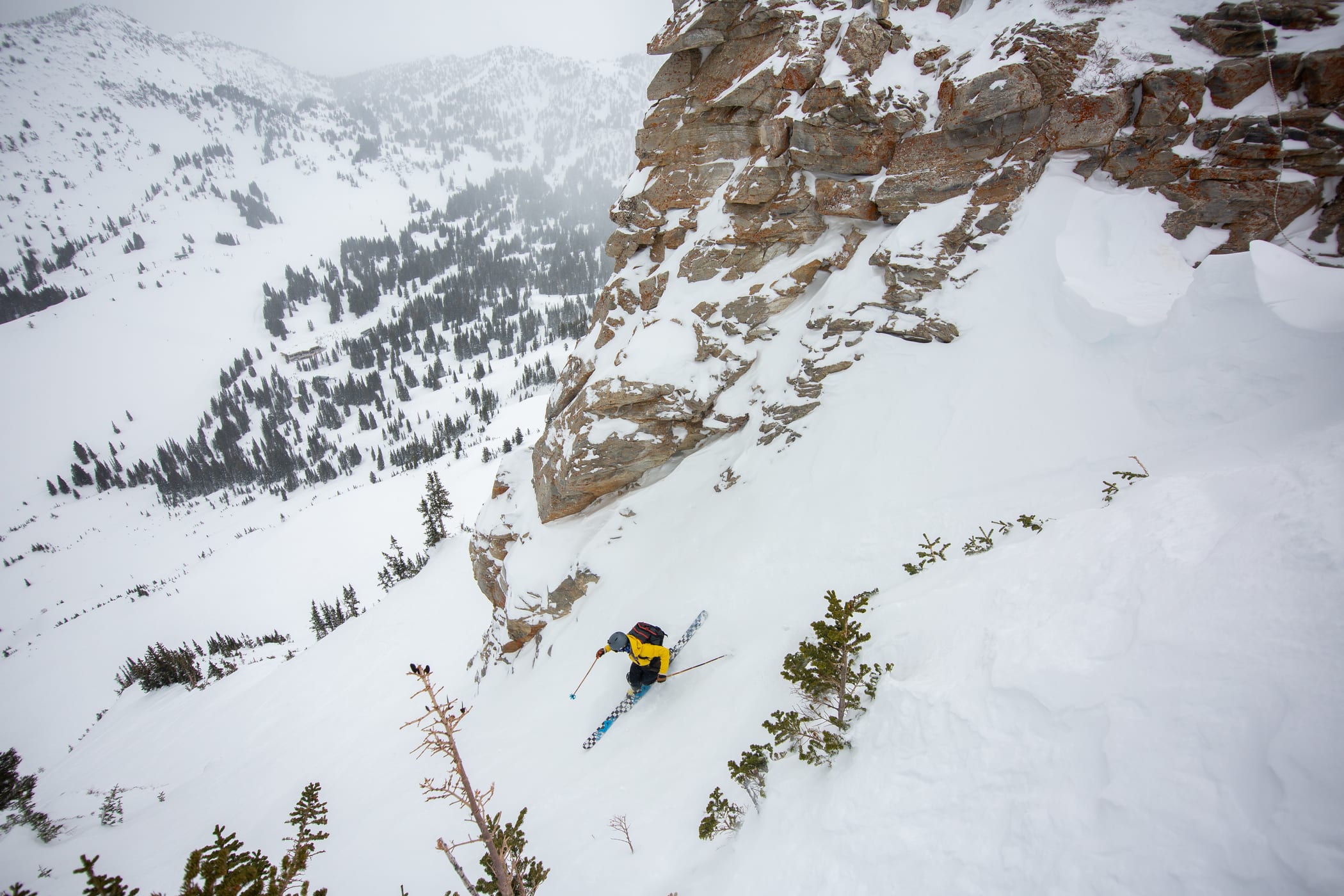
"Tele Tay" Johnson drops a knee in the entrance to Eddie's High Nowhere | Photo: Rocko Menzyk
For even more thrills, check out Gunsight's lesser-known neighbor—Eddie's High Nowhere. The run earns its name from Eddie Morris, an Alta ski instructor who would reply “Nowhere” when asked where he was hiking off to; Eddie's son Johnny is a veteran Alta ski patroller today, The approach to Eddie’s requires a rope assist and a steep bootpack. Along the highest line of the High Travers, skiers will encounter a little exposure when grabbing an anchored rope to gingerly navigate around a corner of cliffside. Next up, a steep bootpack to reach the tight entry slot between outcroppings of rock.
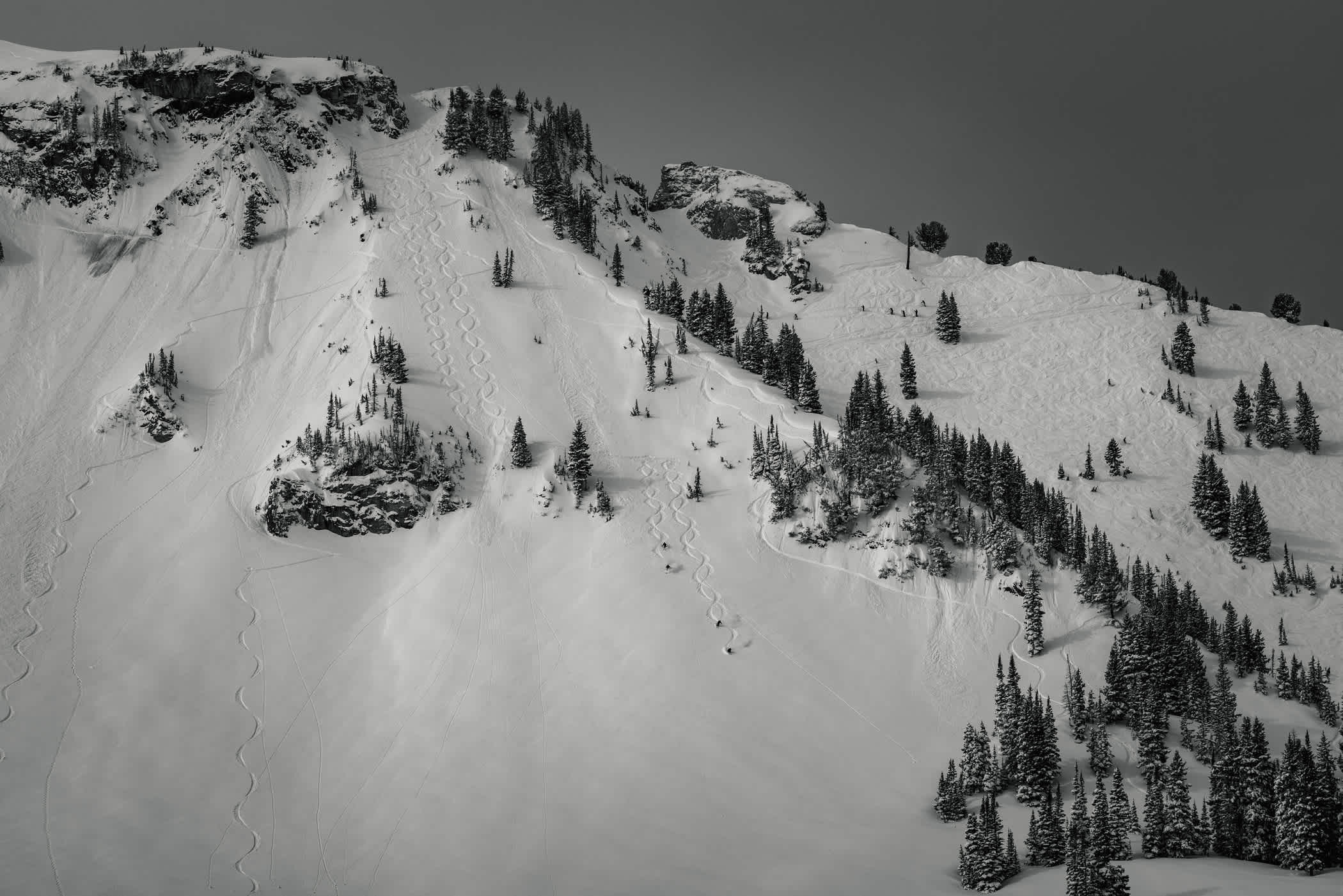
Trace the powder 8s to find the hidden entrance to Eddie's High Nowhere | Photo: Rocko Menzyk
All options below Eddie’s steep entrance feature pitches of 40 degrees or more of sustained fall-line. If you can keep your cool in the crux up top, you’ll be rewarded with a huge bowl that harbors incredible untracked powder turns after a storm. Keep an eye out to the skier's right for a sizable cliff band called Pyramid Rock. Alta Ski Patrol confirms that this line contains one of the longest and most consistent fall lines that can be skied all the way down to Little Cottonwood Creek. The closest equivalent option would be the far wall of Devil's Castle—both require a commitment and a sense of adventure to achieve.
5. BALDY CHUTES
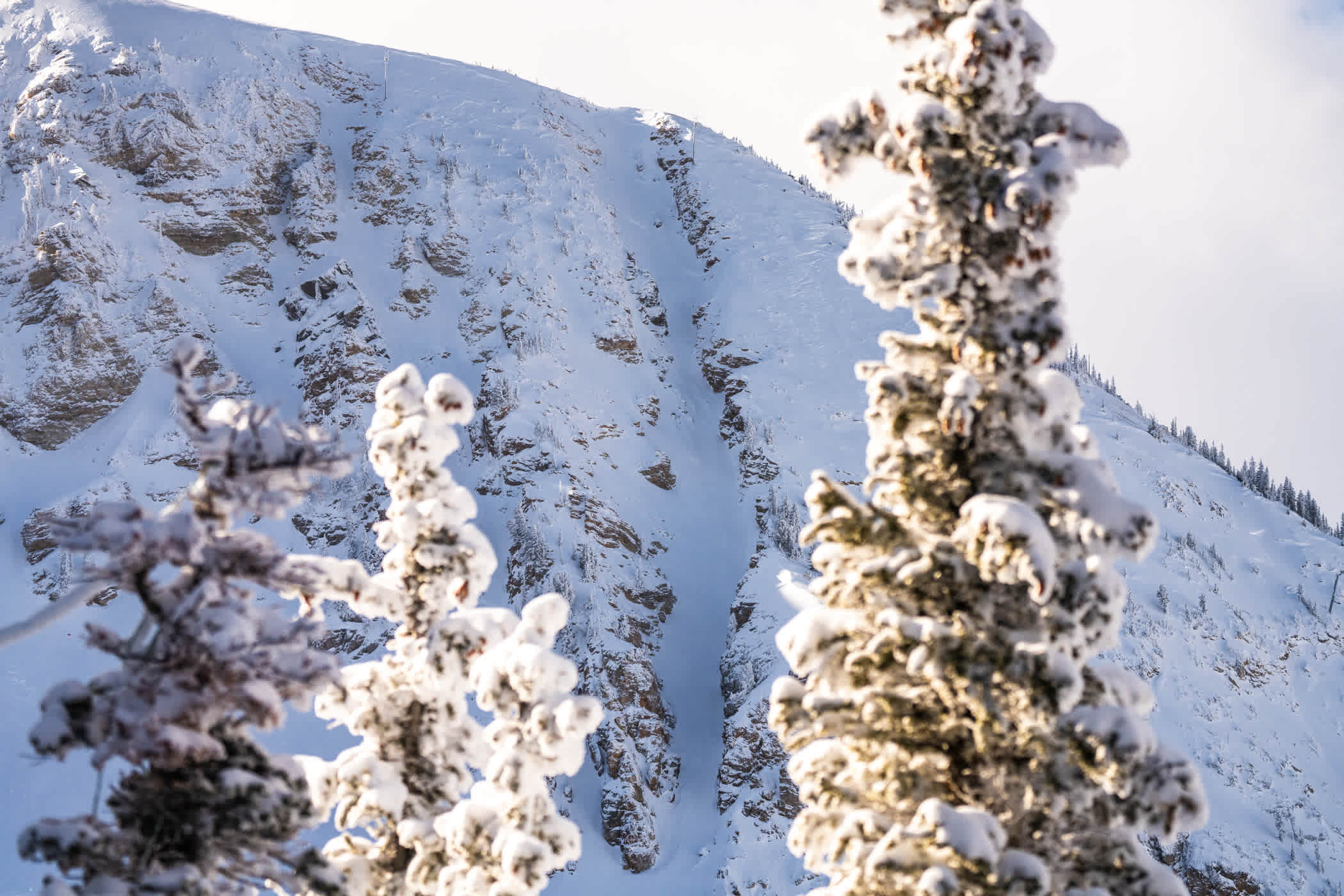
The amazing Baldy Chutes | Photo: Tyler Struss
If you commit to hiking the Baldy Chutes, the commitment needs to be rock solid. Bailout options don't really exist and you need to have a high degree of confidence in your steep skiing comfort before embarking on the lengthy hike to reach Alta's highest summit. The amazing Baldy Chutes are a series of flumes that plummet from the precipitous 11,068-foot summit of Mount Baldy. Depending on fitness, a hike to the peak via a steep bootpack can take between 20-45 minutes. The summit view of the surrounding Wasatch Range is unforgettable, but that panorama won’t be as memorable as your first peep into Main Chute plunging down below your ski tips.
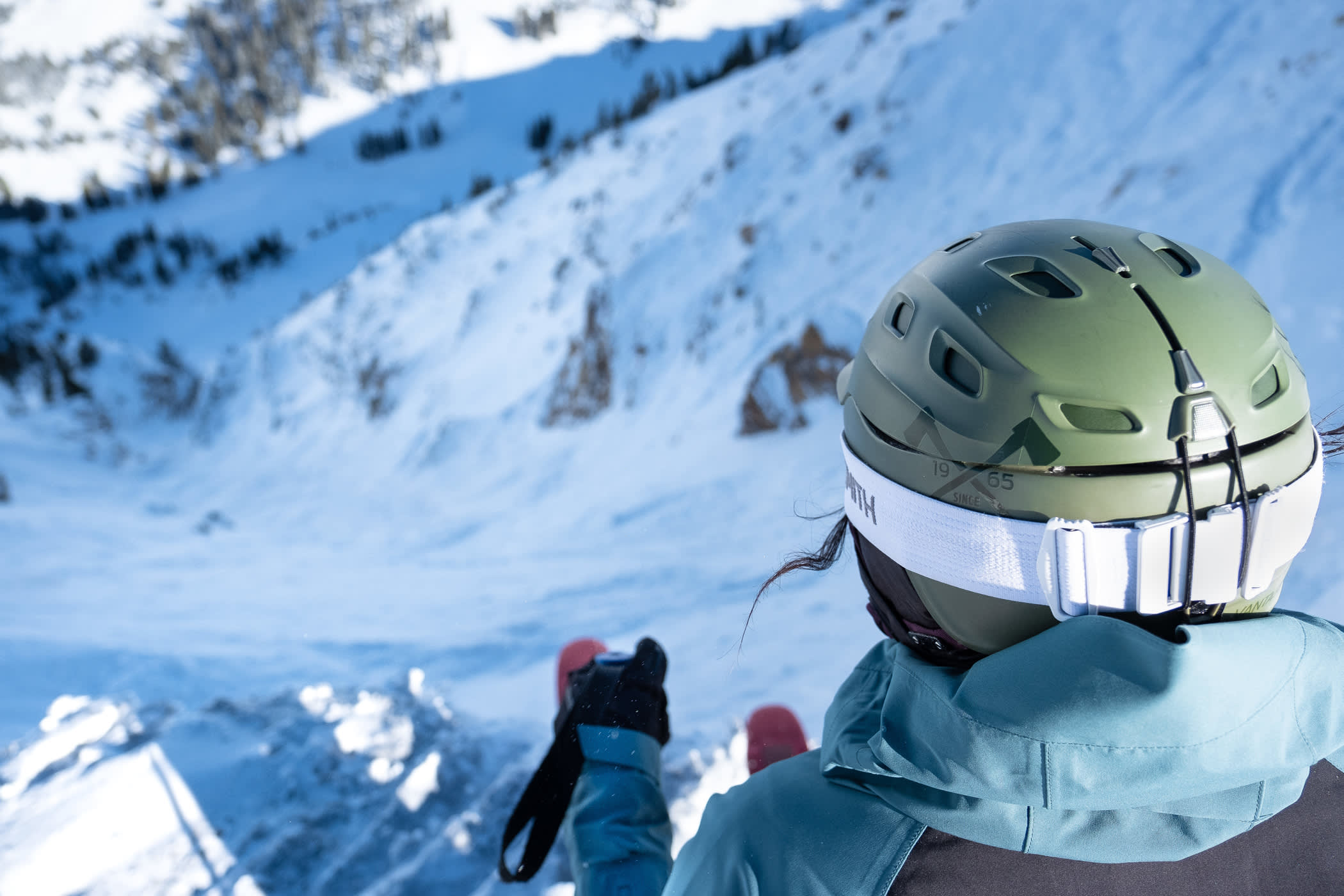
No way down but down when it comes to Main Chute| Photo: Iz La Motte
From the top of the Sugarloaf lift, the red ski patrol sign is visible to the right of the Snowbird access gates. A terrain opening for Baldy Chutes is dictated by snow conditions, weather forecast and avalanche hazard. The steepest portions of the bootpack are encountered early in the hike. If you’re already gasping for air, that’s not unusual—just keep heading up and the path will mellow out and meander before the final summit push.
The Alta Ski Patrol will specify which runs are open from the top of Mount Baldy on the informational sign and map at the start of the bootpack. For the safety of yourself and others, all closures must be obeyed. The crown jewel is Main Chute, a screamer that hits 44 degrees in places. Main Chute is typically the "easiest" chute for reaching the gentler slopes of Ballroom below. However, it’s not uncommon to find skiers taking pause to collect themselves before the daunting drop in. The view and the realization of what lies ahead leave many a skier breathless before they embark on the descent.
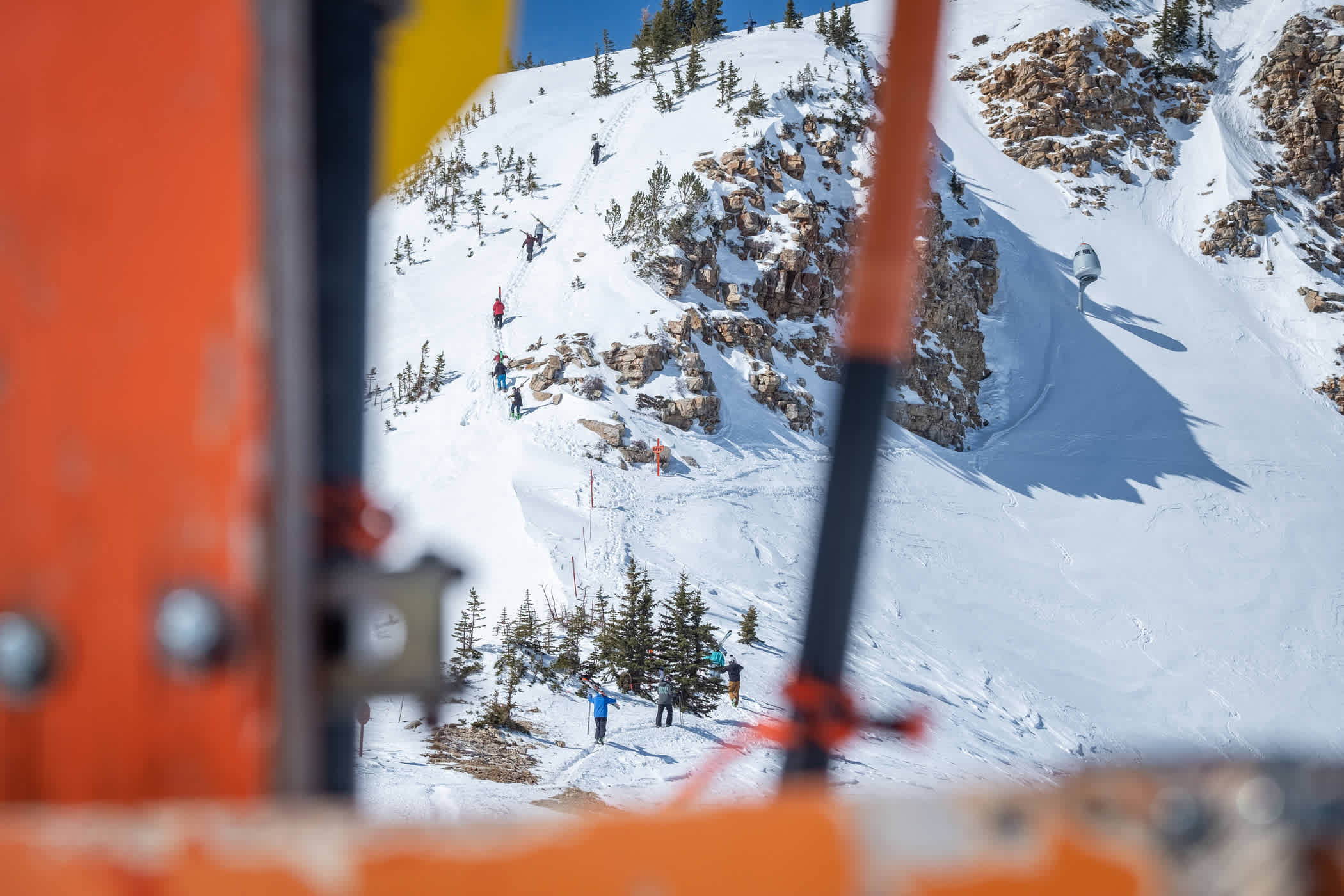
The steepest portions of the Mount Baldy bootpack are near the start| Photo: Iz La Motte
Though Main Chute remains steep throughout, the crux is a narrower section of the couloir in the top third of the chute that feels notably narrow in winters with low snowpack. Once you've passed through this choke, the pitch is slightly more forgiving and you can open up your turns to embrace the unique sensation of big couloir skiing. When exiting the chute, watch for other skiers and be prepared to navigate uneven terrain as you cross the Ballroom Traverse. If you find you simply cannot face Main Chute and the Baldy Shoulder is open, that's an alternate route down via the skier’s far left beyond Main Chute. Note that wayfinding through Baldy Shoulder can be difficult and there are rocks, cliffs and unmarked hazards in the area. All of Mount Baldy's terrain is rated for expert skiers and it is not appropriate for skiers who lack confidence in steep terrain.
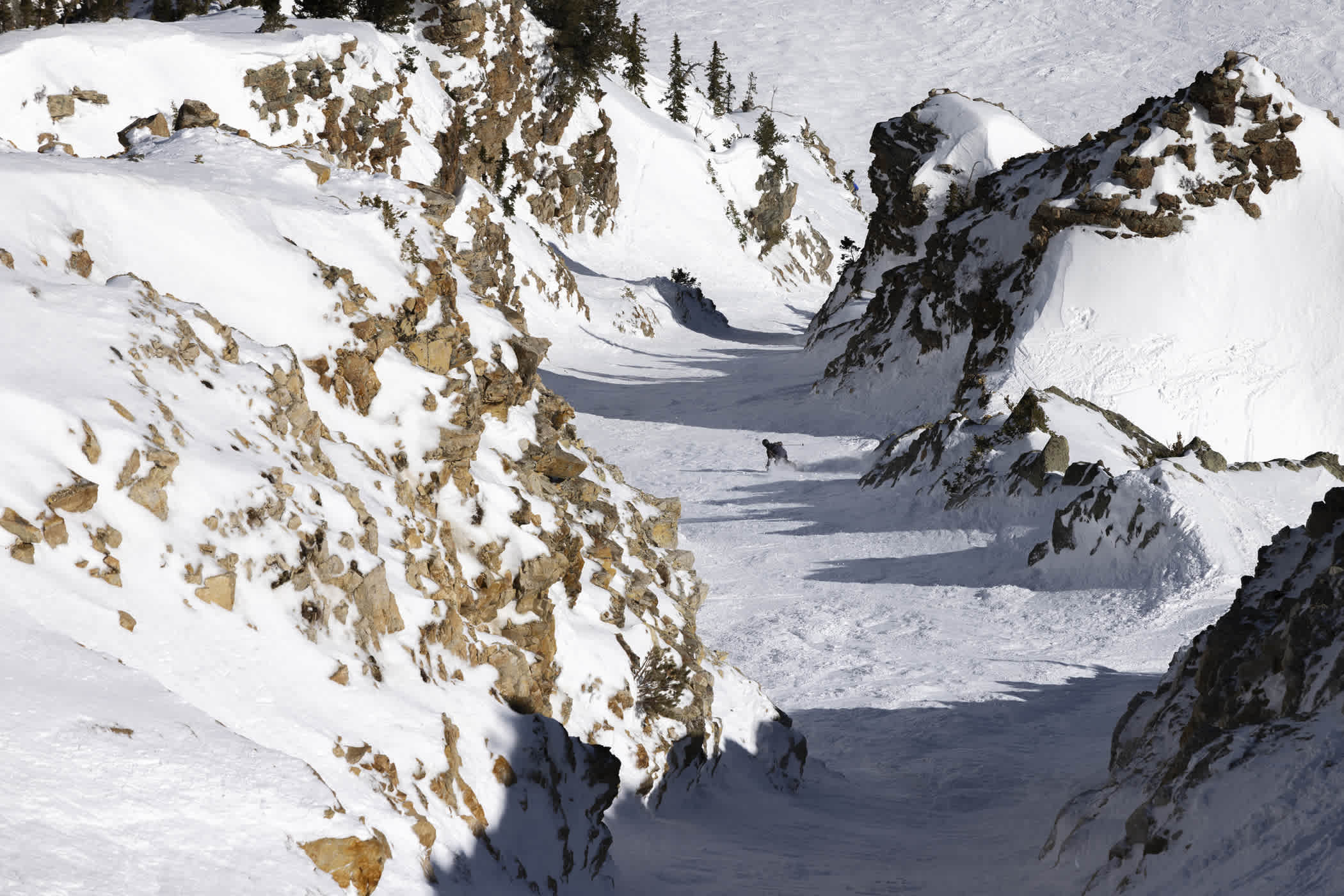
Trust us, it's steeper than it looks | Photo: Rocko Menzyk
Other couloir options from the top of Mount Baldy include Little Chute or Dog Leg, where the turns are both tighter and more technical. If your lungs and legs are up to the task, multiple Baldy laps are the ultimate test of fitness and endurance. For the best shot at fresh snow, keep an eye on the reader boards at the base of each lift to monitor terrain openings. The terrain off Mount Baldy is only offered when avalanche hazard is low and typically when skies are clear during a weather pattern of high pressure and sunshine following snowpack settlement after a storm cycle.
6. CECRET CHUTES
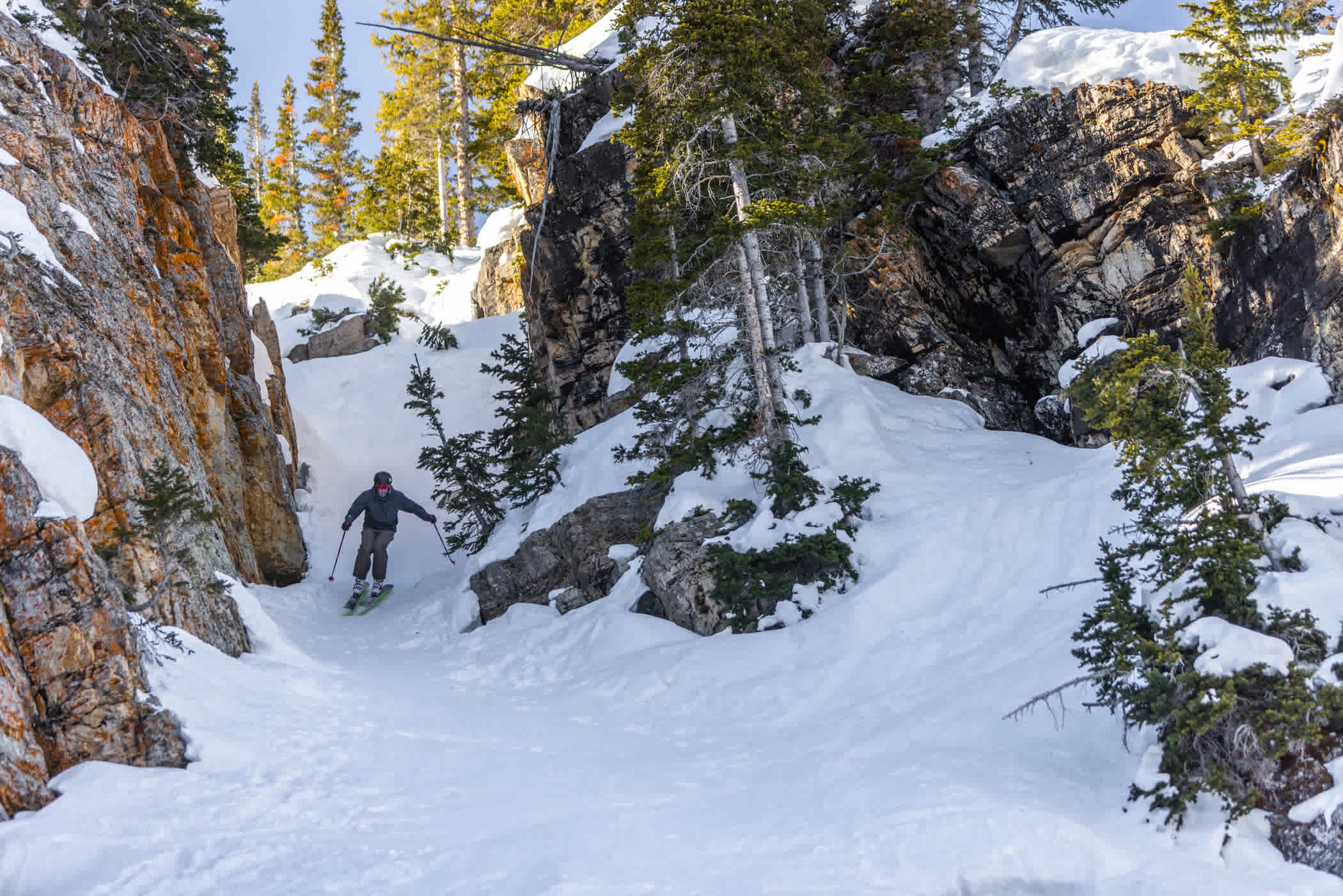
Turner Barbour threads a tight line in the Cecret Chutes | Photo: Rocko Menzyk
Most skiers embark on the arduous Devil’s Castle sidestep in the quest for premium, untracked powder. They remain unaware of the opportunity to tack on some tight chute skiing after the main event. The Cecret Chutes are located at the bottom of Devil’s Castle. Expect exposure, cliffs and some chutes so tight that a straightline is mandatory. Chutes like Bat Cave and Elevator aren’t long, but the pucker factor is high.
To find the Cecret Chutes, you’ll warm up your hip flexors with a little sidestepping into the Devil’s Castle area via the access gate near the top of Sugarloaf lift. Be warned, the farther you sidestep out, the easier it will be to access Cecret Chutes. Make sure to mark the cliff band that lies to the right of where Cecret Lake would reside in the summer months. Bear right and find the chute that suits your style. Named after the world-famous Cecret Lake, the Cecret Chutes are a great way to bookend a memorable run in Devil's Castle.
7. EAST CASTLE
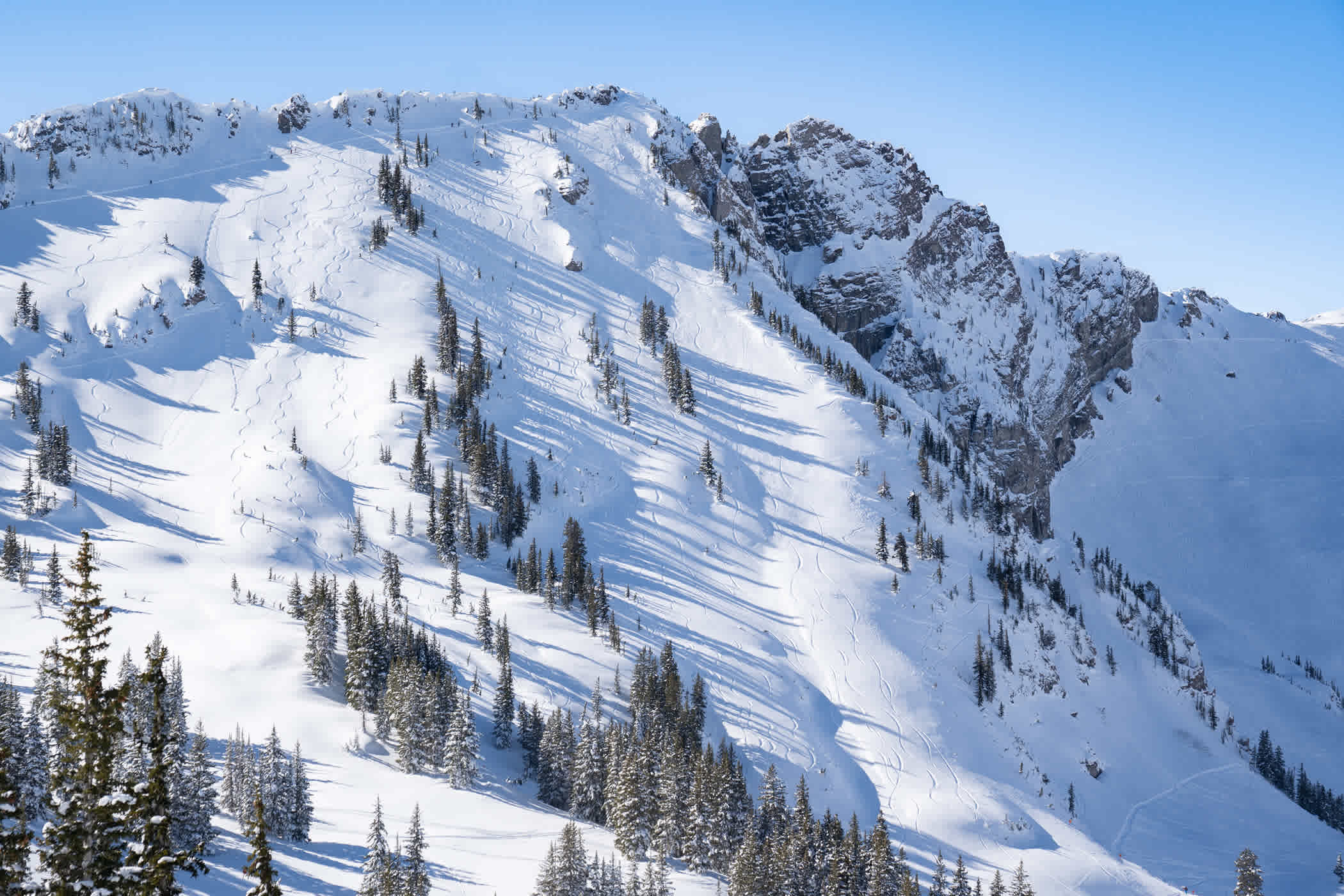
It's a sidestep stairway to heaven to find the longest, steepest lines up top | Photo: Chloe Jimenez
To experience a side of Alta that most skiers seldom achieve, the East Castle awaits. The wide-open slope is a great alternative to the mellow pitch of the more commonly skied Devil's Castle. Located to the looker’s right of Supreme lift, the East Castle offers nicely spaced lanes and a consistently steep pitch. Skiers must commit to a lengthy sidestep from the saddle below Supreme lift and on up the endless rampart that forms East Castle. This rarely open terrain zone practically guarantees fresh powder when Ski Patrol drops the rope after a storm. The sidtestep alone deters all but the most dogged of skiers.
The sidestep will require around 30-45 minutes of upward shuffling to complete Alta's longest, hardest approach. Skiers experiencing shortness of breath will have the option to bail early and drop in at any point before reaching the height of the pinnacles of Devil's Castle. Those with a stout left hip flexor will find the steepest and longest lines looming from the top, just around the corner from the Devil’s Castle apron.
8. SPINEY CHUTES
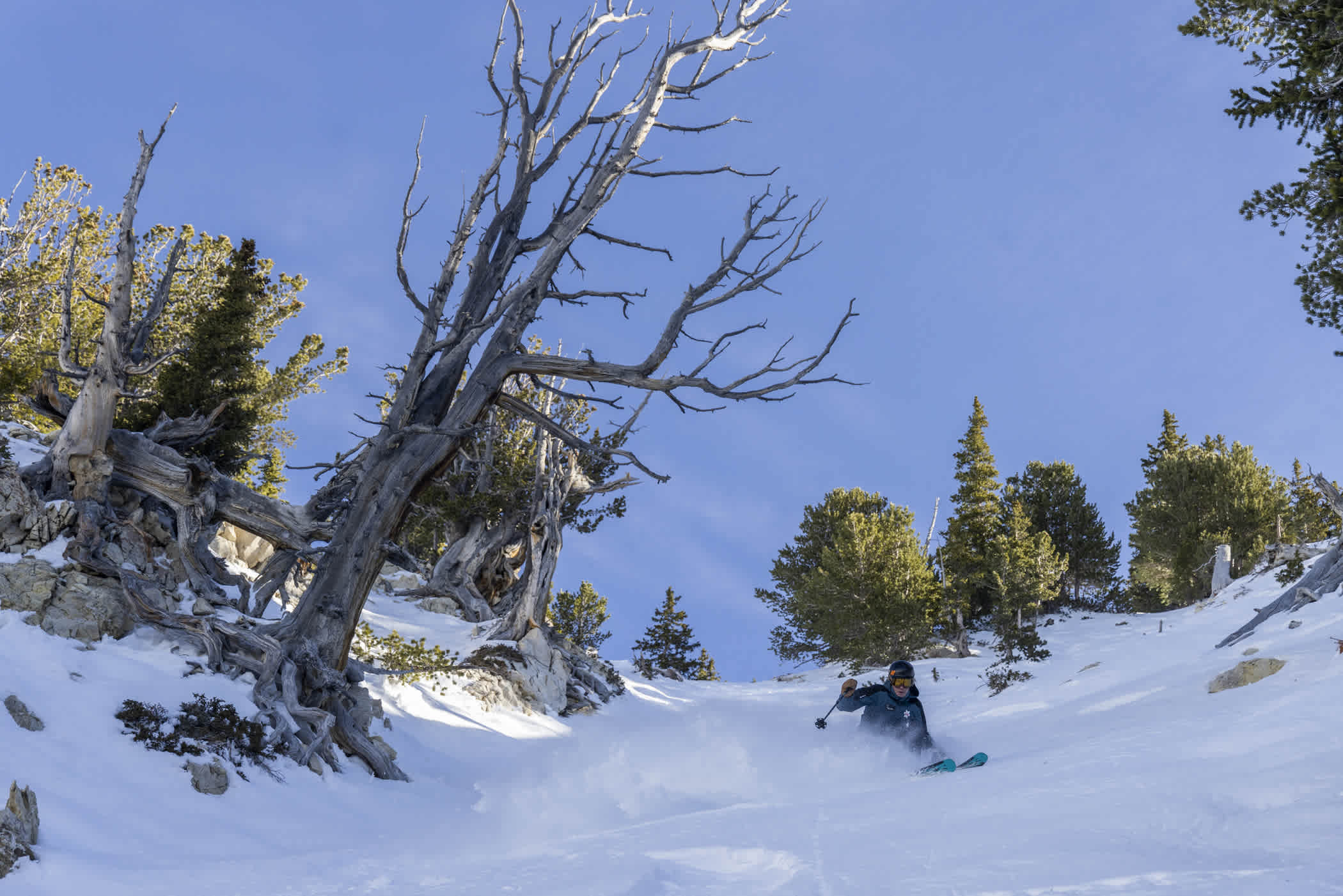
Threading between ancient limber pines makes Spiney Chutes a memorable one | Photo: Rocko Menzyk
Upon unloading Supreme lift, many Alta skiers shuffle up the bootpack and traverse out to the furthest reaches of Catherine’s area with a single-minded focus. However, the commute to Catherine’s passes by a densely packed series of gullies known as the Spiney Chutes that an expert skier shouldn’t miss.
When open, the Spiney Chutes pack a quick, steep punch with intimidating sight lines down their flanks. Gnarled limber pines stud their rocky buttresses and the blonde crags broadcast the siren’s call of pure adrenaline. The view down canyon toward Mount Superior has the power to stop you in your tracks, so take it all in before dropping in. If it’s your first time in Spiney Chutes, we recommend scoping your line and memorizing landmarks to the looker's left as you ride the Supreme lift. The entrances are steeper than 40 degrees and require linking a few tight turns before opening up in the lower reaches of the Back Forty.
To get there, take Supreme lift and after bootpacking to reach the traverse, you’ll look for the left entry gate toward Back Forty and So Long. Before reaching So Long, head down the spine of the ridgeline and pick your poison.
Add Your Comment