
Preserving the Alta Magic for Generations to Come.
Our Mission Is Sustainability
The Alta Environmental Center (AEC) was established in 2008 to guide Alta Ski Area’s sustainability efforts and to protect the natural environment in which we operate. Alta is situated at the very end of Little Cottonwood Canyon on 2,500 acres of National Forest Service Land—operating under a special use permit granted by the United States Forest Service (USFS) in 1938. Under this agreement, we collaborate closely with the USFS and various stakeholders to achieve shared management goals of the forest.
What Is Sustainability?
Sustainability is a broad term that is often perceived as meaning cutting emissions, planting trees, changing light bulbs, carpooling and recycling. While each of these actions are practical and necessary, we believe that sustainability encompasses much more than just a series of individual actions and initiatives.
Think of sustainability like the pistons in an engine—essential components that help it function, but not the whole machine. The engine is designed to move us forward, powered and driven by our entire organization—from leadership to operational staff and influenced by the community. Our responsibility is to ensure that this engine can take us where we need to go today without limiting where future generations can go tomorrow. The goal is not to drive until the wheels fall off, but to maintain what we are building thoughtfully and deliberately so that it remains strong, dependable and something we can proudly pass on.
Our approach to sustainability is based on three key components: environment, community and economics. For a business to be genuinely sustainable, these three elements must be balanced. We are acutely aware that a healthy ecosystem is the foundation for both a thriving community and a strong economy. These components drive us to prioritize the protection and restoration of the natural mountain environment, to serve as a resource for our community and to minimize our environmental impact with long-term sustainability initiatives and resource efficiency.
Climate change presents both challenges and opportunities for us to shape the future of Little Cottonwood Canyon. With support from local and national communities, we strive to address the environmental impacts of recreation, transportation and operations in the canyon. Locally, we engage with our community through year-round educational programs and stewardship events in partnership with local nonprofit organizations. On a national level, we participate in the National Ski Area Association’s (NSAA) annual Climate Challenge—which keeps us accountable to our commitments, measures our progress and encourages us to learn from and inspire others in the ski industry. This report outlines the actions we’re currently taking, the progress we’ve made and where we see opportunities for growth and innovation.
Energy Efficiency
Alta strives to be energy-efficient in a way that supports economic viability while minimizing our environmental impact. Due to our high elevation, extreme weather patterns and an average of 548” annual snowfall, the basic models of energy efficiency don’t always apply to our energy use. To implement efficiency initiatives, we must think creatively and collaborate with others—internally and externally—to find a way to tailor efficiency models to fit our unique operations.
Our Impact
Each year, we measure our carbon emissions to identify our emission sources and their quantity, hold ourselves accountable and provide operational transparency. This data serves two primary purposes: to report our annual emissions to the NSAA’s Climate Challenge and to make informed climate initiative decisions.
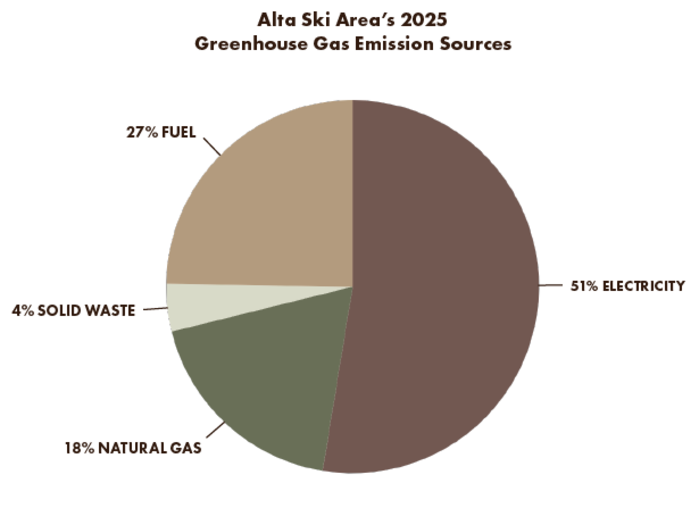
The ski area’s emissions rise and fall each year depending on how much energy we use—but the source of these emissions remains primarily the same. Electricity is consistently our largest emission source because it powers essential operational systems such as lifts and snowmaking. Our second-largest source is fuel used in grooming equipment and vehicles, which can vary with snowfall and terrain coverage. Lastly, natural gas used to heat buildings and run kitchen appliances accounts for our third-largest source. Visualizing the distribution of emissions by source makes our investment path clearer: the greatest opportunities for meaningful reductions lie in the areas that reliably represent the largest share of our carbon footprint. The following are different energy efficiency initiatives implemented to leave greener tracks on our slopes.
Sustainability In Action
As a business that depends on snow, it is crucial for Alta to pursue initiatives that continuously reduce our greenhouse gas emissions. Given Alta’s extreme and unique environment, some of our emissions are beyond our control—therefore, we focus on the changes we can influence. By measuring our emissions, we can identify areas where we can take action and drive meaningful change. The following highlights ongoing, successful sustainability initiatives that Alta has implemented.
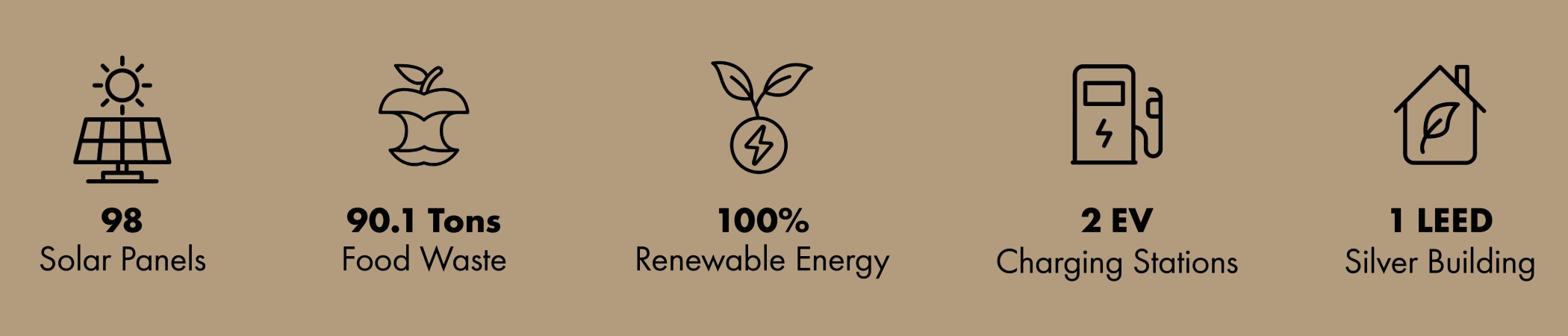
100% Renewable Energy match
More than 50% of Alta Ski Area’s annual greenhouse gas emissions come from electricity that is used for running lifts, powering buildings and snowmaking—all of which are essential to operating a ski area. Unfortunately, electricity emissions are largely beyond our control, as our provider, Rocky Mountain Power (RMP), ultimately decides which mix of energy sources goes into the power grid. Currently, that mix contains a majority of coal, renewable energy and then natural gas—listed respectively by their contribution size.
While we continue to urge RMP to transition away from coal-generated energy, Alta demonstrates our desire to expand renewable energy on the grid by participating in RMP’s renewable energy program—the Blue Sky Program. Since January 2022, Alta has committed to matching 100% of its annual electricity consumption with renewable energy by purchasing renewable energy credits (RECs) at a premium price. The Blue Sky program creates a larger market for renewable energy in Utah and funds local renewable energy projects to support community-based projects across the state.
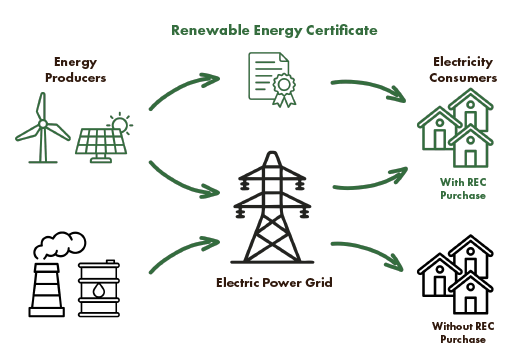
Electricity is produced by various sources—from coal power plants to wind farms—which are mixed into the electric power grid and then transmitted to homes and businesses. Since power from many different sources is mixed into the grid, it’s impossible to identify the exact source of the electricity you receive. So, how can the ski area ensure that the power Alta uses comes from renewable resources?
First, you must understand what a REC is. Each REC represents one megawatt-hour of energy that has been generated by a renewable source and delivered to the power grid. Once the REC has been created, it is paired with a unique identification number and can only be purchased once. This ensures that the renewable power generated is not double-counted and purchasers can legitimately claim 100% renewable electricity. If you do not own the REC, you cannot claim the renewable attribute—which is why RECs are essential for emissions accounting and compliance. By purchasing RECs, Alta is contributing revenue that supports the growth of renewable energy projects in Utah and increases the demand for renewables in our power grid.
This initiative has helped reduce our carbon footprint by approximately 3,567 metric tons of carbon dioxide annually.
Ski Pass Recycling
Picture this: It’s a powder day and you’re eagerly waiting to load the Collins lift when “front row” is called. You confidently shuffle up to the gates to scan your pass, but then you hear the dreaded sound of rejection. Awkwardly, you shimmy and fumble through your pockets only to find your Alta day pass sandwiched between an Alta card from last week, a two-year-old Mountain Collective and a zero-balance gift card from grandma. What do you do now? Keep your current pass in a pocket by itself but don’t toss those old cards in the trash—think greener!
This winter, Alta Ski Area is recycling retired plastic ski passes. Most of these cards cannot be reused and are typically sent from the slopes to a landfill, where they will remain indefinitely. Instead, Alta will send the collected passes to TerraCycle where they will be transformed into new materials, such as playgrounds and gym flooring.
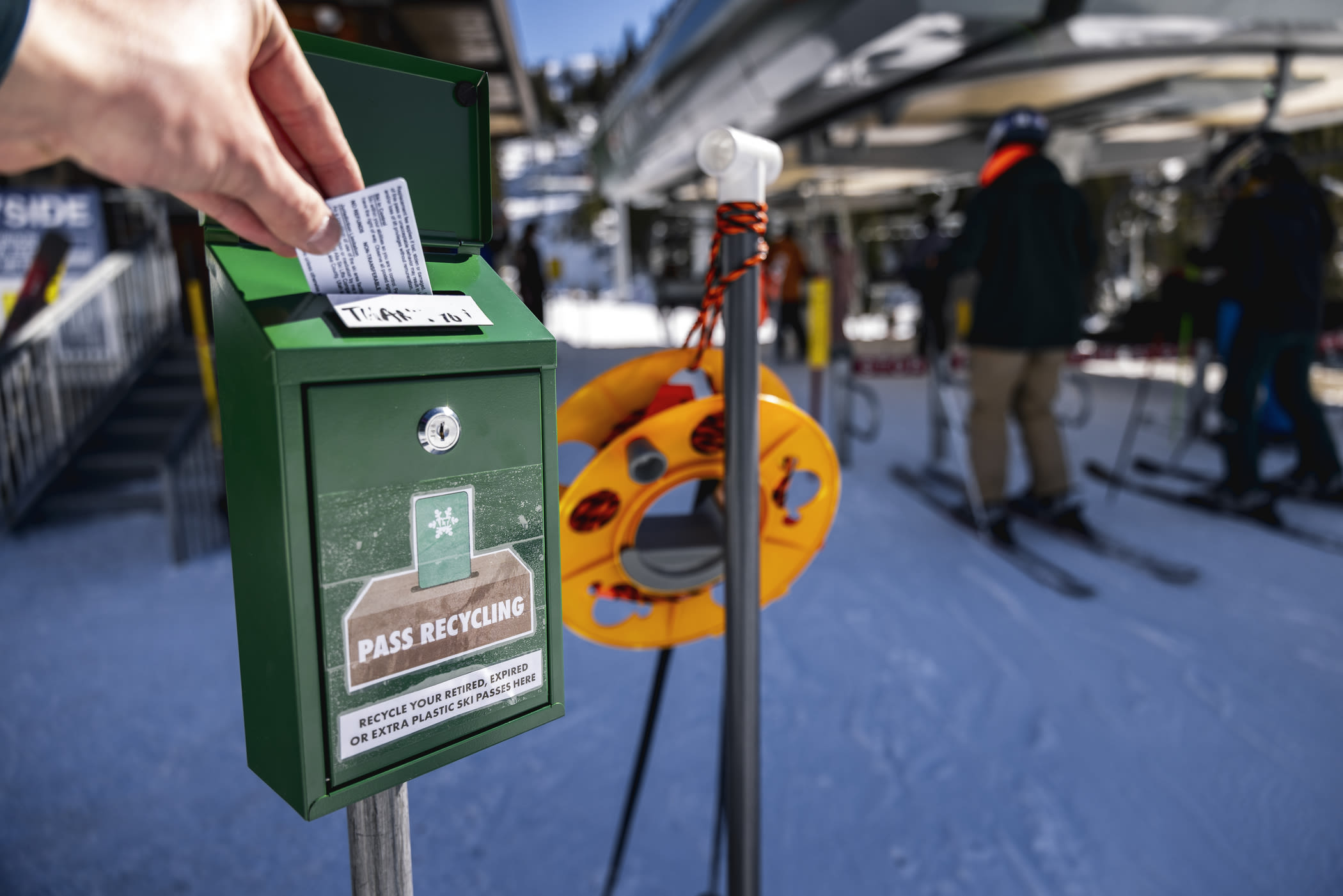 Green pass recycling box at the base of the Collins lift | Rocko Menzyk
Since the start of the pass collection pilot program in February 2025, we have collected an average of 30 pounds of used ski cards per month—during ski season. By weighing these passes, we’re gathering data to help us track the amount of plastic waste that ski cards really produce and find ways to reduce it. So, the next time you’re at Alta, give your Alta card a second chance by reloading it online or in person. If you find an old pass, drop it in our pass recycling boxes at the base of any lift or hand it to an employee. Thanks for helping us keep plastic out of the landfills!
Solar Panels
In 2015, Alta partnered with Rocky Mountain Power and DwellTek to further its commitment to renewable energy by installing 98 solar panels at three key locations: Collins Patrol Shack, Cat Shop and the Buckhorn employee housing building.
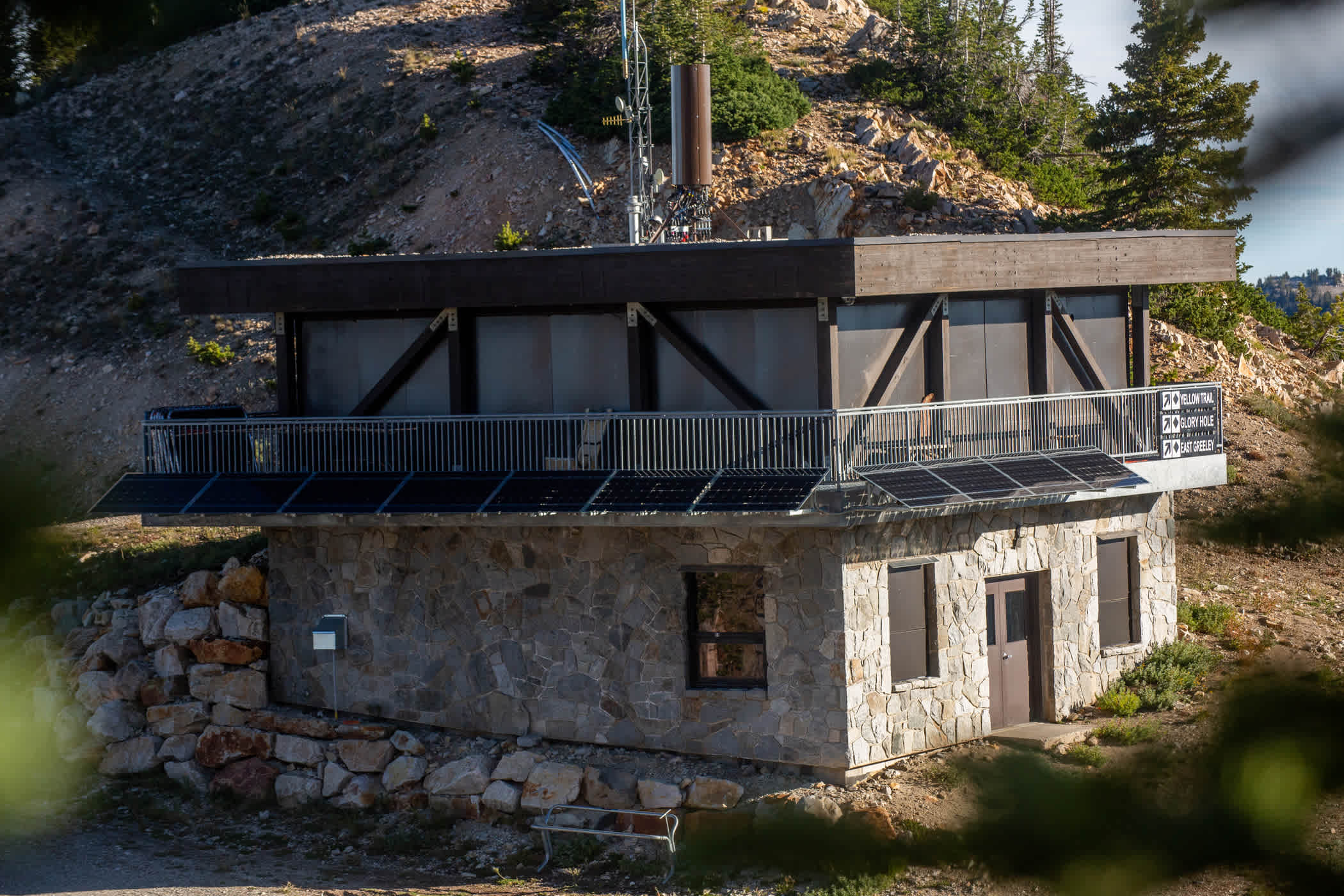 Solar panels on the top of the Collins Ski Patrol Shack | Photo: Rocko Menzyk
These solar arrays were strategically placed to maximize sun exposure and operational efficiency while generating clean, renewable electricity year-round. The energy produced powers essential mountain operations and employee housing—reducing reliance on conventional energy sources and lowering emissions. The solar panels offset approximately 126 tons of carbon emissions annually, equivalent to planting 3,238 trees each year.
Renewable Diesel
Renewable diesel is a product made from organic feedstock and is chemically identical to petroleum diesel created from crude oil. It is an attractive option not only for its emissions reductions, but also because it does not require any modifications to machinery. Last summer, Alta piloted renewable diesel in our heavy machinery with seamless results. This success encouraged us to expand the pilot program into this winter. If renewable diesel is fully adopted, Alta’s fuel emissions could be reduced up to 70%. However, to prevent gelling in cold temperatures, it needs to be mixed with some petroleum diesel, estimating an emissions reduction of approximately 30–50% during winter. This pilot is currently ongoing and we look forward to reporting back at the end of the season.
Food Waste Collection
In the spring of 2019, Alta Ski Area launched a pilot program to collect food waste from its three food and beverage locations. That first spring, Alta employees collected five-gallon buckets filled with food waste and transported them to Wasatch Resource Recovery (WRR) each week. At WRR, the collected food waste is be processed through a large-scale food digester—converting the organic material into bio-gas for heating homes and nutrient-rich fertilizer for farming.
After four months, the pilot program successfully diverted a total of 6,400 pounds of food waste from landfills. However, the program was temporarily halted in 2020 due to COVID-19. The AEC used this break in the program as an opportunity to plan logistical improvements and expand collection in the future. The program was relaunched in 2021 in collaboration with Snowbird and Momentum Recycling to ensure more efficient and sustainable transportation of food waste from Little Cottonwood Canyon to WRR by coordinating our pick-up times to limit the amount of travel in the canyon.
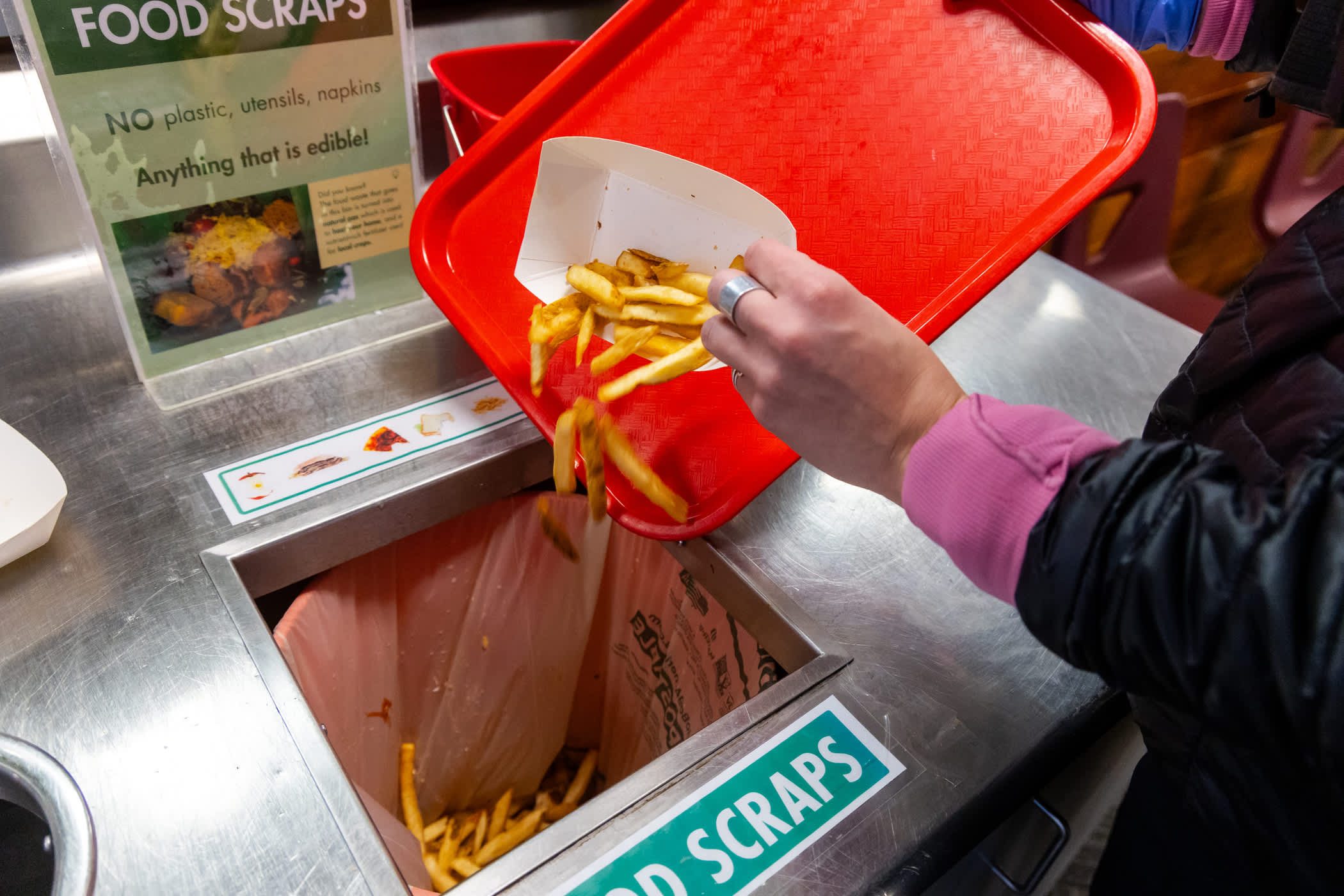 Throwing away food scraps at the Albion Grill | Photo: Photo-John
Why is it important to divert food waste from landfills? Food waste accounts for nearly 30% of our landfill waste. When organic material is buried in a landfill, it begins to decompose in an anaerobic (oxygen-free) environment. Without oxygen, the decomposing food produces methane gas, which escapes into the atmosphere. When the organic material decomposes naturally in an aerobic (oxygen-rich) environment—such as a compost pile—it releases carbon dioxide. This type of release is a normal process in the lifecycle of carbon in nature. Methane and carbon dioxide are both greenhouse gases. However, methane has a global warming potential 80x higher over a 20-year span than carbon dioxide.
From March 2021–December 2025, Alta diverted over 180,000 pounds of food waste to WWR
Diverting Alta’s on-site food waste allows us to make tangible impacts on our greenhouse gas emissions. We are also contributing to local renewable programs with the creation of natural gas and fertile soil. The goal of this program is to make our operations more circular, minimize our environmental footprint and give back to our community in meaningful ways.
Land Conservation
Creating a sustainable future for Alta requires work, well beyond energy efficiency and traditional sustainability practices. It requires that we plan for and understand the impacts of changes we make to this alpine ecosystem. That’s where the AEC’s conservation crew comes in.
Restoration in the Mountains
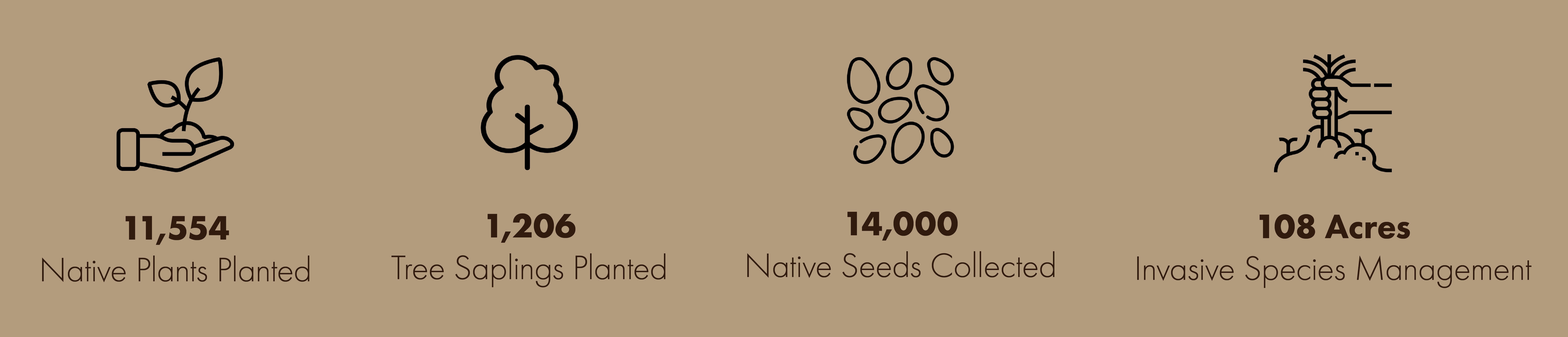
To ensure that the ski area protects and improves the land on which it operates, a strict restoration protocol is followed. Any disturbance to the soil—such as the construction of a new lift, the installation of a snowmaking line or the regrading of a slope—triggers the AEC’s land disturbance protocol. In such cases, the affected areas are designated as restoration zones, which the AEC carefully evaluates, restores and maintains. The protocol is to plant 1,000 native plants per acre of disturbed land for three consecutive years.
The process begins with a plant inventory and identification of the community types present on site. Any tree saplings within the project zone are harvested and relocated. Collaboration with the operations crew helps minimize the impact of heavy machinery tracking whenever possible. Once project work has been completed, a native seed mix is hand-cast and protected by a natural geotextile fabric laid over the site to prevent erosion and to provide shade and temperature control for the seeds. The AEC then follows up by collecting native seeds near the project area to be grown over the winter and spring. These seedlings serve as establishment vegetation, initiating the restoration process. Active planting and monitoring occur for three years after disturbance. If a site requires more specific tailoring and attention, the necessary care is provided.

Healing The Headwaters: Wetland Mitigation
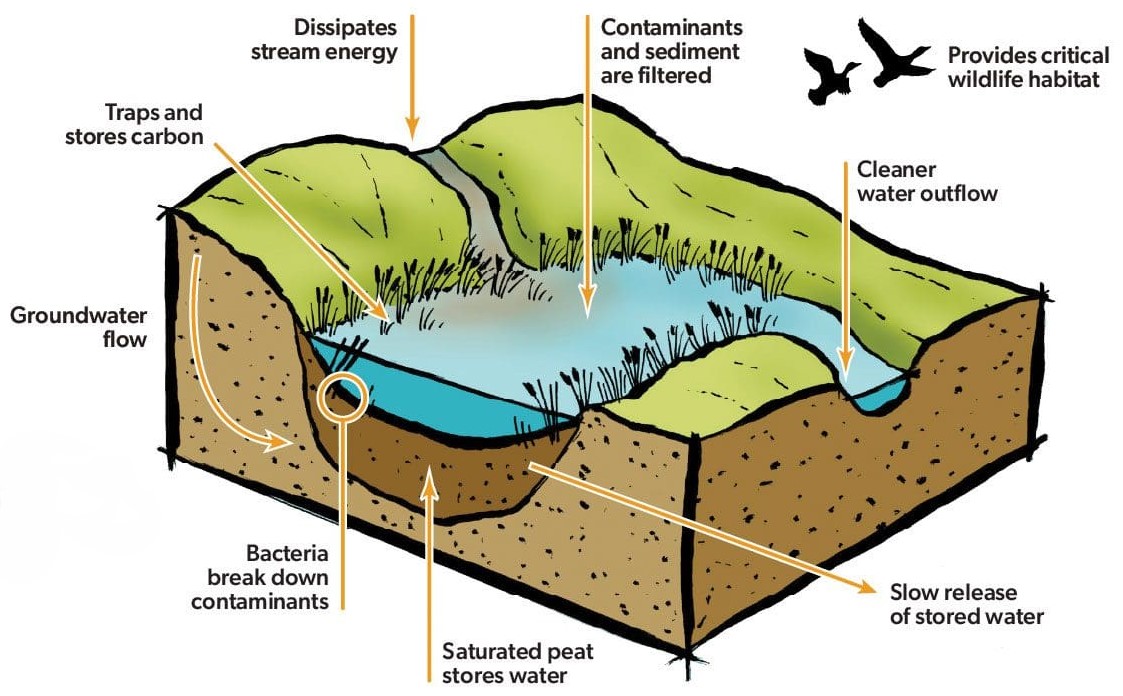
For ski areas, wetlands aren’t just ecological features—they function as natural infrastructure. When healthy, they help protect roads, parking lots and trails, reduce erosion and maintenance issues and support downstream water quality.
What Are Wetlands?
Wetlands are places where water sticks around long enough to become their own ecosystem and shape the landscape around them. That may look like water pooling on the surface or seeping slowly through the soil and moving through groundwater into streams and channels. This prolonged presence of water creates unique soils that support plants adapted to being wet. In mountain watersheds, wetlands act like sponges. They soak up snowmelt and heavy rains, slow down waterflow and gradually release it downstream. This helps keep streams cleaner, cooler and provides a more reliable water supply later in the year.
Resilience and Infrastructure
At Alta, resilience is not only about protecting the environment—it is about enhancing natural infrastructure so ecological systems can perform essential functions. These functions include providing flood control, cleaning and transporting water, creating fire breaks and establishing wildlife refugia. Rather than over-engineering these systems, the focus is on providing the conditions necessary for them to sustain themselves. This approach is known as process-based restoration, which prioritizes restoring natural processes—such as water movement, sediment transport and vegetation growth—rather than forcing a fixed outcome. This method enhances resilience and reduces long-term maintenance needs.
Wetland Mitigation
In 2019, Alta expanded a base-area parking lot, permanently impacting a small amount of wetland habitat. As required by the US Army Corps and Salt Lake City Public Utilities, Alta completed a wetland mitigation plan with a 3-to-1 net gain in wetland habitat. Rather than creating isolated replacement sites, Alta chose to improve existing wetlands and restore their processes. The following case studies describe the restoration process of three major wetland sites: Bend, Berm and Cecret.
Bend Lot
The Bend Lot is a popular parking area for summer visitors, located at the end of the Summer Road—formerly the base of the old Supreme lift. When the infrastructure was removed in 1981, it left a degraded ditch that provided little ecological or operational value. Hydrologically, a small stream flows into the ditch, briefly pools and then passes through a culvert into Little Cottonwood Creek. In winter, this area functions as a low-grade groomed run in the Supreme area that requires a significant amount of man-made snow to fill.
The goal of this project was to raise the ditch elevation by lining the basin with native topsoil, peat moss and organic material to create soil capable of holding water. Much of the organic material came from the Berm Excavation site mentioned next. Shallow channels were added to slow and meander incoming flow—allowing water to infiltrate the soil, support wetland plants and move gradually through the culvert. Native plant transplants and willow cuttings that were sourced from nearby wetlands were used to jump-start revegetation. Cost and extent of disturbance were both reduced by reusing on-site materials.
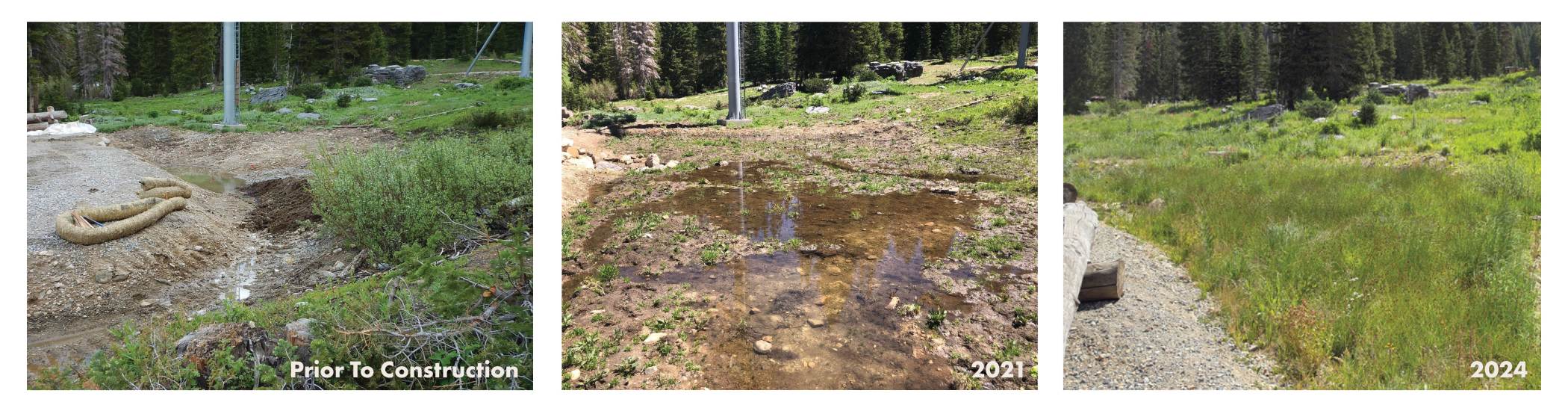
The result is a functional wetland that improves water quality, flood control, wildlife habitat and early-season skiing. The area now requires less man-made snow and improves aesthetics at a major public access point.
Berm Excavation
The Berm Excavation project is located in the Albion Fen, a ten-thousand-year-old wetland in the Supreme area. A three-foot-tall berm—believed to be an 1800s mine tailing remnant—ran through the wet meadow, disrupting hydrology and wetland vegetation. To restore the hydrologic connectivity of the meadow, our strategy was to remove the berm to allow the system to recover and expand.
Because wetland soils are highly sensitive, equipment access was carefully planned. The perimeter of the berm was marked with Recco chips the summer before and excavation occurred immediately after ski season. Snowstat was used to guide machinery over the snow to locate the buried Recco chips and minimize soil disturbance while excavating the berm down to ground elevation. The excavated material was reused at the Bend Lot and final grading was completed later by hand. Wetland plants and grasses were transplanted from the surrounding wet meadow and mulching in the fall helped retain moisture.
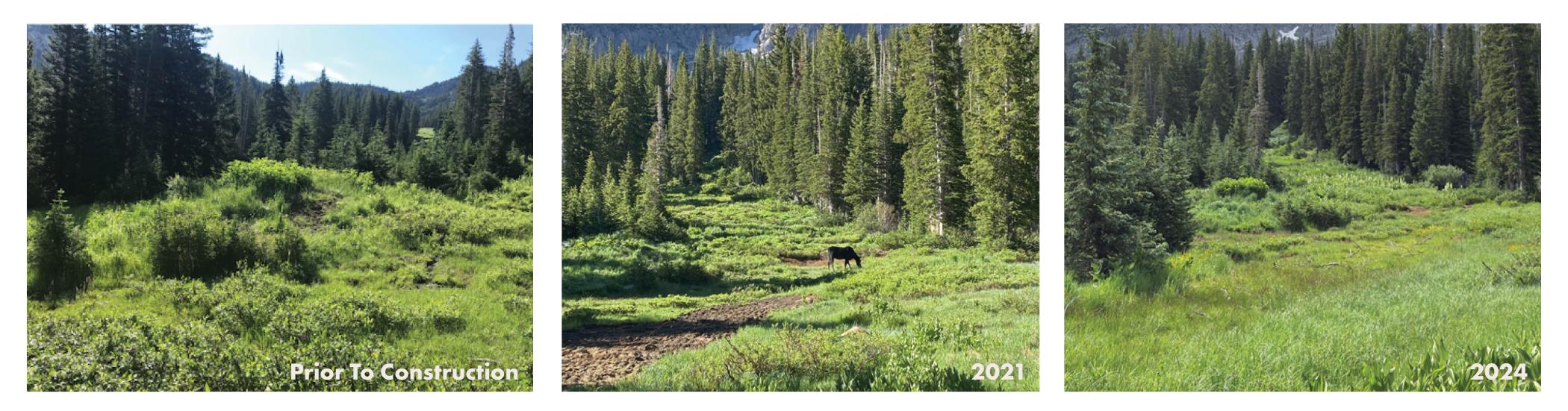
Removal of the berm restored hydrologic connectivity and strengthened the fen’s long-term resilience, allowing natural processes to function more effectively. Careful timing of operations and reuse of materials minimized impact and cost through coordinated project implementation.
Cecret Lift Road
The Cecret Lift Road is a former service route to the retired Cecret lift terminal. Maintenance vehicles previously crossed directly over a stream to access the terminal, resulting in channel degradation and erosion. During peak flow, water spilled out of the channel and eroded the steep access road. Addressing this site required eliminating the source of degradation—vehicle crossings—and reinforcing the streambank.
To fix this problem, the water flow was temporarily rerouted while the channel was reshaped during the driest point of the season. A gentle curve was added and the banks were reinforced with rock and native wetland plants before water was reintroduced. The channel slope naturally flattens here, providing an opportunity to further slow water for better soil saturation.
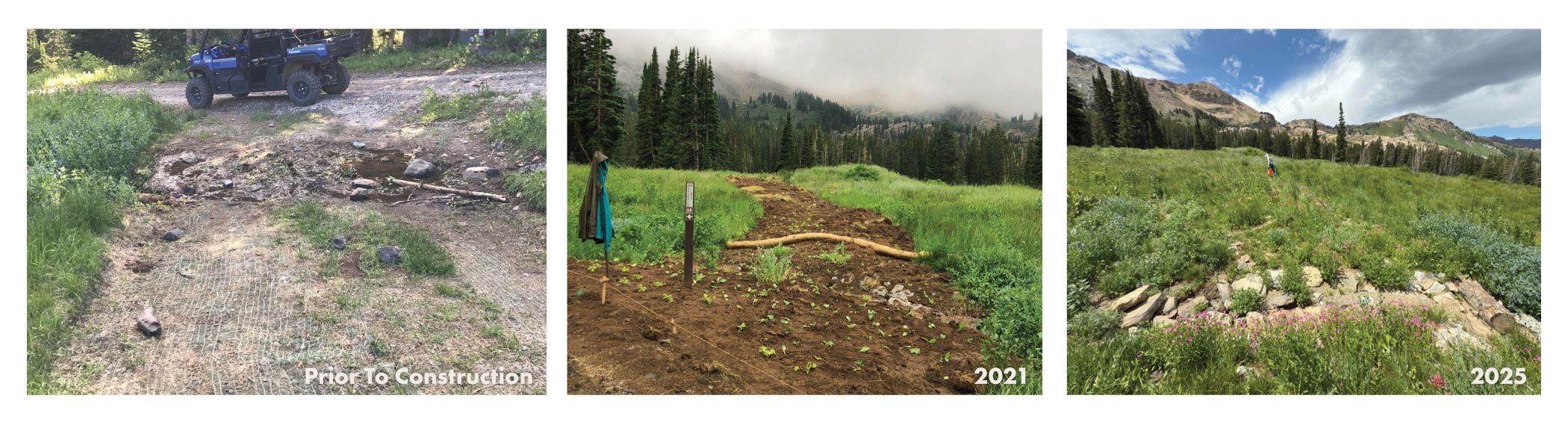
The result provided recovery of riparian vegetation, improved downstream water quality and the elimination of an ongoing road maintenance issue.
Community Outreach
Alta is renowned for its world-class powder skiing in a natural mountain environment, but what truly sets it apart is its small yet vibrant community that has kept the stoke alive since 1938. This community is made up of diverse individuals from all walks of life who, despite their differences, share a common bond: skiing. Our passion for the great outdoors has fostered a community of stewards dedicated to protecting, educating and celebrating the place we call home.
It is the AEC’s responsibility to act as a resource for our community by promoting sustainable initiatives through various partnerships and stewardship opportunities. Additionally, we work to foster environmental education and research through internal and third-party collaboration.
 These accomplishments are a collaborative effort with our non-profit partners and community organizations
Summer Stewardship
We learn best through hands-on experiences and there’s no better way to gain knowledge about our environment than by spending a day in the mountains. In addition to our educational events, we invite volunteers to participate in various restoration projects throughout the summer. This summer, we hosted 28 stewardship and educational events, joined by a total of 2,240 participants.
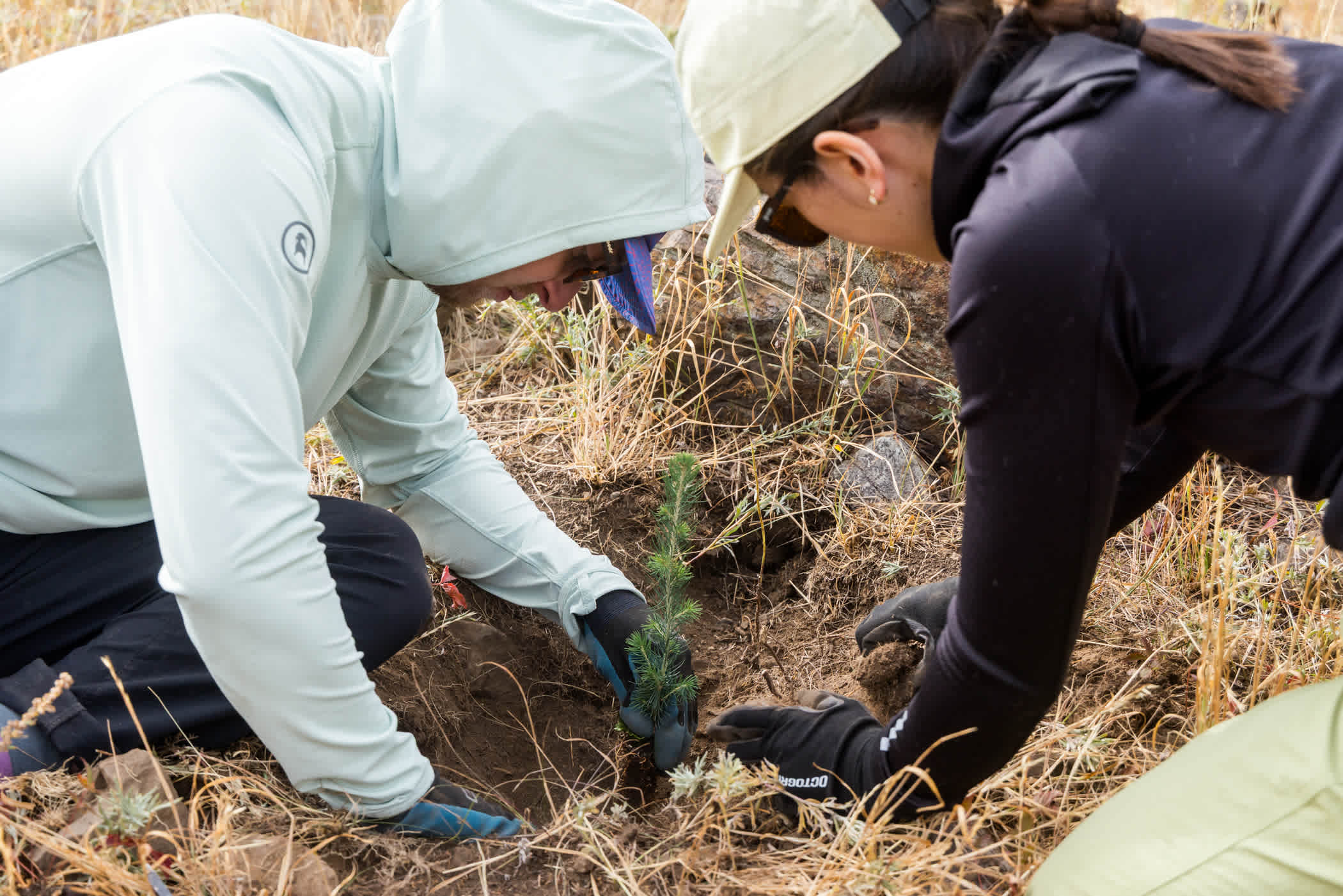
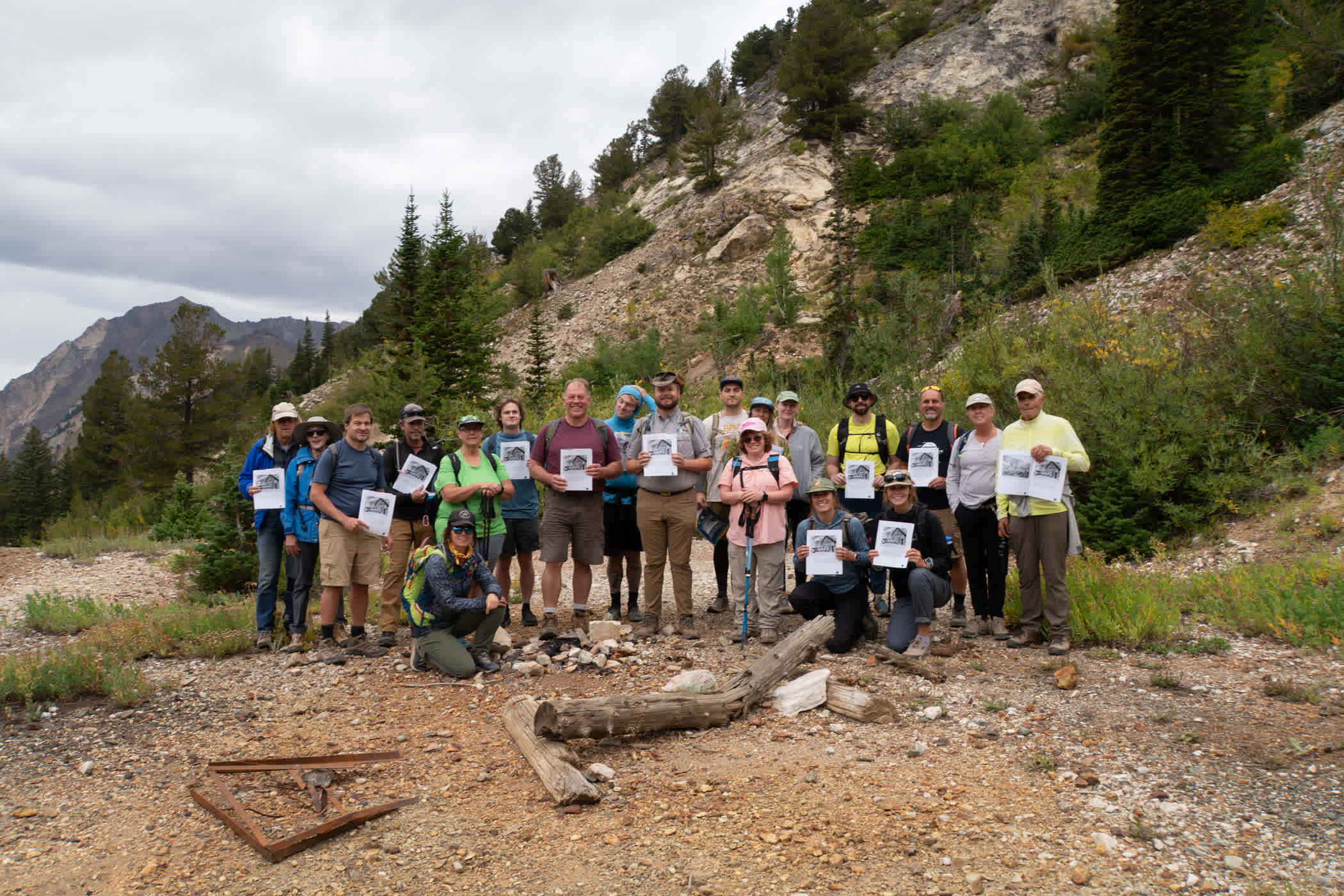
Left: Historic Mining Hike with UCSS | Photo: Adam Fehr – Right: Tree Planting Day with TreeUtah | Photo: Photo-John
Winter Education
Topics related to the environment can often feel overwhelming or intimidating. Our goal is to bridge the gap between our community and environmental education by offering fun and interactive learning experiences for recreators of all ages, backgrounds and abilities. With the support of our non-profit partners, we host weekly events on the slopes for skiers and snowshoers. People can join experts to learn about Alta’s ecology, geology, wildlife, history and more. This winter, we hosted 32 educational events joined by a total of 430 participants.
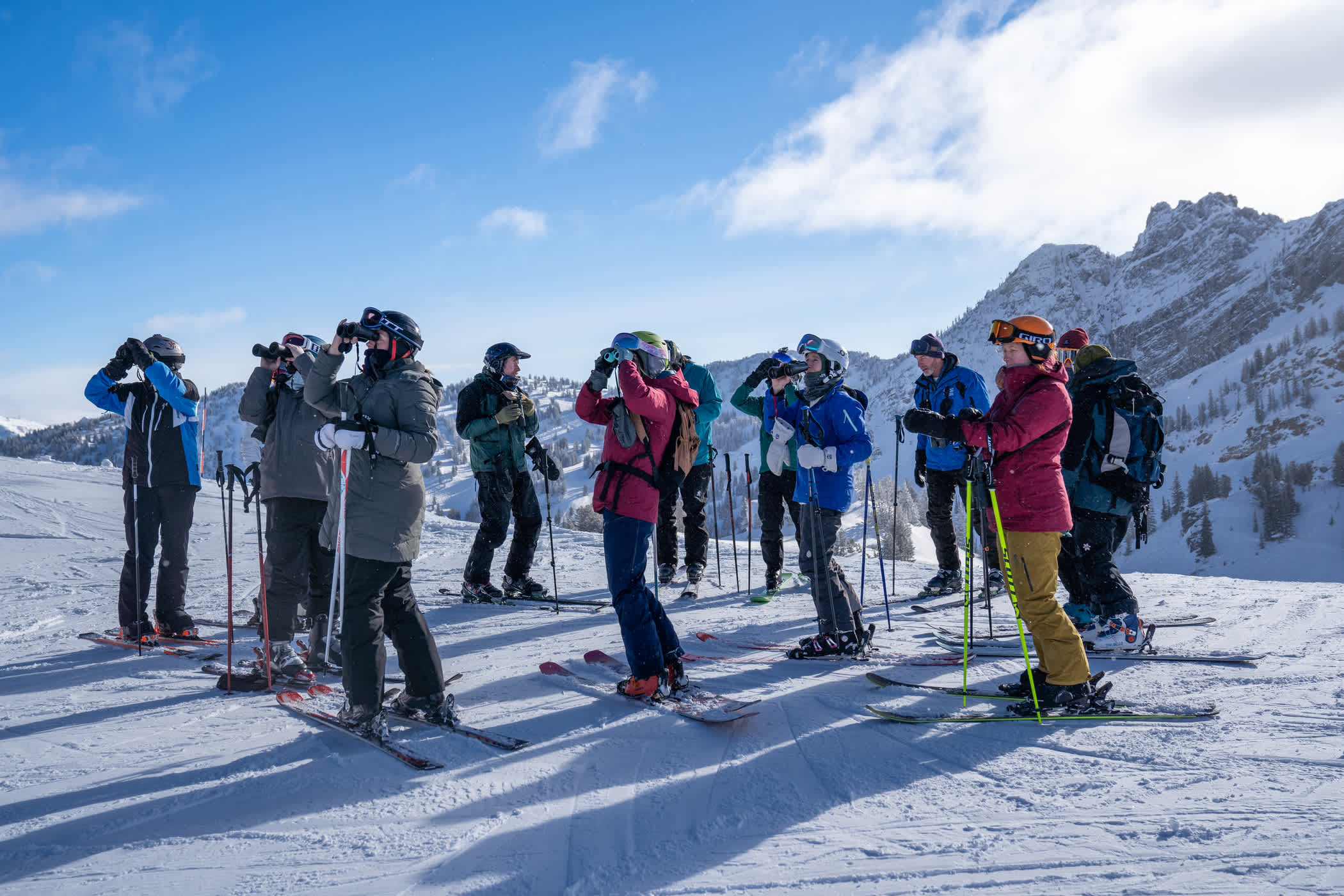
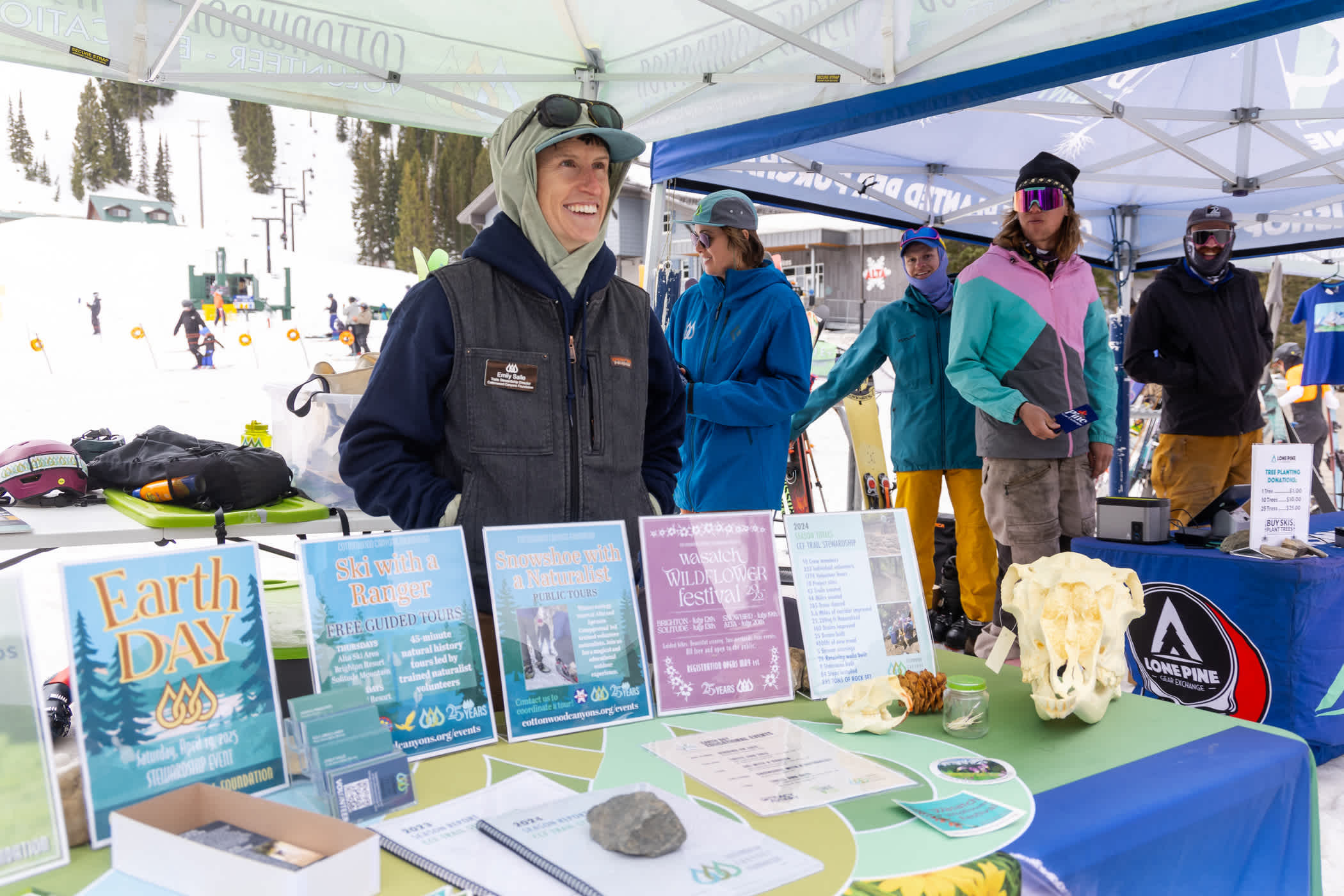
Left: Birding on Skis | Photo: Chloe Jimenez – Right: Alta Earth Day 2025 | Photo: Photo-John
Our goal is to provide a unique opportunity to learn something new and develop a personal connection to the land.
All hands on deck
Change starts at home. Every winter, 600 dedicated employees from around the world come together in Alta. Their ideas and stewardship drive the AEC’s sustainability initiatives—because meaningful change happens when everyone takes part.
Employee Conservation
During the summer months, most of Alta’s employees leave the Wasatch to embark on their next seasonal journey around the world. The small group of summer employees who remain are spread across Alta’s 2,500 acres—working tirelessly behind the scenes to help protect, preserve and improve the ski area during the off-season. To foster camaraderie with Alta’s summer crew, the AEC hosts three Employee Conservation Days each summer.
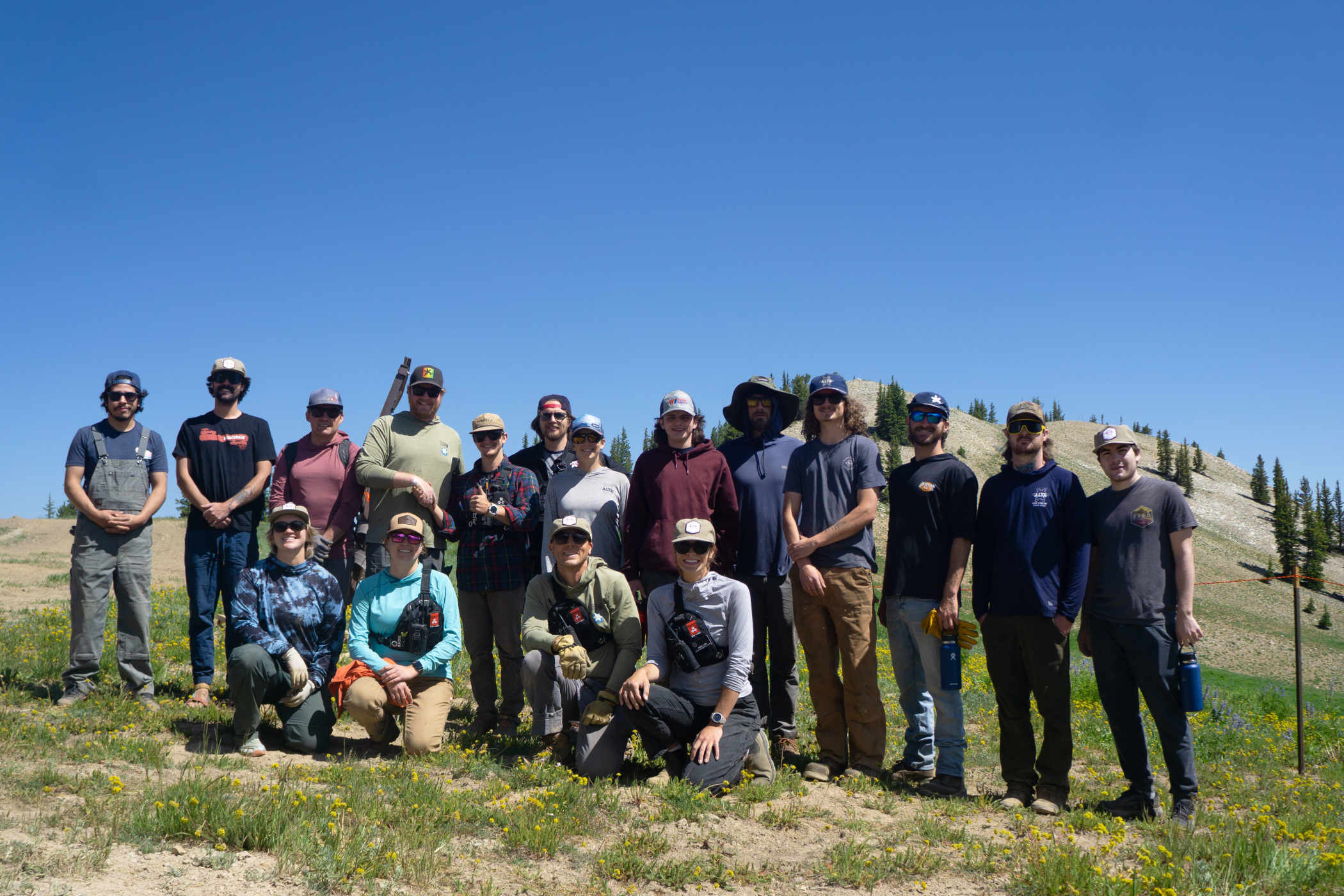 Planting 1,200 native plant seedlings into Upper Sleepy Hollow on Employee Conservation Day 2026 | Photo: Lexi Dowdall
We encourage people from all departments to take a break from their usual tasks and join us on the mountain for a day of restoration work. This year, employees planted a total of:
- 1,897 native plant seedlings in Upper and Lower Sleepy Hollow
- 334 Engelmann spruce and Douglas fir saplings in the Eagles Nest
These initiatives not only strengthen our connections with one another but also deepen our appreciation for the land that brings us all together.
Green Team
In winter, the AEC invites employees from all departments to join the Green Team, which meets monthly to discuss environmental issues and implement sustainability projects at the ski area. This initiative gives Alta employees the opportunity to share their ideas and help drive change. Groups are formed to propose sustainability projects, with the AEC providing support and funding for these projects from the annual Alta Earth Day opportunity drawing. Some recent projects include reusable mugs and sporks for patrol, vanpool and carpool programs and pass recycling. These small initiatives play a big role in creating a greener Alta.
learning on the slopes
SKE-COLOGY is an independent learning opportunity that the AEC provides to connect with our little recreators. This self-guided exploration takes you on an educational scavenger hunt through Alta—uncovering fascinating insights about the area’s ecology, geology, wildlife and history while answering critical thinking questions.
Grab some popcorn and take a front-row seat for a SKE-COLOGY adventure with Ella and Juni
This program was launched in the 1990s as a collaboration between the USFS, Vail Mountain Resort and Alta Ski Area—originally created for ski school groups. Over the years, it has evolved into a year-round educational experience suitable for skiers and hikers of all ages. Participants receive a map that pinpoints the locations of ten hidden interpretive signs throughout the Sunnyside area.
Historical Highlight
This summer, Alta replaced outdated snowmaking water pipelines that run beneath the Transfer Tow. Below the surface lay the undisturbed remnants of a small mining town built over a century ago. Those in the town weren’t looking for the same Alta Magic we all seek today—rather, they were searching for silver hidden deep within the mountains.
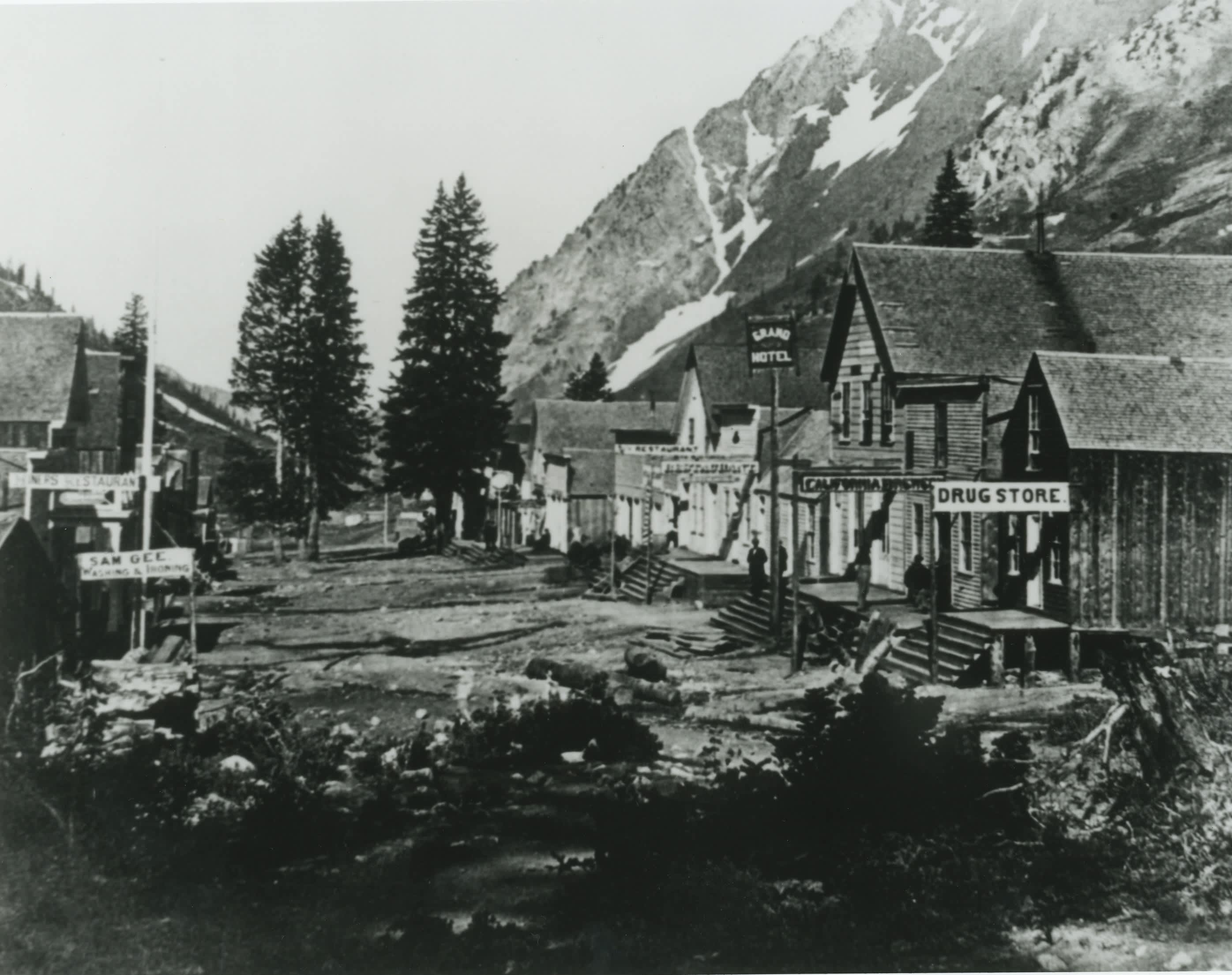
History of Alta
In the late 1800s, Alta was a bustling mining town where many sought riches, though few succeeded. To support the fast-growing community and mining industry, lumber was extracted from the surrounding forest, which quickly left the slopes barren—leading to frequent avalanches and landslides that ravaged the town. Despite being rebuilt repeatedly, Alta eventually became a ghost town by the early 1900s due to economic collapse and resource depletion. In an effort to restore the environment, the State of Utah and the USFS sent the Civilian Conservation Corps (CCC) to Little Cottonwood Canyon to complete restoration work, paving the way for the opening of the Alta Ski Area. While conservation efforts continue to this day, the history remains buried beneath the surface, telling tales of the old wild west filled with hardworking miners, drinking and duels.
The Big Dig
Due to the historical significance within the construction site, the USFS required an archaeologist to be present on-site to monitor the excavation—carefully sifting through each scoop of dirt for artifacts. While we anticipated uncovering some remnants of the old town, we were surprised by the thousands of artifacts that appeared as the backhoe dug a ten-foot trench. Among the findings were hats, liquor bottles and many bullets.

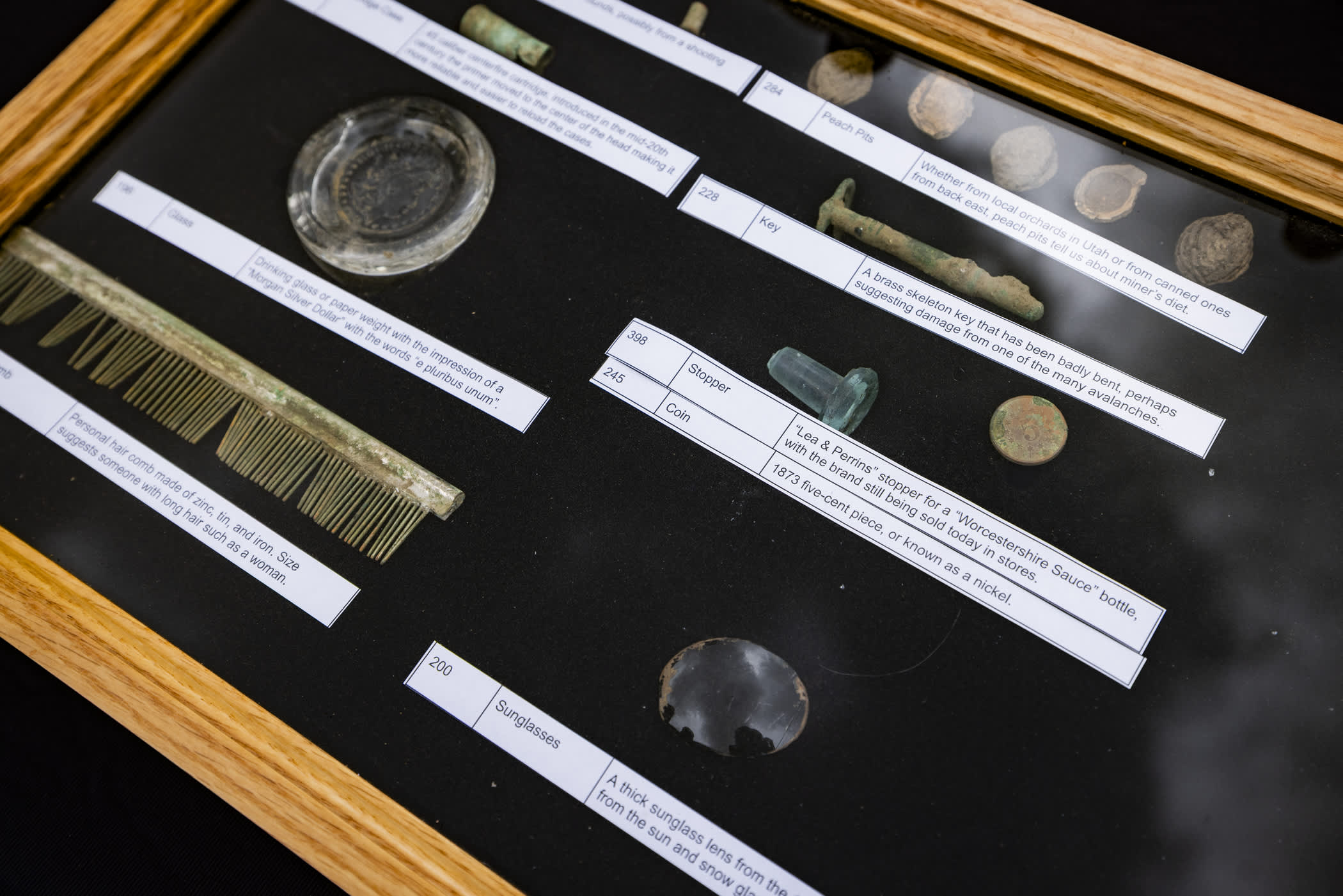
Artifacts pulled from the trench at the old Town of Alta site | Photo: Rocko Menzyk
To help manage these discoveries, we partnered with the Utah Cultural Site Stewardship (UCSS), which organized volunteers to assist in sifting through the soil. While there was a wealth of items to be found, two things stood out the most: a stone building foundation and an intact bottle full of alcohol.
Discoveries
The stone building foundation is believed to be from a former two-story hotel that once accommodated miners and visitors along the main street. This discovery provides important reference points as to where the historic town was situated. Following this finding, archaeologists from the USFS and State Historic Preservation Officer, Chris Merritt, joined us on-site to evaluate, which resulted in a temporary halt to the project for careful excavation and documentation.
 Archaeologists uncovering a stone foundation from the old Town of Alta | Photo: Rocko Menzyk
The most remarkable discovery was an unopened bottle of alcohol believed to be over 150 years old. UCSS took this rare find to High West Distillery in Park City for further analysis. Initial tests indicated that the mysterious liquid was likely a low ABV alcoholic beverage, possibly a type of beer or cider. The team took the investigation a step further by collaborating with two PhD chemists to analyze the contents in more detail. They found that the sediment at the bottom of the bottle contained yeast—suggesting there is a possibility of isolating the active agent to recreate the original beverage. To help make this dream a reality, the team brought in brewing expert Kevin Templin, founder of Templin Family Brewing and a former CAT driver at Alta. These experts are working diligently to cultivate and preserve the liquid, with the hope of recreating the beverage that miners enjoyed in Alta over a century ago, offering us an authentic taste of history.
Learn more about the 150-year-old bottle of liquor found at Alta Ski Area >
Connecting with the Community
To share these discoveries with the public, UCSS and the AEC hosted an Archaeological Open House at the project site, showcasing notable artifacts and the remains of the stone foundation. Hundreds of community members from Alta, along with curious individuals and amateur archaeologists, stepped back in time to experience what life was like for a 19th-century miner living and working in Alta. We will work with the USFS and UCSS to piece together this fascinating history of the old mining town of Alta and share it with our community.
Thank you for reading
Thank you for reading the Alta Environmental Center's 2025 sustainability efforts to keep Alta green for generations to come. We look forward to another year of learning, growing and connecting. For questions or inquiries, please email us at environment@alta.com.
Comments