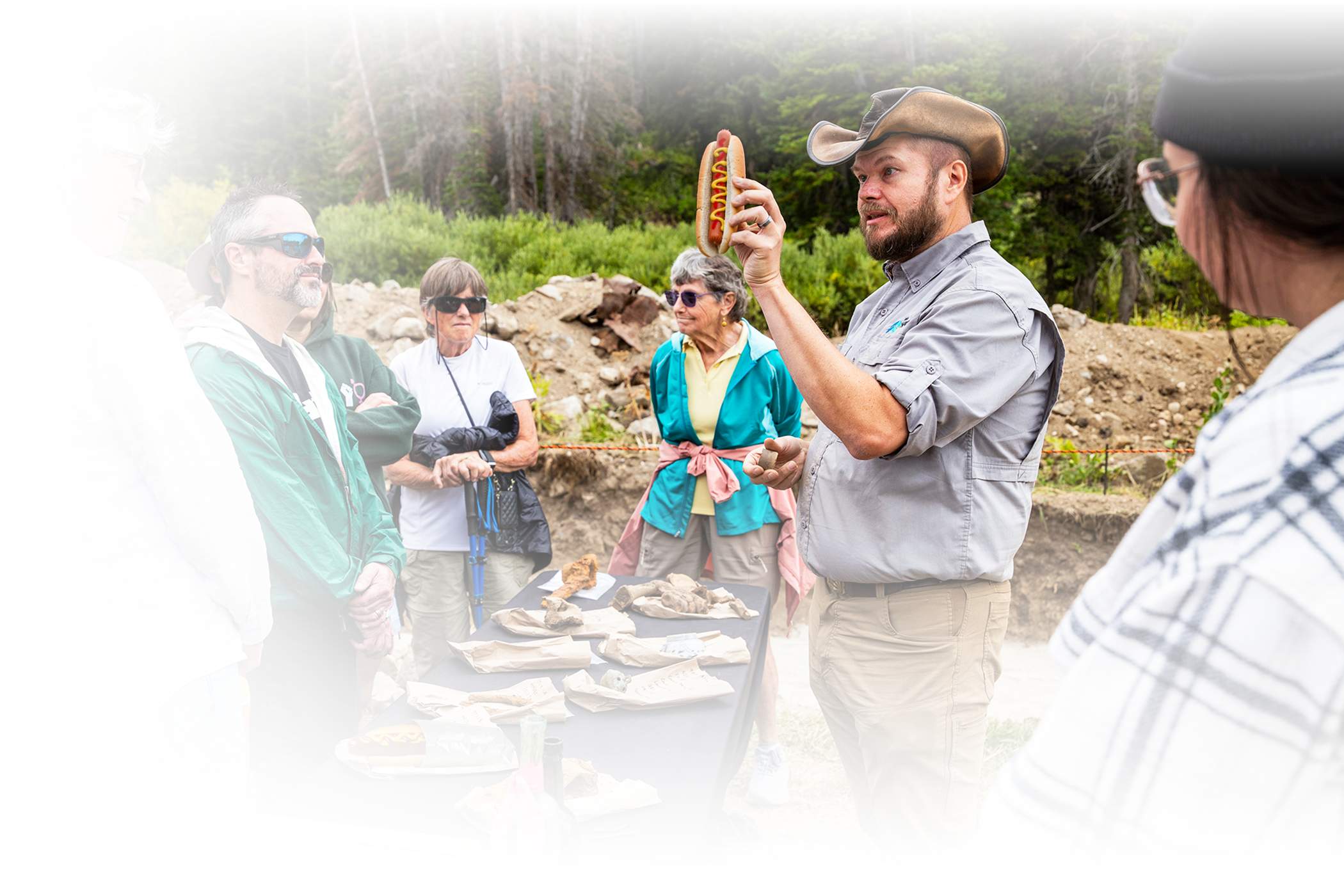
The World’s First Hot Dog Discovered at Alta.
An astonishing little slice of Alta history was unearthed last summer, forever altering our perception of the past. While digging a trench for an upgraded snowmaking system, Alta employees and local archaeologists unearthed myriad artifacts from the original townsite of Alta’s silver mining outpost.
In the summer of 2025, our teams went to work alongside the Transfer Tow, upgrading our decades-old snowmaking system and the electrical and culinary lines for the Town of Alta. The project also included laying 16-foot-diameter pipes for storing water for snowmaking. This undertaking required trenching into the soil—and deep into forgotten facets of Alta’s mining history, dating back to the 1860s.
The Past Meets the Present.
As the excavation inched closer to the site of the old Town of Alta, archaeologists carefully examined the soil and catalogued any artifacts uncovered by our crews. The discoveries started piling up, revealing clues and stories about the people who lived here 150 years ago.
In total, more than 6,000 artifacts were uncovered. From boot soles to bullets, pistols to perfume, a surprising diversity of relics emerged. Civil War buttons were unearthed near a German clay pipe. Cookware, pieces of china, spurs, animal bones and even an old leather hat surfaced from the soil, painting an intimate portrait of the lives of miners and the town that sheltered them. Over a thousand items were catalogued and preserved by the team of volunteers and state archaeologists.
As the aspens turned yellow, the crews hurried to sift more objects from the soil and collect them before the ground froze. Trenches were filled with soil and the archaeological dig was put to bed for the winter—experts estimated that more than a million treasures remain under the soil.
Mining Era Mystery Spirit.
The most captivating discovery was a completely intact, corked and full bottle of some sort of alcoholic spirit—the only full bottle of alcohol ever discovered in a Utah archaeological excavation. Our friends at the Utah State Historical Preservation Office (SHPO) sent the bottle of spirits to a local distillery and a winery in Park City, another nearby mining-era-turned-ski town. Isaac Winter, Director of Distilling at High West Distillery, tasted, tested, preserved and identified the alcohol as a 19th-century cider. “This bottle wasn’t some rotgut firewater but something driven by delicate aromatics. It wasn’t something crude, but something meant to be enjoyed as part of community life—something to celebrate with on the edge of civilization beneath the towering peaks of Alta.” - Isaac Winter
This curiosity found in Alta has become a worldwide story, featured in ski industry, culinary and archaeology publications. Plans are in the works to recreate the cider using the molecular elements of the 150-year-old liquid.
Mining era Mystery Meat.
Perhaps more unbelievable than a 150-year-old bottle of cider, another astonishing discovery has been kept under wraps since September, while forensic archeologists focused on one peculiar relic from the summer’s dig. Careful analysis and rigorous scientific methodology have confirmed a finding that could upend the fabric of American culinary history.
This remnant of frontier life was found in the dusty soil, rolled up in tin foil. At first glance, the tin foil appeared to contain stale bread and possibly a tube of perfectly-preserved pemmican—a salty, calorie-dense mix of tallow, dried meat and dried berries widely used by Native Americans and adopted as a nutritious and fortifying meal by miners and pioneers. However, this culinary discovery looked unusual compared to previous pemmican findings—and yet oddly familiar.
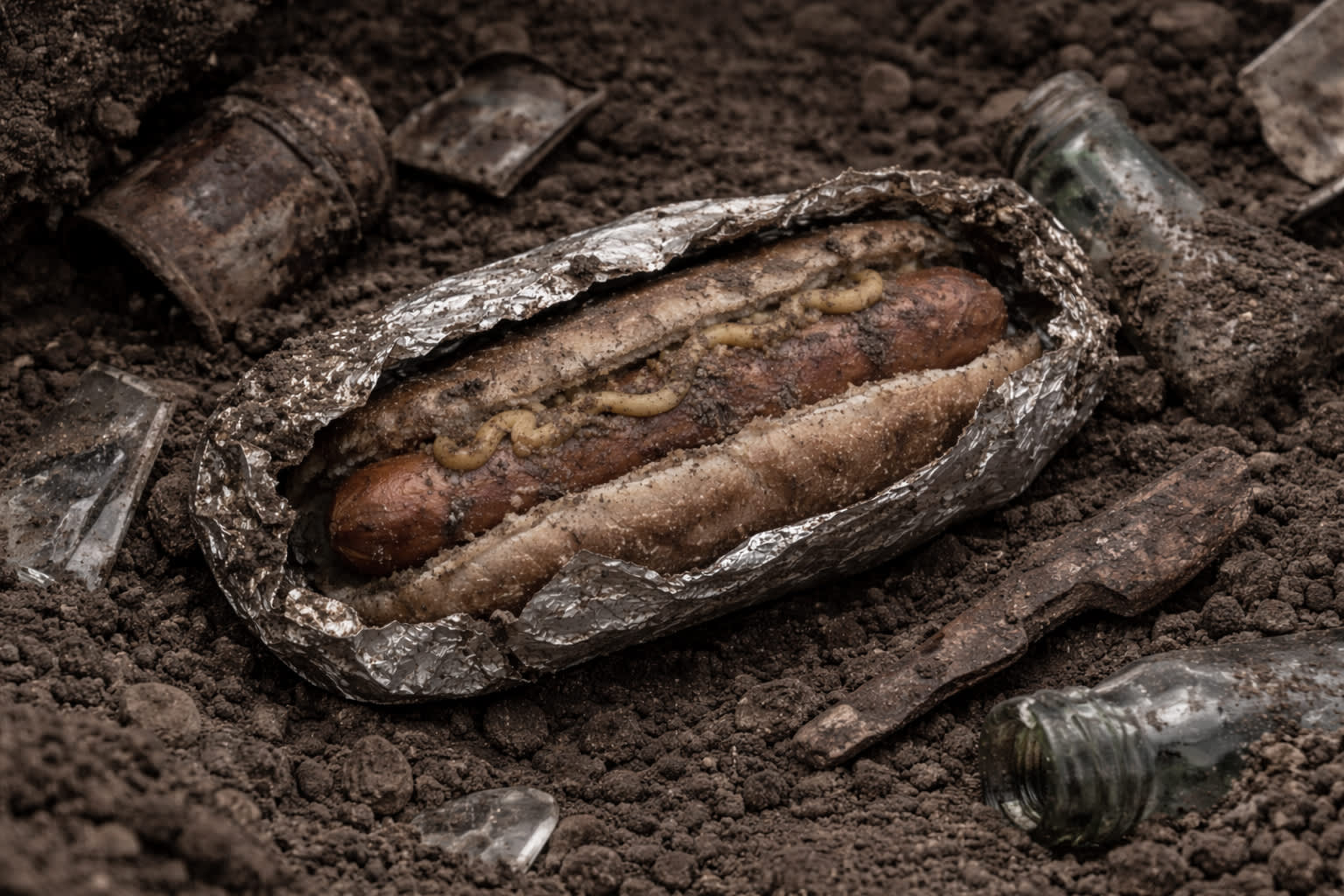
Mining era mystery found in the old Town of Alta under the Transfer Tow, circa October 2026
The artifact was expedited to a lab for carbon dating and molecular analysis. For six months, we’ve been anxiously awaiting the results and our initial suspicions have been confirmed.
The mining-era mystery meat was, in fact, a hot dog. And not just any hot dog, but possibly the oldest hot dog in American history.
For over 150 years, the origin of the hot dog has been attributed to a German immigrant and food cart operator, Charles Feltman of Coney Island, New York. Feltman allegedly began selling frankfurters in buns called “red hots” and, later, “hot dogs” to beachgoers in the summer of 1867. Hot dogs have since become a staple of American cuisine and a vibrant thread in the fabric of American culture. Coney Island hot dogs have become more American than apple pie. But our recent findings may have Charles Feltman rolling over in his grave—much like the shriveled hot dogs lapping the rollers at your local 7-11.
Silver and Sauerkraut—a Hot Dog Origin Story.
Silver ore was first discovered in Little Cottonwood Canyon in 1864. By 1871, Alta was firmly established as a mining town with 2,100 mining claims and a thriving summer population of 5,000 to 8,000 individuals—mostly immigrants from Germany and other Western European countries.
Last summer’s discovery of animal bones, the foundation of a butcher shop and a shockingly well-preserved hot dog all point to one logical conclusion—the miners of Alta were consuming large quantities of hot dogs as early as 1866, one year before Feltman began slinging sausages on Coney Island.
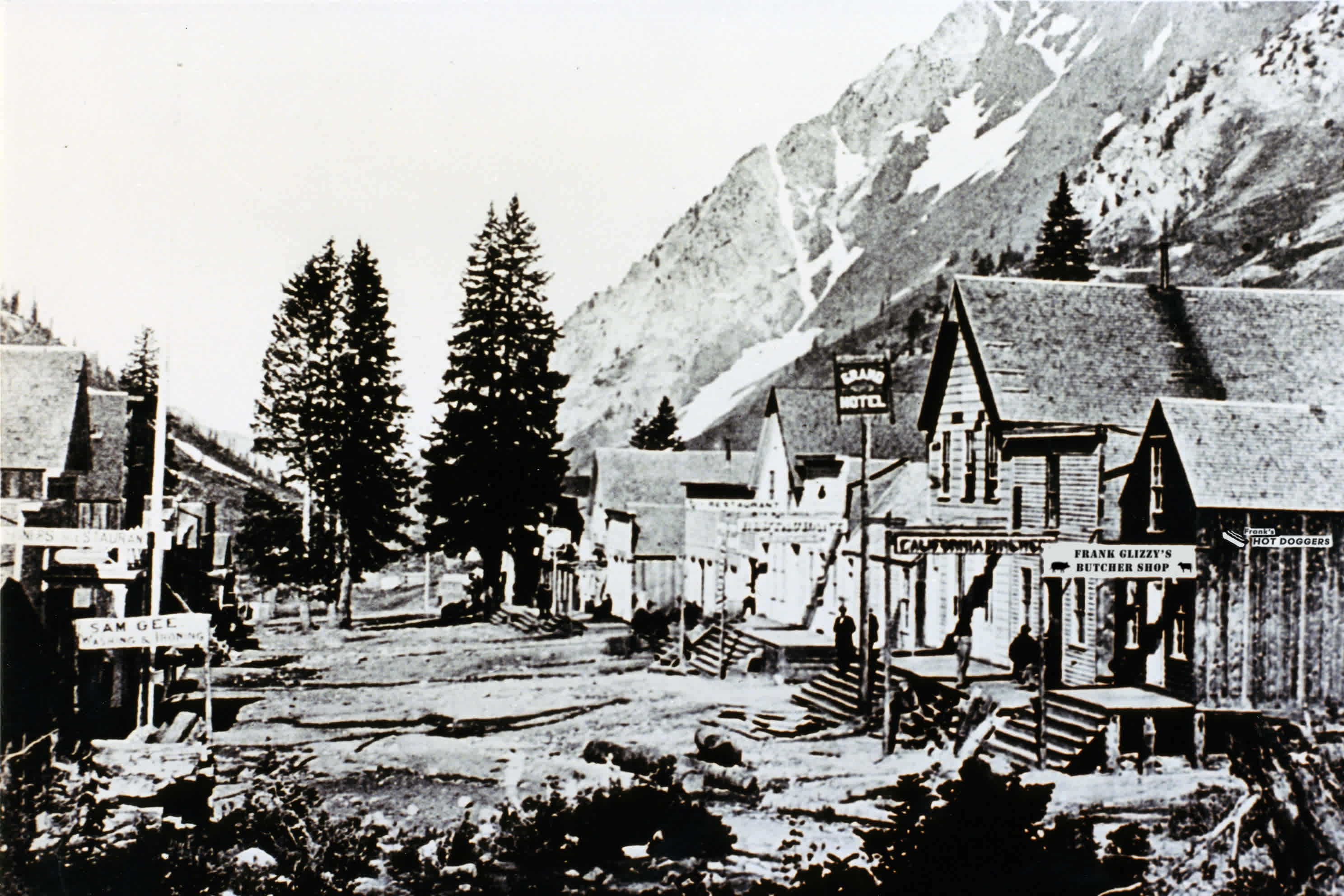
Main Street in the Town of Alta, circa 1878
A look at Alta’s 1871 town census identifies the owner of the butcher shop as Frank Glizzy, a German immigrant from the Frankfurt region. Mining company registries indicate that Glizzy made his way to Alta as early as 1865, prospecting for silver and selling frankfurters out of his butcher shop, located in the original Town of Alta, near today’s Snowpine Lodge. That version of town was destroyed, and a new, old Town of Alta was formed alongside Little Cottonwood Creek, today's Transfer Tow.
The Birthplace of Hot Doggers.
The popularity of Frank Glizzy's Hot Doggers had a massive impact on Alta’s mining industry. These calorie-dense, portable sandwiches kept miners and the Alta community fueled during long days underground. High levels of arsenic and other mining byproducts in the town’s water supply likely helped preserve Glizzy’s dogs for weeks and months, adding to their utility and popularity among miners.
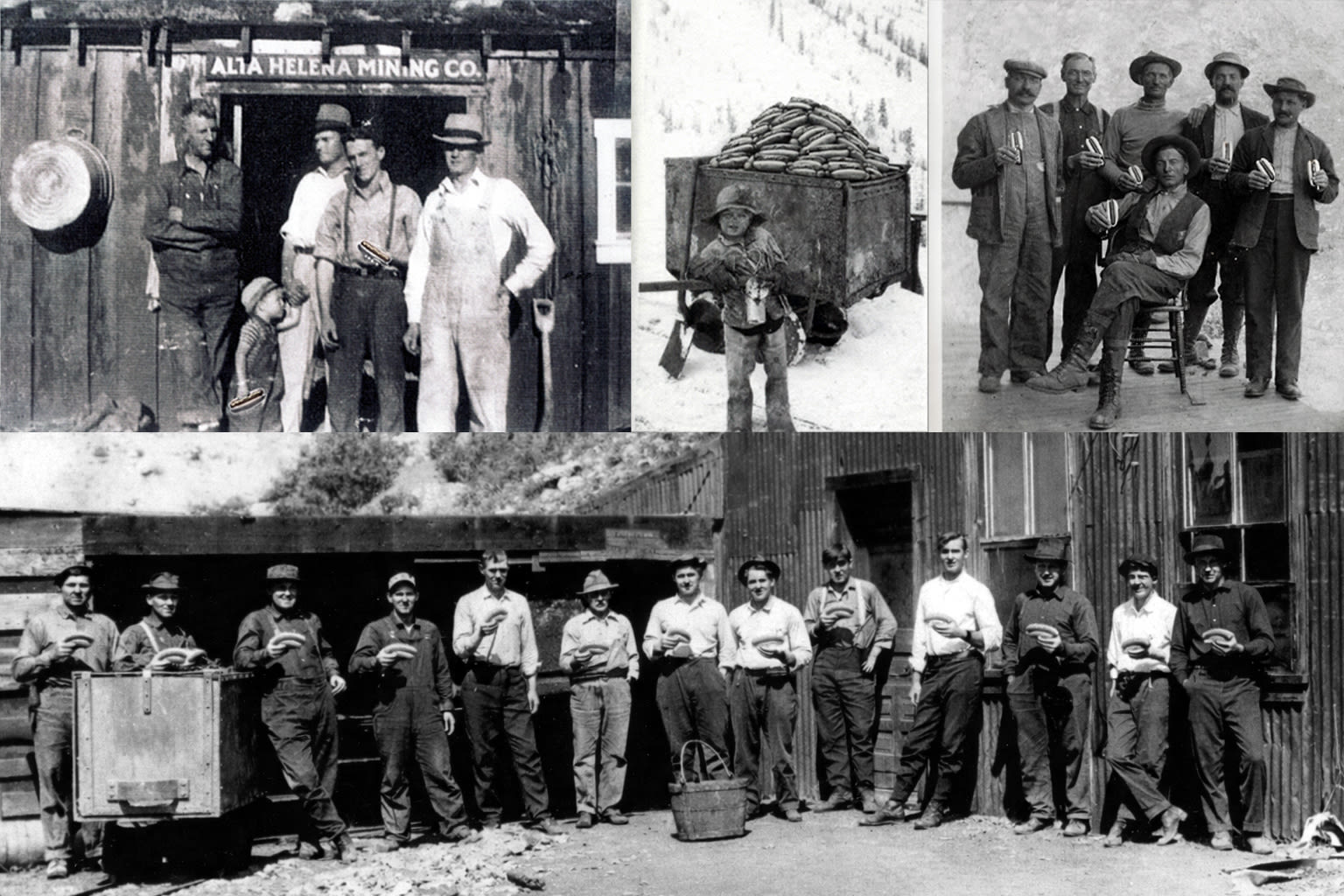
Miners refuel with Frank Glizzy's Hot Doggers, circa 1885
Artifacts indicate that Alta’s Chinese immigrant miners introduced ketchup and mustard—both ingredients rooted in ancient Chinese medicine—to Frank’s Hot Doggers. These additions enhanced flavor while helping to fight rampant scurvy and other ailments common during the mining era. The addition of Frank’s heirloom recipe for German sauerkraut provided beneficial probiotics and improved miners’ gut health. Unfortunately, these zesty hot dog condiments did not cure syphilis, gonorrhea or chlamydia.
While other mining communities were known to have been ravaged by disease and dysentery, the Town of Alta remained relatively healthy—aside from the ever-present dangers of bar fights, pistol duels, mine explosions, cave-ins, slips, falls, fires, cold weather, snowstorms and, of course, avalanches.
Historical experts believe the silver mining boom in Alta strongly correlates with periods of elevated hot dog consumption from Frank Glizzy’s butcher shop and modified ore cart Hot Dogger stands.
Hot Dog Skiing Is Born.
Thanks in large part to a surplus of calories from consuming Frank Glizzy’s hot dogs, miners began engaging in recreation within Little Cottonwood Canyon. A favorite pastime involved hiking up mountainsides and sliding down with barrel staves attached to their boots.
Thanks to Frank Glizzy’s nutritious and delicious Hot Doggers, skiing arrived in Alta.
As the mines ran dry and Alta’s mining era fizzled out, so did the original era of “hot dogger” skiing in Alta. One by one, miners left Little Cottonwood Canyon. The new Town of Alta was abandoned, leaving behind only buried secrets and a love of hot dogs and skiing.
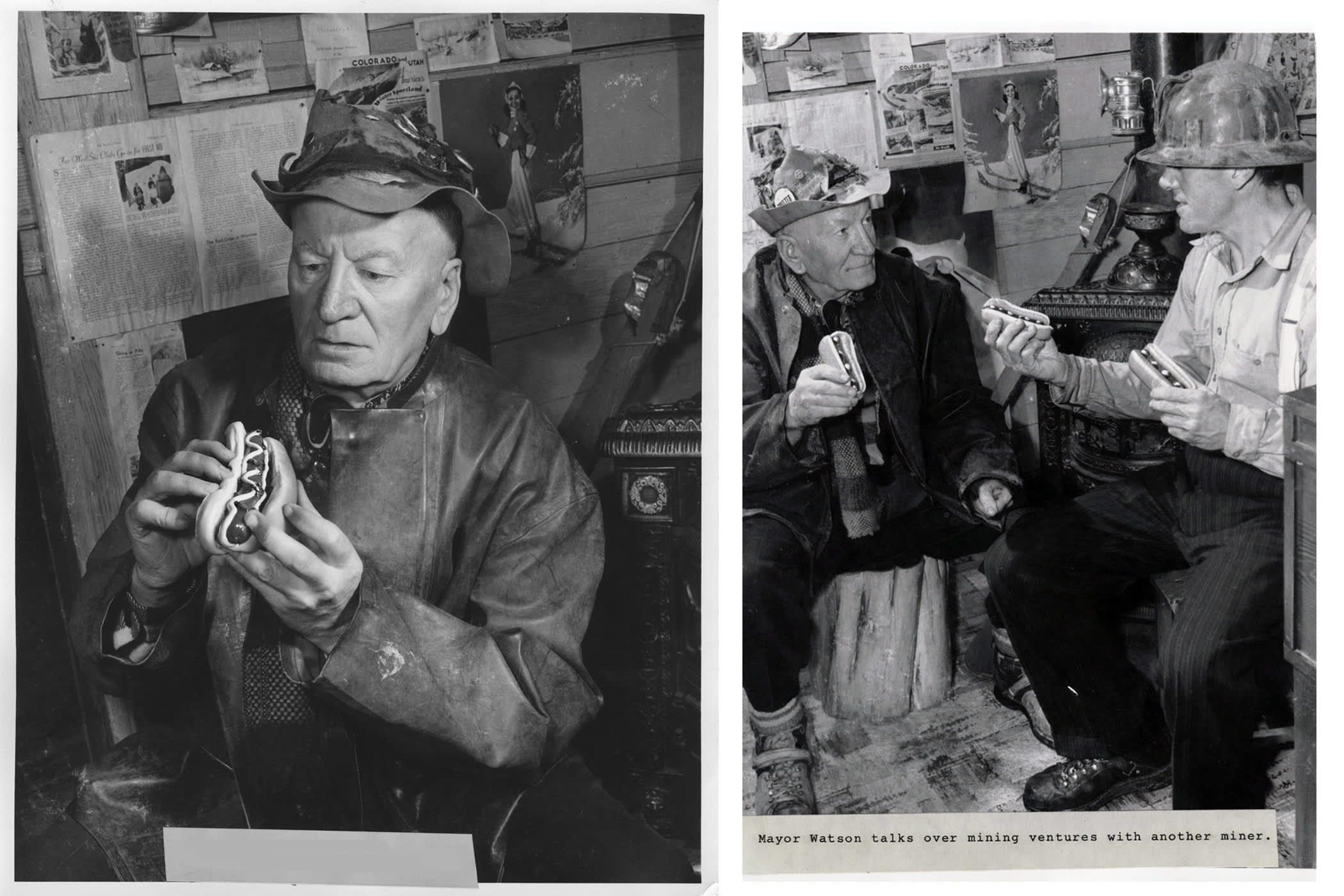
Mayor Watson shares his love of hot dogging, mining and skiing, circa 1920
By 1920, George Watson had purchased most of the surface rights to the land and was the sole resident—and de facto Mayor—of Alta. When the US Forest Service and the Salt Lake Winter Sports Alliance hired the world-famous Norwegian ski jumper Alf Engen to identify the ideal location for a potential ski area. Alta was rediscovered. Mayor Watson donated his defunct mining claims to the US Forest Service and Alta Ski Area was born in 1938. Utilizing the spare parts from mining-era ore tramways, Collins lift spun to life on January 15th, 1939, carrying skiers up Collins Gulch in Alta. The single chair was the first chairlift in Utah and just the fifth ski lift in the United States.
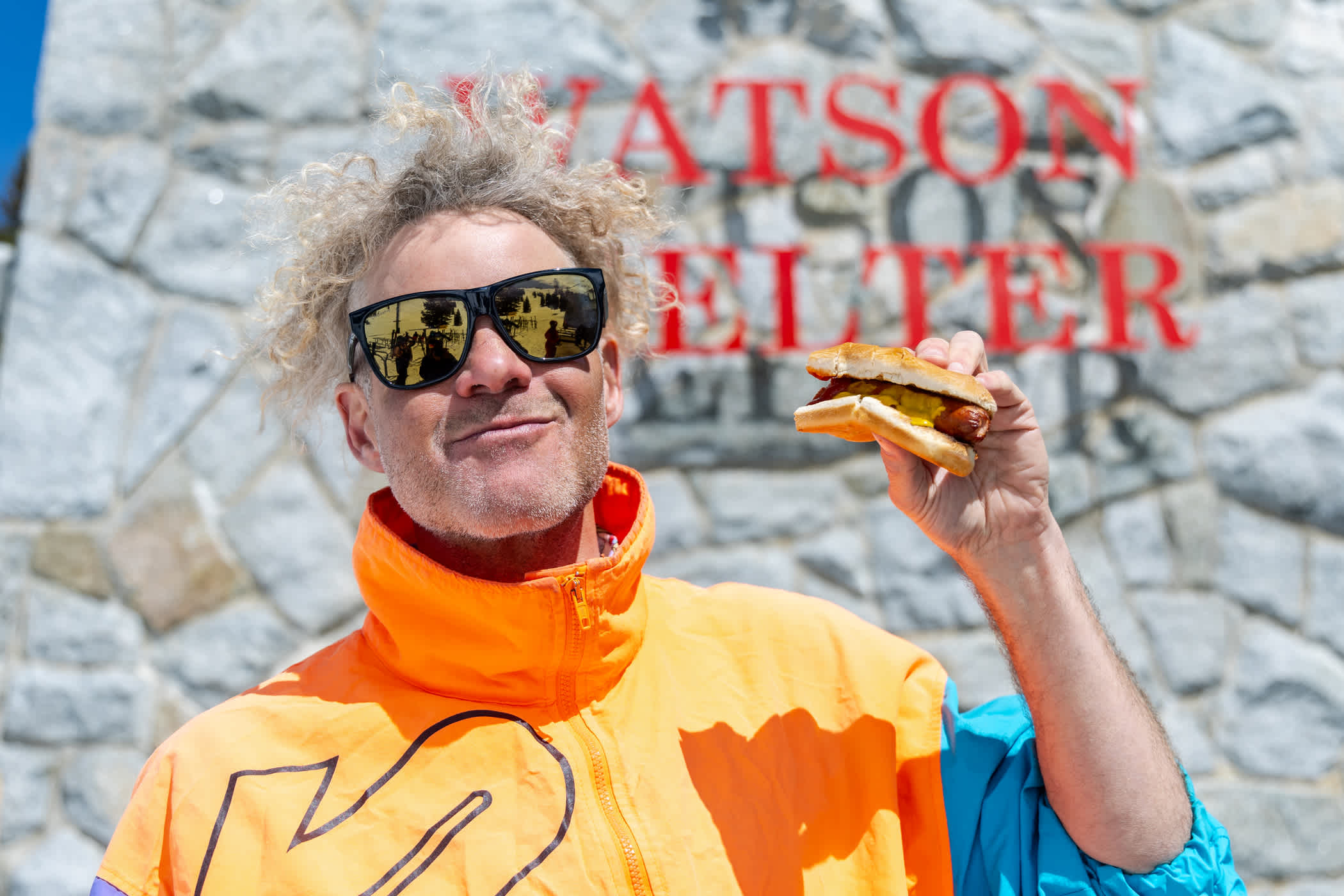
Watson’s cabin operated as a mid-mountain shelter for early skiers of Alta, where he served up signature hot doggers and footlong tales of hot dog-fueled miners sliding down the surrounding mountains.
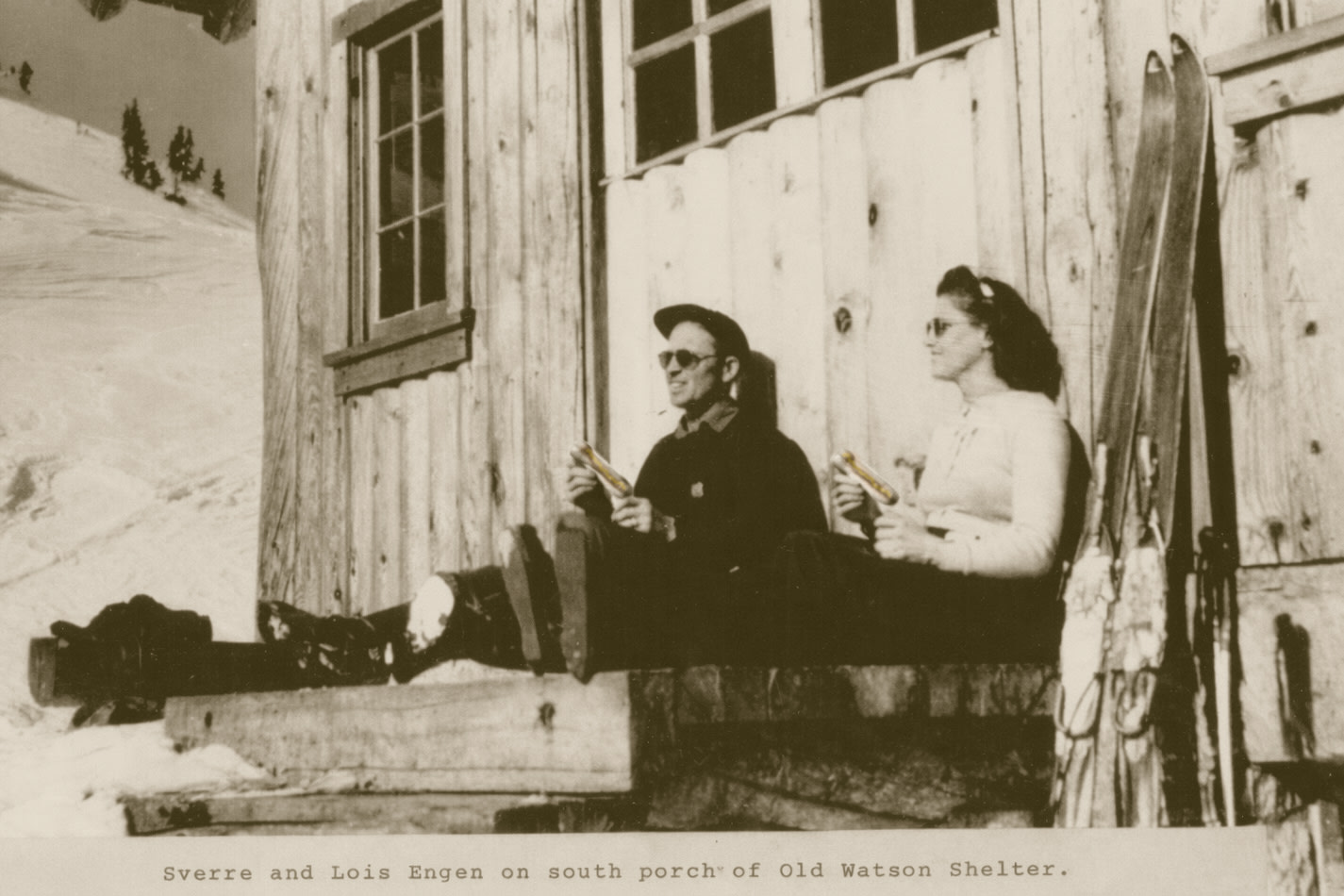
Sverre and Lois Engen—hot doggers eating hot dogs at Watson Shelter, circa 1950
The Golden Era of Hot Dogging in Alta.
The Engen Brothers of Alta—Alf, Corey and Sverre—were regulars at Watson's Shelter and were no strangers to hot dogs or hot dog skiing. After immigrating from Norway to the United States, the brothers made a living as professional ski jumpers.
Eventually calling Alta home, the brothers helped put the fledgling ski area on the map. The three Engens produced, directed, filmed and starred in some of the first ski films in American history. Through photography, videography and writing, the Engen Brothers brought hot dog skiing and deep powder snow to an American audience that was enamored with all things skiing.

Alf Engen, Miggs Durrance and Dick Movitz hot dogging at Alta, circa 1940
The Engen Brothers were among the original Golden Era Hot Doggers in Alta and across North America. But their impact also helped pioneer avalanche mitigation, warfare on skis, ski area development, ski area management, marketing, promotion, racing, ski jumping, collegiate coaching, professional ski instruction and much, much more.
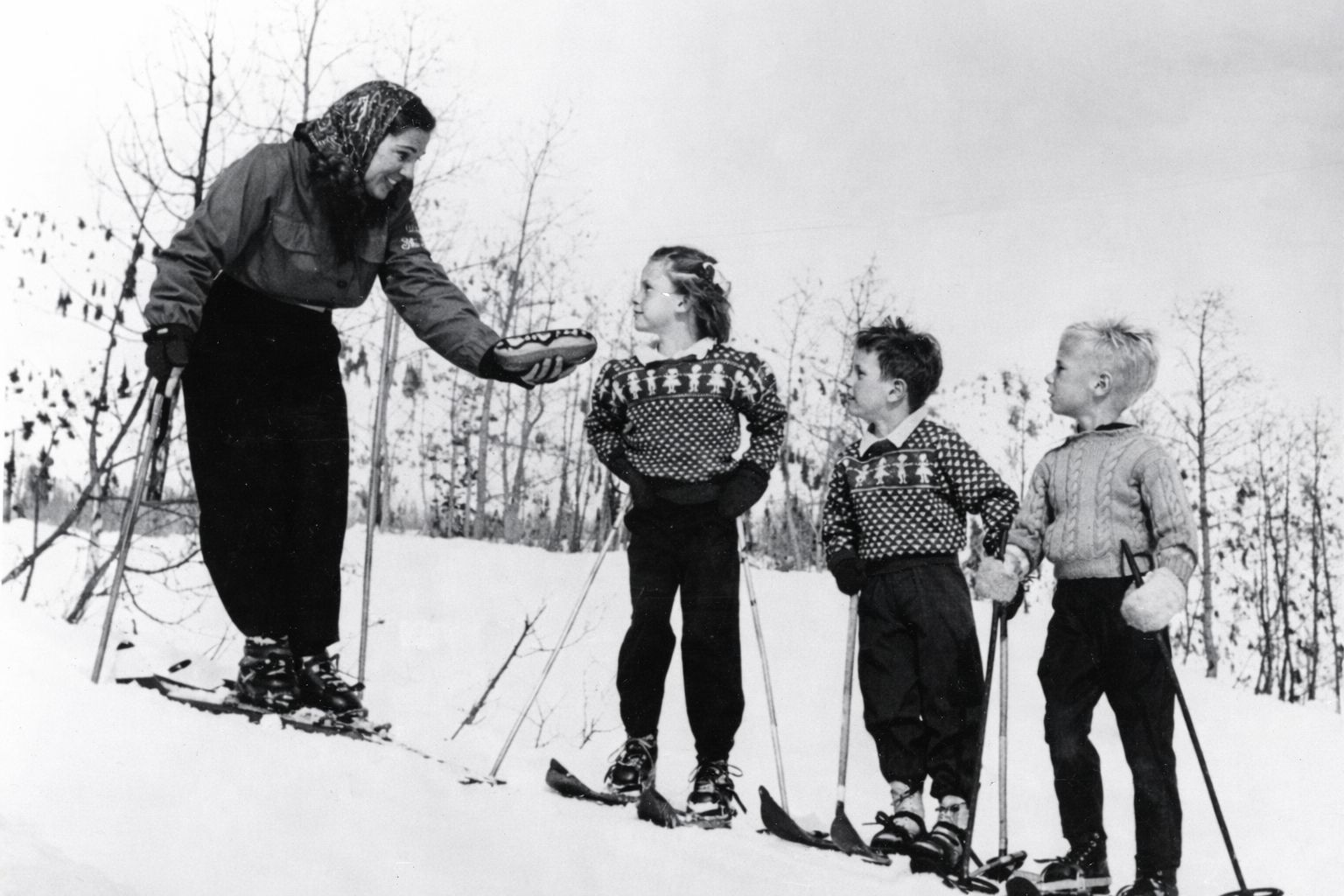
Young hot doggers at Alta, circa 1945
Alta Ski Area is widely recognized as the birthplace of avalanche mitigation and avalanche rescue dogs—and hot dog skiing.
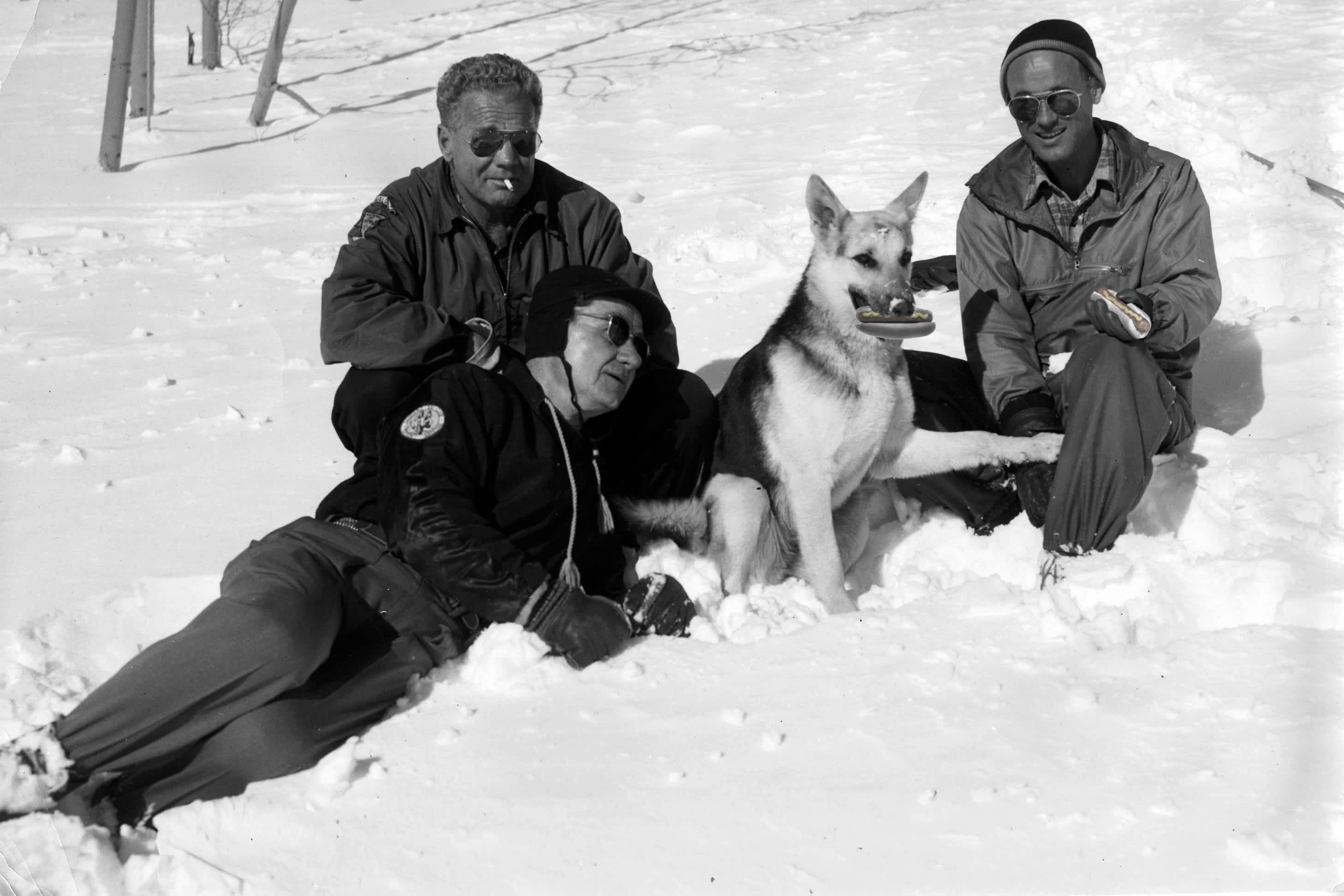
Hot dog-loving Snow Rangers and avalanche dog Cola, circa 1950
The impact left by the Engen Brothers and their cadre of friends who enjoyed a hot dog or two in Watson’s Shelter—some of the greatest skiers in the history of the sport—has had an outsized influence on Alta Ski Area and the American ski industry over the past 88 years.
The Future of Hot Dogging at Alta.
Generations of Alta skiers have learned the powder skiing technique while developing a lifelong love of skiing from the Alf Engen Ski School. Graduates from the ski school's youth programs have stood on podiums at the Alta Gelande Championships, Olympics, Freeride World Tour and the Frank World Classic.
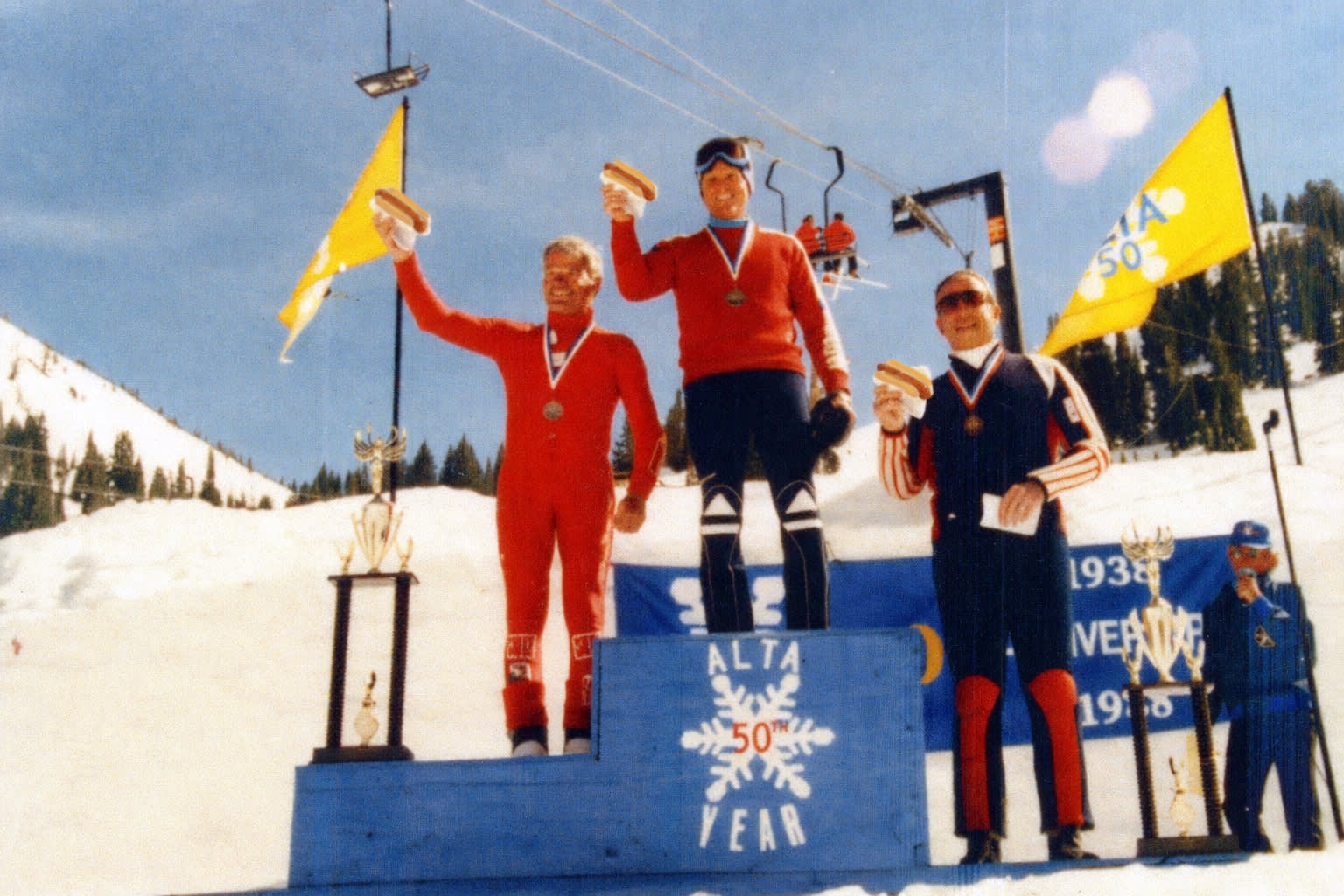
Junior Bounous, Gene Christiansen and Alan Engen hot dogging at Alta's 50th anniversary Gelande celebration, circa 1988
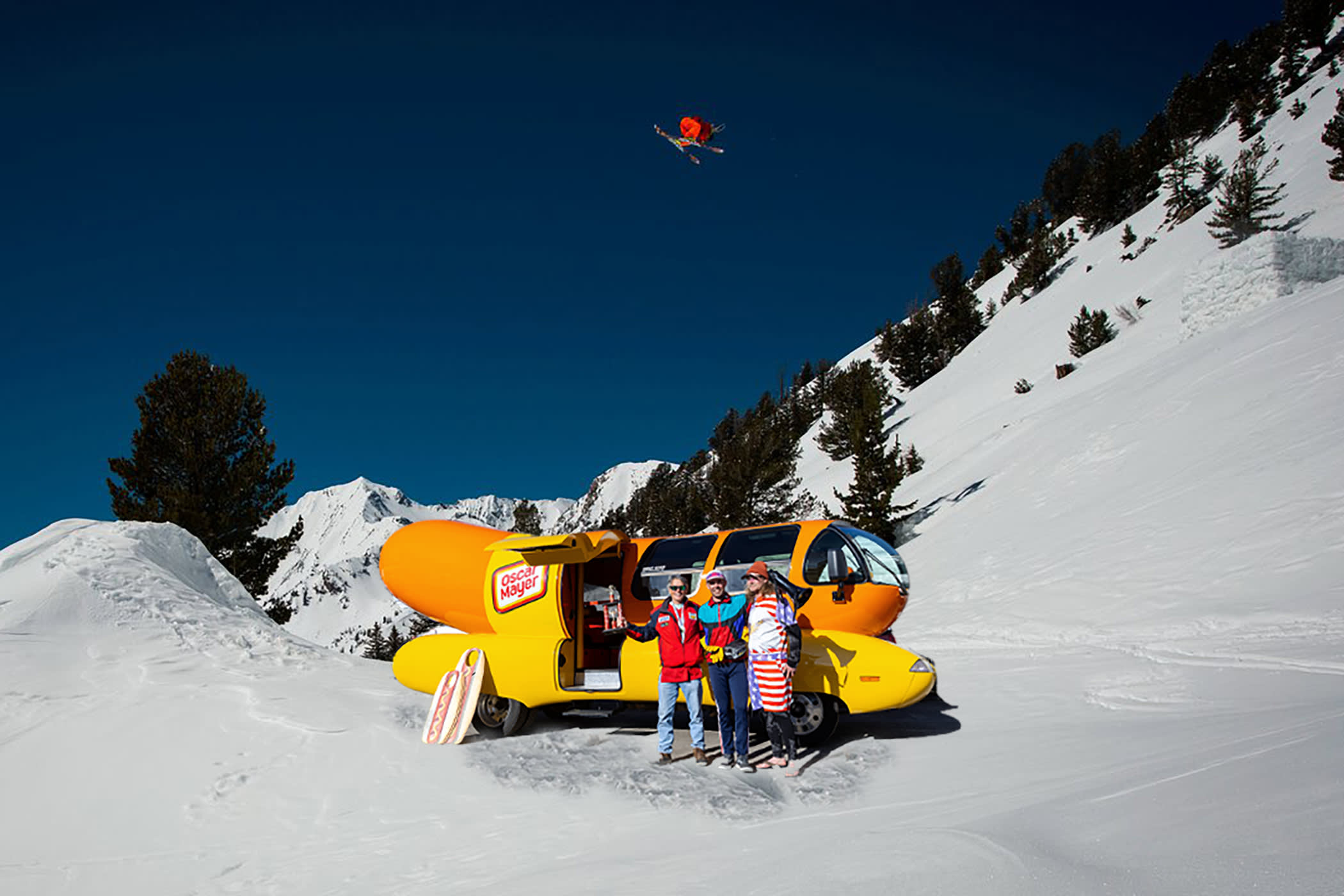
Hot dogging at Chad's Gap, circa 2000
As skiing has evolved from miners on barrel staves to the 10th Mountain Division to gelande ski jumping to hot dogging to moguls to downhill racing to ski ballet to freestyle skiing to cliff hucking to Chad's gapping to freeride to buttering in parachute pants, hot dogs have fueled and inspired skiers for the past 150 years.
No one knows for sure what the next movement or celebration of skiing will be. But we know the spirit of Frank Glizzy's Hot Doggers will be there.
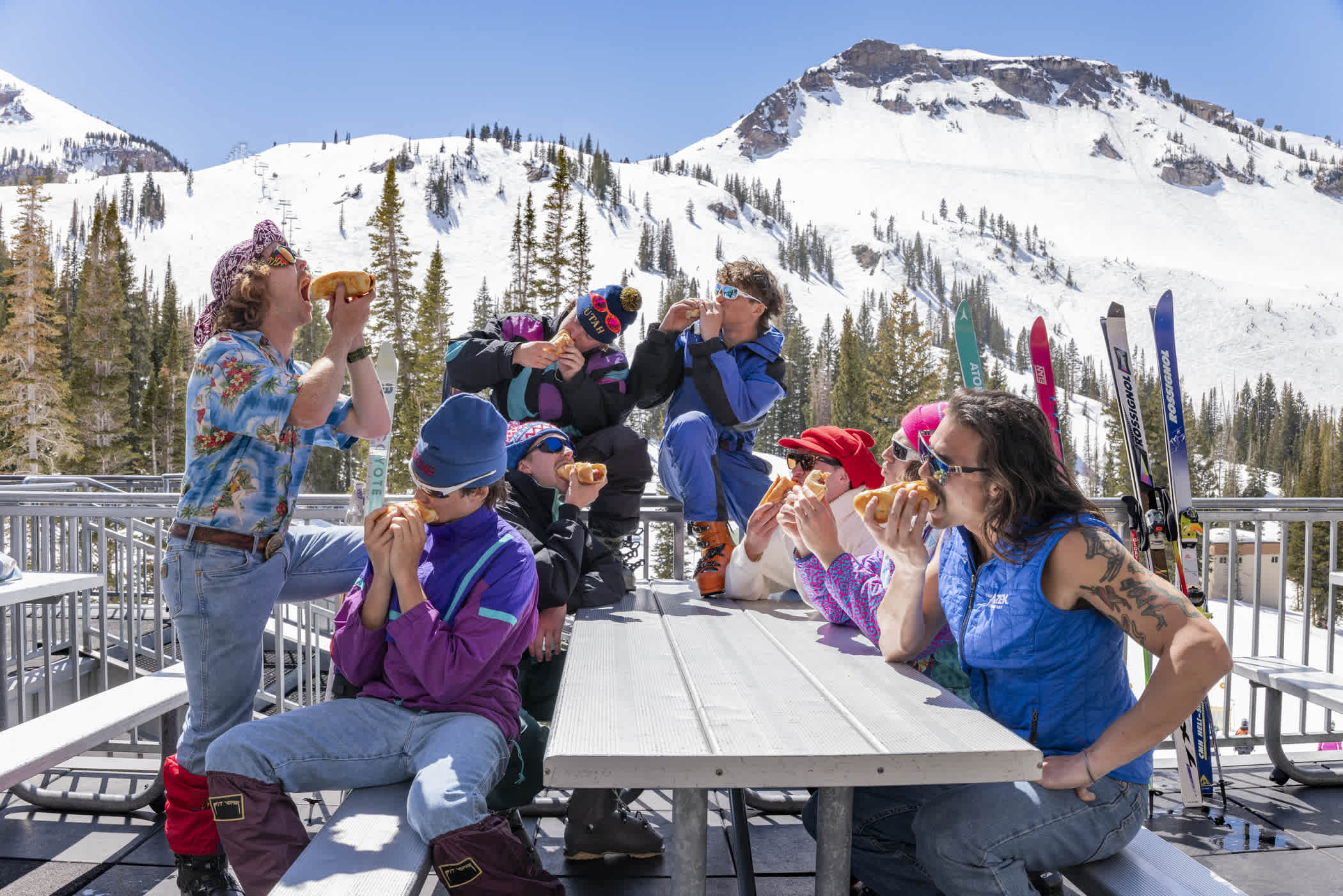
Hot doggers crushing hot dogs, circa 1992
To borrow from Isaac Winter,
Hot dogs aren’t something crude, but something meant to be enjoyed as part of community life— something to celebrate with on the edge of civilization beneath the towering peaks of Alta.
Add Your Comment